Overview
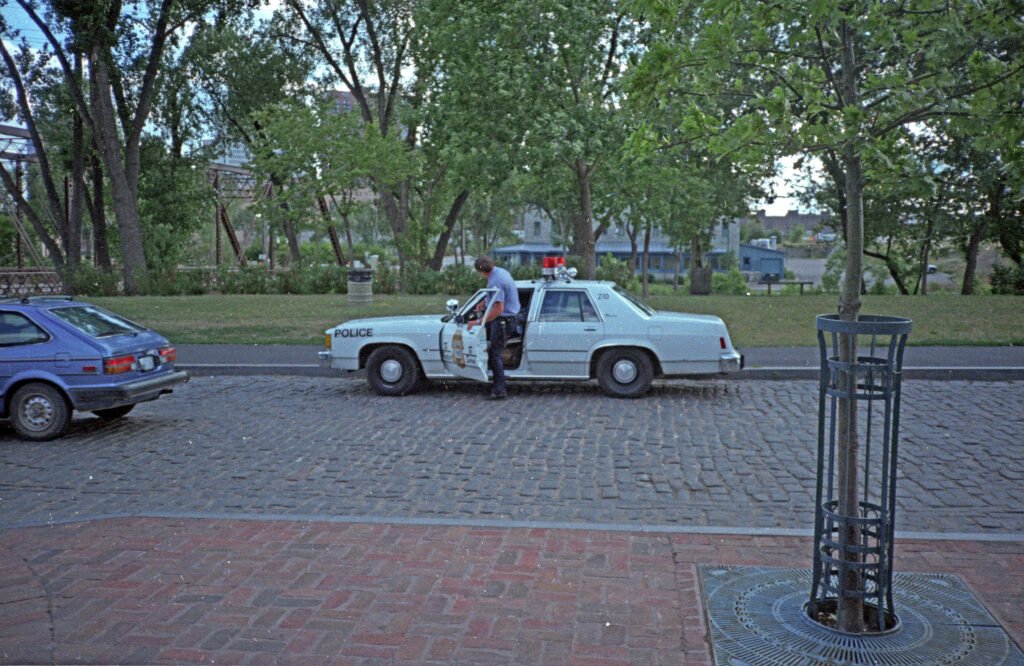
Police patrol refers to the continuous movement of officers through an assigned geographic area, whether on foot, in vehicles, or using other means such as bicycles or horses, with the goals of deterring crime, maintaining public order, and responding quickly to calls for service. Patrol remains the largest single function within most police departments by number of officers assigned.
Forms of patrol
Vehicle patrol allows officers to cover large areas quickly and respond rapidly to incidents, while foot patrol places officers in closer, more frequent contact with residents and businesses, often supporting community policing goals. Specialized patrol forms, including bicycle and mounted patrol, are sometimes used in parks, dense urban areas, or crowd control situations where their particular mobility and visibility offer advantages.
Patrol allocation
Departments increasingly use crime data and analysis of call volume to determine how patrol resources should be distributed across a jurisdiction and across different times of day, an approach often described as data driven or predictive patrol deployment. The goal is to concentrate patrol presence where and when it is likely to have the greatest effect on crime and response times.
Debates over effectiveness
Research on the effectiveness of random, undirected patrol in deterring crime has produced mixed findings, leading many departments to shift toward more targeted patrol strategies focused on specific high crime locations or times, sometimes described as hot spot policing, which some studies suggest produces more measurable crime reduction than traditional random patrol alone.
Technology in patrol
Modern patrol work increasingly incorporates technology such as in car computers providing real time access to records and dispatch information, automated license plate readers, and body worn cameras that record officer interactions with the public. These tools have changed how patrol officers operate, providing more information during encounters while also creating new forms of accountability and documentation.
Shift work and staffing
Patrol staffing presents ongoing operational challenges for police departments, since calls for service do not arrive evenly throughout the day, requiring departments to adjust shift schedules and staffing levels to match anticipated demand while also managing the physical and psychological toll that irregular shift work, including frequent night shifts, can place on officers over long careers.
Hot spot policing
Research identifying that crime tends to concentrate heavily in a relatively small number of specific locations has led many departments to adopt hot spot policing strategies, directing additional patrol attention to these concentrated areas rather than spreading patrol resources evenly across an entire jurisdiction, an approach that several studies have found more effective at reducing crime than undirected general patrol.
Rural and specialized contexts
Patrol strategies differ considerably between dense urban environments and rural jurisdictions, where officers may cover vastly larger geographic areas with far fewer available resources, requiring different approaches to response time expectations, backup availability, and the overall relationship between patrol coverage and community expectations about police presence.
Officer wellness
The demands of patrol work, including irregular hours, exposure to traumatic incidents, and the ongoing psychological stress of unpredictable encounters, have led many departments to expand officer wellness programs addressing mental health, physical fitness, and resilience, reflecting growing recognition that sustainable patrol operations depend on supporting the long term wellbeing of the officers performing this demanding work.
Community perception
How residents perceive patrol presence varies considerably depending on their prior experiences and relationship with police, and departments increasingly consider community perception alongside traditional performance metrics when evaluating patrol strategies, recognizing that a patrol approach perceived as intrusive or unfair by residents can undermine cooperation even if it produces measurable reductions in reported crime.
Future directions
Ongoing experimentation with alternative patrol models, including pairing officers with mental health clinicians to respond jointly to certain calls, reflects a broader rethinking of what patrol should look like in communities seeking responses to non criminal emergencies, such as mental health crises, that do not necessarily require a traditional armed law enforcement response.
Measuring patrol effectiveness
Departments increasingly use a combination of response time data, crime statistics, and resident surveys to evaluate whether a given patrol strategy is achieving its intended effects, recognizing that no single metric fully captures the complex relationship between patrol presence and genuine improvements in community safety and satisfaction.
Closing observation
Despite considerable change in tools and strategy over the decades, patrol remains the foundation on which most other police functions are built, since it is patrol officers who maintain the ongoing, routine presence that defines most peoples direct experience with law enforcement.
How that presence is deployed will likely continue to evolve as departments experiment with new tools and strategies.
Final note
Departments that regularly reassess their patrol strategies against current crime patterns and community needs, rather than relying on long standing habit alone, tend to make more effective use of their available patrol resources over time.
This kind of regular reassessment is increasingly viewed as a mark of a well managed modern department.
Departments that fail to adapt risk misallocating scarce resources relative to where they are actually needed most.
It remains one of the most carefully studied aspects of day to day police operations.
It remains the single largest function within most police departments by number of personnel assigned to it.
Few expect that to change significantly in the years ahead despite continuing shifts in strategy and technology.
Few expect that to change significantly in the years ahead despite continuing shifts in strategy and technology.
Its basic logic has outlasted many generations of changing technology and tactics alike.
It is studied closely across departments of every size.
Key facts
- Array
Quick checkWhy is patrol considered the backbone of most police departments?Show answer
Patrol officers provide the first response to most calls for service, maintain visible deterrent presence throughout a jurisdiction, and generate much of the direct observation and community contact that supports broader police operations.
Sources
- Array
Editorially reviewed by Specialty Digest Editorial TeamLast reviewed November 4, 2026Researched and drafted with AI assistanceReport an issue