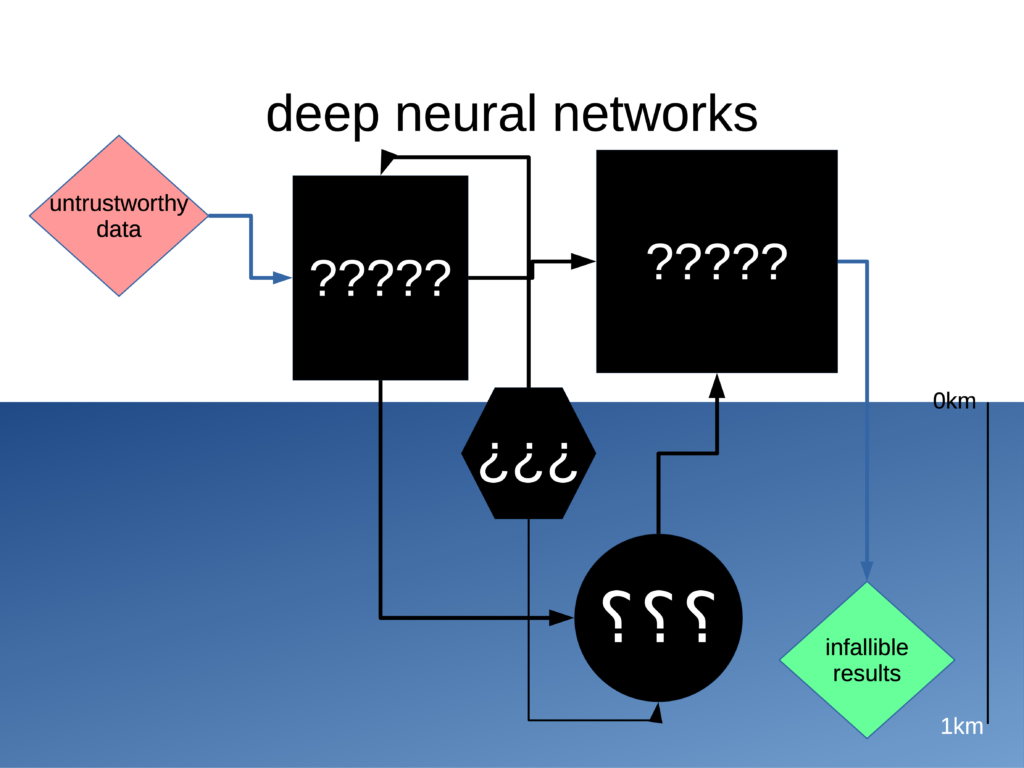
Almost everything currently called “artificial intelligence” — chatbots, spam filters, the app that sorts your phone’s photos — is pattern recognition running at an enormous scale, not a thinking mind. The label covers a wide range of software, and understanding what is actually happening under the hood explains both why these tools are so capable and why they still get things confidently wrong.
Narrow Intelligence, Not General Intelligence
Researchers draw a hard line between narrow AI and general AI, or AGI. Narrow AI is built to do one type of task well — recognize a face, transcribe speech, recommend a show — and every AI system in commercial use today, including the most advanced chatbots, falls into that category. General AI would mean a system with broad, human-level understanding across arbitrary tasks; it remains theoretical, and no existing system approaches it, whatever marketing language sometimes implies. That distinction matters because it explains the gap between what today’s AI tools do well, a single task at a time, and the more sweeping claims sometimes made about them.
Machine Learning: Rules the Computer Writes Itself
Traditional software runs on rules a programmer writes explicitly. Machine learning, the technique underneath most modern AI, flips that: instead of hand-coding rules, engineers feed an algorithm large amounts of data and let it find patterns on its own, adjusting itself to improve at a task through repeated exposure. In supervised learning, that training data is labeled — photos tagged “cat” or “not cat” — so the system can check its own guesses against the right answer millions of times over. Unsupervised learning instead lets a model find structure in unlabeled data without ever being told the correct answer in advance, which is useful for spotting patterns humans have not already named.
Neural Networks: Loosely Modeled on the Brain
Most modern AI runs on artificial neural networks, systems of interconnected layers of nodes loosely modeled on how neurons connect in the brain. Each node takes in numbers, weighs their importance, and passes a result to the next layer. Deep learning simply means stacking many such layers, sometimes hundreds, which lets a network learn increasingly abstract features: early layers in an image model might detect edges, later ones detect shapes, and the deepest layers detect entire objects. That layering is what lets a system recognize “a dog” rather than just a cluster of pixels, and it is why deeper networks generally outperform shallow ones on complex recognition tasks.
How Chatbots Actually Predict Words
The large language models behind tools like ChatGPT are built on a neural network design called the transformer, introduced by Google researchers in 2017. Transformers break text into tokens, meaning words or word fragments, and use a mechanism called self-attention to weigh how much every other token in a passage matters to the one currently being processed — which is how a model tracks that “it” in a sentence refers to “the dog” rather than “the park.” These models are trained by having them repeatedly guess a hidden word across billions of sentences pulled from text on the internet, adjusting internal parameters, of which modern models hold hundreds of billions to trillions, until their guesses get statistically better. Training a frontier model this way can require thousands of specialized processors running for months and cost tens of millions of dollars, which is why so few companies build these systems from scratch and why most AI products are built on top of a handful of underlying models.
Why It Still Gets Things Wrong
Because language models work by predicting statistically plausible next words rather than consulting a database of verified facts, they can produce fluent, confident text that is simply wrong, a failure mode researchers call hallucination. That single distinction — that today’s AI systems are sophisticated pattern-matchers rather than reasoning minds with real-world understanding — is the most useful fact for using them well: it explains why they are extraordinary at fluent language and pattern completion, and why their confident-sounding answers still need to be checked before they are trusted for anything that actually matters.