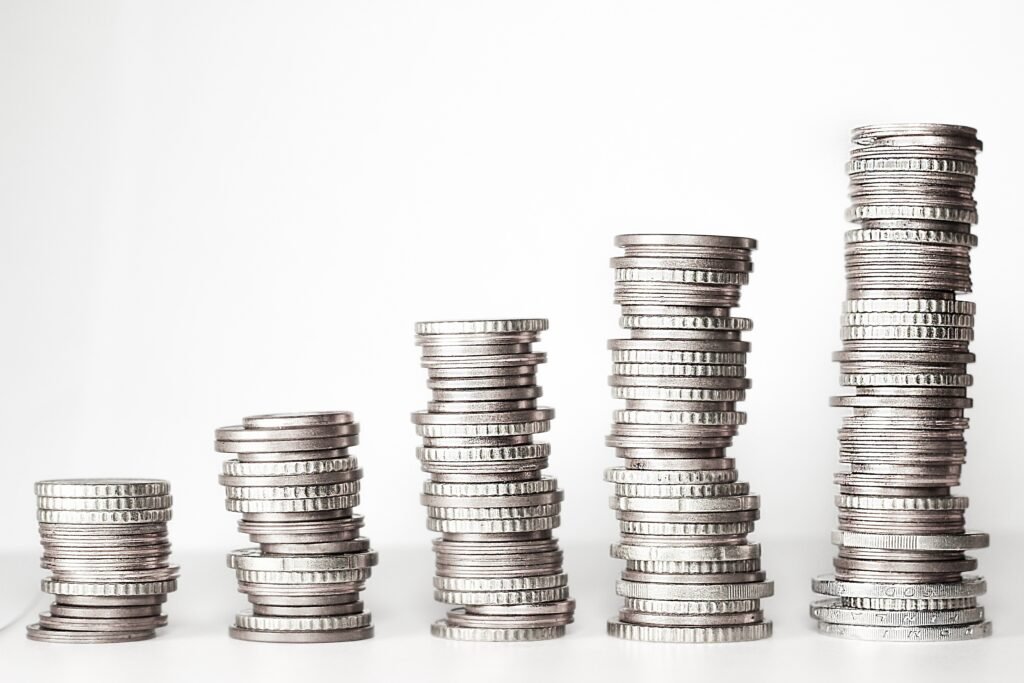
Compound interest is interest calculated on both the original amount of money (the principal) and on all the interest that money has already earned, so each new round of interest is calculated on a growing base rather than a fixed one. Albert Einstein is often credited with calling it the eighth wonder of the world; there is no solid record that he actually said it, but the description fits the effect. Compounding is the mechanism that turns small, regular savings into a large sum over decades, and it is also the mechanism that can turn a small unpaid credit card balance into a debt that grows faster than expected.
How compound interest actually works
Simple interest is calculated only on the principal, the original amount deposited or borrowed. Compound interest is calculated on the principal plus every bit of interest already added to it, so the base it is calculated on keeps expanding. The math is x = P(1 + r/n)^(nt) − P, where P is the principal, r is the annual interest rate, n is how many times per year interest compounds, and t is the number of years. The formula matters less than what it implies: interest starts earning its own interest, and that compounding effect gets stronger the longer it runs.
Put real numbers on it. $5,000 deposited into a savings account earning 5% annually, compounded monthly, grows to roughly $8,235 after 10 years — about $3,235 in interest. The same $5,000 earning simple interest over the same period reaches only $7,500. The $700-plus gap is entirely the product of compounding, not a higher rate or a bigger deposit.
Why compounding frequency matters
Interest can compound annually, quarterly, monthly, or daily, and the more often it compounds, the faster the balance grows, all else being equal, because each compounding period locks in a slightly larger base for the next one. A $10,000 deposit earning 3% annual percentage yield, compounded annually, grows to about $13,498 after 10 years with no further deposits; compounded daily at the same rate, it edges a little higher still, since interest is being calculated and folded back in more frequently.
The same mechanism works against borrowers
Compounding is not only a savings phenomenon. Most mortgages, auto loans, and federal student loans use simple interest, which costs borrowers less over time. Many credit cards and some personal loans compound instead, which means an unpaid balance accrues interest not just on what was originally charged, but on the interest already tacked onto it. That is the mechanical reason credit card debt can escalate quickly when only minimum payments are made: the balance it is calculated on is never shrinking fast enough to slow the growth.
Time matters more than the rate
Because the effect compounds, time is the most powerful variable in the equation — in many cases more powerful than the interest rate itself. Money that starts compounding earlier has more compounding periods to work through before it is needed, which is why financial educators consistently emphasize starting to save early, even in small amounts, over waiting to save larger sums later. A modest sum given decades to compound routinely outgrows a larger sum given only a few years.