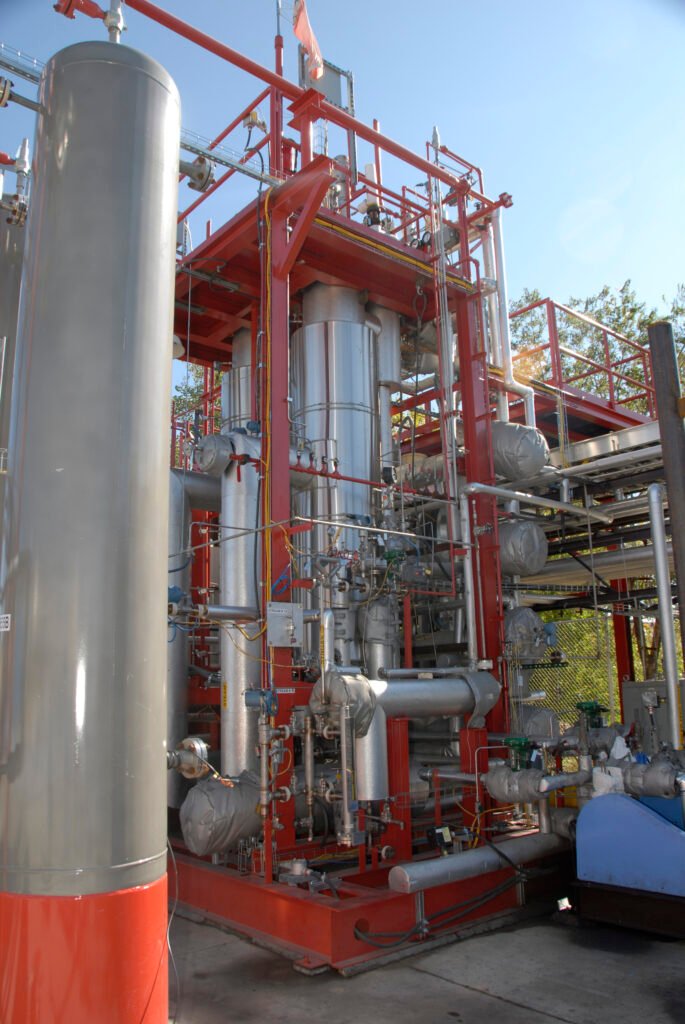
Biofuel is fuel produced from recently living biological material, chiefly plants, algae, or organic waste, rather than from fossil fuel deposits formed over millions of years. Because the carbon released when a biofuel is burned was captured from the atmosphere relatively recently, biofuels are generally promoted as a lower-carbon alternative to gasoline, diesel, and other petroleum fuels, though how much climate benefit a given biofuel actually delivers depends heavily on exactly how it was produced.
First-generation biofuels
First-generation biofuels are made from food crops using well-established, widely available processing methods. Ethanol, the most common example, is produced by fermenting sugars from crops such as corn, sugarcane, or wheat, then distilling the result into a fuel that can be blended with gasoline. Biodiesel is produced by chemically processing plant oils or animal fats, often from soybeans, rapeseed, or used cooking oil, into a fuel that can be blended with or substituted for petroleum diesel in many vehicles. These fuels are technologically mature and comparatively cheap to produce, which is why they still make up the large majority of biofuel actually used worldwide, but they draw directly on crops and farmland that could otherwise go toward food production, raising a persistent food-versus-fuel tension that has shaped biofuel policy debates for years.
Second-generation and advanced biofuels
Second-generation biofuels are produced from non-food biomass, including agricultural residues such as corn stalks and wheat straw, dedicated energy crops grown on marginal land not well suited to food crops, and woody material from forestry byproducts. Because these feedstocks do not compete directly with food production in the same way first-generation crops do, second-generation biofuels are often presented as a more sustainable path, though the processing technology required to break down tougher plant materials such as cellulose is more complex and historically more expensive than the fermentation used for first-generation ethanol. Algae-based biofuels represent a further, even more experimental category, since algae can in principle produce far more fuel per unit of land than conventional crops and can be grown on land unsuitable for agriculture, but large-scale commercial production has so far proven difficult to make cost-competitive.
How biofuels are used
Most biofuel in use today is blended with conventional petroleum fuel rather than used alone: ethanol is commonly blended into gasoline at low percentages across much of the world, with some countries, Brazil prominently among them, running large shares of their vehicle fleet on much higher ethanol blends or on ethanol alone. Biodiesel is similarly blended with petroleum diesel at varying percentages depending on national fuel standards and vehicle compatibility. Aviation presents a particular challenge, since aircraft engines require fuel meeting demanding performance specifications that most current biofuels cannot fully satisfy on their own, which is why sustainable aviation fuel, usually a blend of advanced biofuel with conventional jet fuel, has become a specific focus of research and early commercial investment separate from ground-transportation biofuel.
A brief history: Brazil’s ethanol program
Brazil built the world’s most extensive national ethanol program starting in 1975, when the government launched Proalcool in response to the 1970s oil crises, aiming to reduce the country’s dependence on imported petroleum by expanding sugarcane-based ethanol production and blending it into the national fuel supply. The program expanded steadily over subsequent decades, and Brazil now runs a large share of its vehicle fleet on flexible-fuel engines able to burn any blend of gasoline and ethanol, including ethanol alone, a model few other countries have matched at the same scale. Brazil’s experience is frequently cited in biofuel policy discussions precisely because sugarcane ethanol has generally been found to deliver a stronger net climate benefit than corn-based ethanol, since sugarcane requires less fertilizer per unit of fuel produced and Brazil’s existing agricultural land base absorbed much of the early expansion without triggering the scale of new land clearing seen in some other biofuel-producing regions.
Environmental trade-offs
Biofuel’s climate benefit is not automatic. Growing dedicated biofuel crops can drive land-use changes, including clearing forest or converting grassland to cropland, that release stored carbon and can, in the worst cases, offset or even exceed the emissions savings the biofuel was meant to provide, an effect researchers call indirect land-use change. Fertilizer use on biofuel crops carries its own environmental costs, including nutrient runoff that can contribute to water pollution and eutrophication downstream. These trade-offs are a major reason policy and research attention has shifted toward feedstocks, such as agricultural waste and non-food energy crops grown on marginal land, that avoid directly displacing food production or driving new land clearing.
Why biofuel policy remains contested
Government mandates and subsidies for biofuel blending, intended to reduce petroleum dependence and support domestic agriculture, have drawn sustained criticism for driving up food commodity prices during periods when crops are diverted toward fuel production rather than food, particularly affecting lower-income countries that rely on imported grain. Supporters counter that biofuel supports rural economies and provides a transportation decarbonization option available with current infrastructure, especially for aviation and heavy transport where full electrification remains further off, while critics argue that land and crops used for first-generation biofuel could deliver a larger climate benefit if redirected toward other uses such as reforestation or direct food production.
FAQs
Is all biofuel equally good for the climate? No. A biofuel’s actual climate benefit depends heavily on its feedstock and how it was produced; first-generation biofuels grown on newly cleared land can in some cases offer little net climate benefit or even a net cost once land-use change is accounted for, while biofuels made from agricultural waste or marginal land generally offer a clearer advantage.
Why is aviation fuel harder to replace with biofuel than gasoline? Aircraft engines require fuel that meets strict performance and safety specifications under extreme conditions, which most current biofuels cannot fully satisfy alone, so sustainable aviation fuel is typically blended with conventional jet fuel rather than used as a complete substitute.
Key facts
- First-generation biofuels (ethanol, biodiesel) are made from food crops using mature, widely available processing methods.
- Second-generation biofuels use non-food biomass, such as agricultural residues or energy crops on marginal land, avoiding direct competition with food production.
- Indirect land-use change, where growing biofuel crops drives new forest clearing or grassland conversion, can offset some or all of a biofuel's intended climate benefit.
- Sustainable aviation fuel blends advanced biofuel with conventional jet fuel, since aircraft engines cannot run on most biofuels alone.
- Biofuel mandates and subsidies have been criticized for raising food commodity prices when crops are diverted from food to fuel production.
Related concepts
Quick checkWhy can a first-generation biofuel sometimes offer little net climate benefit despite being made from a renewable crop?Show answer
If growing the biofuel crop drives indirect land-use change, such as clearing forest or converting grassland to cropland elsewhere to make up for displaced food production, the resulting release of previously stored carbon can offset or even exceed the emissions the biofuel was meant to save compared with the petroleum fuel it replaced.
Sources
- University of Florida IFAS Extension. Biofuels Primer. 2024 (accessed 2026-11-01)
Editorially reviewed by Specialty Digest Editorial TeamLast reviewed November 1, 2026Researched and drafted with AI assistanceReport an issue