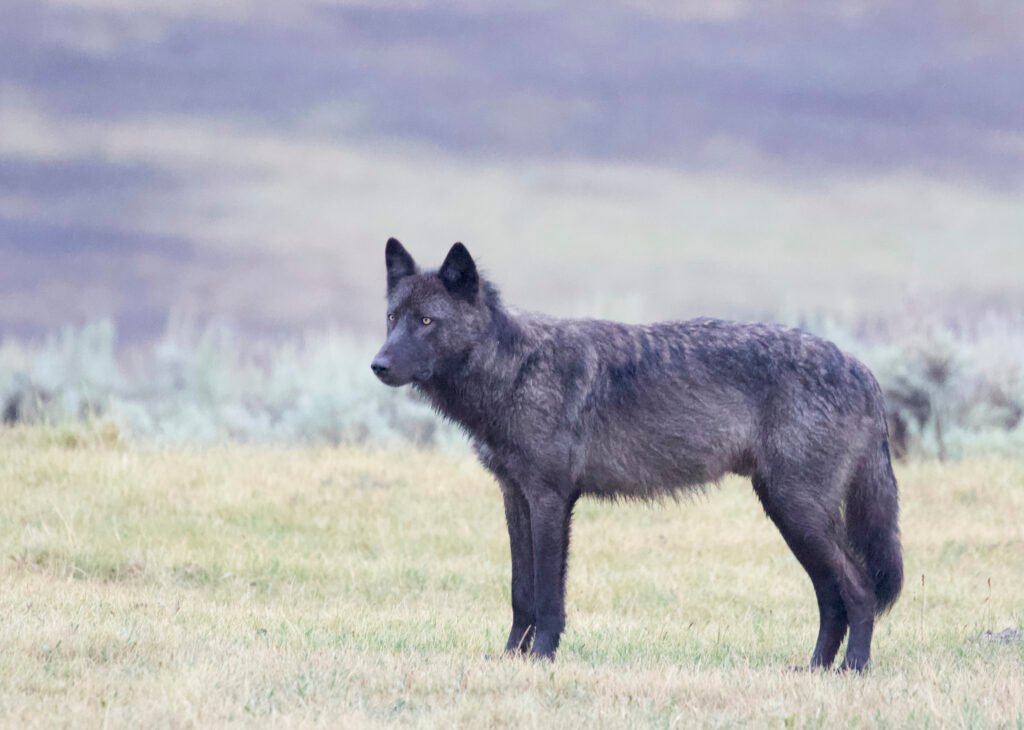
A trophic cascade is a chain of indirect effects that moves through multiple feeding levels of an ecosystem after a change at one trophic level, most often the removal or restoration of a top predator, ripples down through the species that predator eats, then down again to the species those prey eat in turn. The result can reshape not just populations but the physical structure of a landscape, even though the original change happened at only one point in the food web.
How a trophic cascade works
A top-down trophic cascade begins when a predator’s abundance changes, which directly affects how much pressure its prey faces. If a predator population falls or disappears, its prey species, often herbivores, frequently increase, and that larger herbivore population can then put far greater pressure on the plants it feeds on, sometimes visibly thinning or reshaping vegetation across a landscape. Restoring the predator can, at least in principle, reverse the chain: reduced prey numbers or changed prey behavior ease pressure on the vegetation, which can then recover. Ecologists distinguish this density-mediated pathway, in which the cascade works through changes in how many prey animals there are, from a behaviorally mediated pathway, in which the cascade works through changes in how prey animals behave, for example avoiding open areas where a reintroduced predator is more likely to catch them, even if the prey population size itself does not fall.
The Yellowstone wolf case
The best-known example involves gray wolves in Yellowstone National Park, which were eliminated from the park by the 1920s and reintroduced in 1995 and 1996. A long-term study using data from 25 riparian, or streamside, monitoring sites collected between 2001 and 2020 found that willow crown volume along these zones in northern Yellowstone increased by roughly 1,500 percent over the study period, a change researchers linked to reduced elk pressure on willows following the return of wolves and other large carnivores. Even this widely cited case comes with real caveats, however: the same research acknowledges that factors other than wolves contributed to the willow recovery, and the National Park Service’s own scientists describe the full picture as still unsettled, debating how much of the change traces to wolves directly changing elk behavior, to elk population decline, to water availability independently limiting plant growth, or to the return of beavers, themselves dependent on willow, playing an additional role of their own.
Marine trophic cascades
Trophic cascades are not limited to land. Sea otters along the North Pacific coast prey on sea urchins, which in turn graze on kelp, so a healthy otter population generally keeps urchin numbers low enough for kelp forests to thrive; when otter numbers fall, as happened in parts of California following a 2013 sea star wasting disease outbreak and a 2014 marine heatwave that further stressed kelp, urchins can multiply and graze kelp forests down to bare rock, a state ecologists call an urchin barren. This pattern illustrates that trophic cascades can run through very different kinds of ecosystems, from a terrestrial park to a marine kelp forest, while following broadly the same top-down logic.
Why trophic cascades are hard to prove
Demonstrating a trophic cascade convincingly requires ruling out other explanations for an observed change, which is one reason Robert Paine’s original 1960s intertidal removal experiments, which gave rise to the related concept of a keystone species, remain so influential: they used controlled plots specifically to isolate the predator’s effect from other possible causes. Many real-world cascades, including the Yellowstone case, are studied through long-term observational data rather than controlled experiments, since removing or reintroducing a top predator at ecosystem scale on purpose is rarely practical or ethical, which leaves more room for alternative explanations and ongoing scientific debate even when a pattern looks compelling.
Beyond vegetation: physical landscape effects
Some researchers have proposed that the Yellowstone cascade extended even further, into the physical shape of streams themselves, arguing that recovering willow and other streamside vegetation stabilized riverbanks enough to reduce erosion and alter channel patterns over time. This particular claim has drawn some of the sharpest scientific pushback of any part of the Yellowstone story, with other researchers arguing that broader hydrological and climatic factors, rather than wolves and vegetation specifically, better explain the stream changes observed. The disagreement is a useful reminder that a trophic cascade’s effects can be real at one level, such as willow recovery, while a further claimed effect several steps downstream, such as physically reshaping river channels, remains considerably more contested and harder to attribute with confidence.
Why the concept matters
Trophic cascades matter to conservation because they show that protecting or restoring a single species, particularly an apex predator, can have effects that extend far beyond that species itself, reshaping vegetation, altering other animal populations, and even changing physical features such as stream channels. At the same time, the genuine scientific caution surrounding cases like Yellowstone is itself an important lesson: a trophic cascade is a real and well-documented ecological phenomenon in many systems, but any specific claimed cascade still needs to be checked against alternative explanations rather than assumed from a single before-and-after comparison.
FAQs
Is every trophic cascade caused by a predator? Most studied trophic cascades are top-down, beginning with a change in predator abundance, but cascades can in principle also run bottom-up, starting with a change at the producer or primary consumer level that then affects predators further up the food web, though top-down cascades involving predators are far more commonly documented and discussed.
Why do scientists still debate the Yellowstone wolf-willow story if the pattern is so widely cited? Because the 1995-96 wolf reintroduction was not a controlled experiment, researchers cannot fully separate the wolves’ specific effect on elk behavior from other possible contributing factors, including elk population changes, water availability, and the independent return of beavers, so the National Park Service describes the full explanation as still unsettled even while agreeing the willow recovery itself is real.
Key facts
- A top-down trophic cascade begins with a change in predator abundance that ripples down through prey and then the plants or prey those species eat.
- Ecologists distinguish density-mediated cascades (driven by changes in population size) from behaviorally mediated ones (driven by changes in prey behavior).
- A 2001-2020 Yellowstone study found willow crown volume rose about 1,500 percent along monitored streamside sites after wolf reintroduction, though researchers note other factors also contributed.
- Sea otters preying on sea urchins, which graze on kelp, is a widely cited marine trophic cascade example.
- Robert Paine's original 1960s intertidal removal experiments, which also gave rise to the keystone species concept, remain a model for isolating a predator's effect from other causes.
Related concepts
Quick checkWhat is the difference between a density-mediated and a behaviorally mediated trophic cascade?Show answer
A density-mediated cascade works through changes in how many prey animals there are, while a behaviorally mediated cascade works through changes in how prey animals behave, such as avoiding open areas where a predator is more likely to catch them, even if the prey population size itself does not change.
Sources
- International Wolf Center (summarizing a Phys.org report). Restoring predators, restoring ecosystems: Yellowstone wolves and other carnivores drive strong trophic cascade. 2024 (accessed 2026-11-01)
- Microbe Notes. Apex Predators: Definition, Trophic Cascade, Examples. 2024 (accessed 2026-11-01)
Editorially reviewed by Specialty Digest Editorial TeamLast reviewed November 1, 2026Researched and drafted with AI assistanceReport an issue