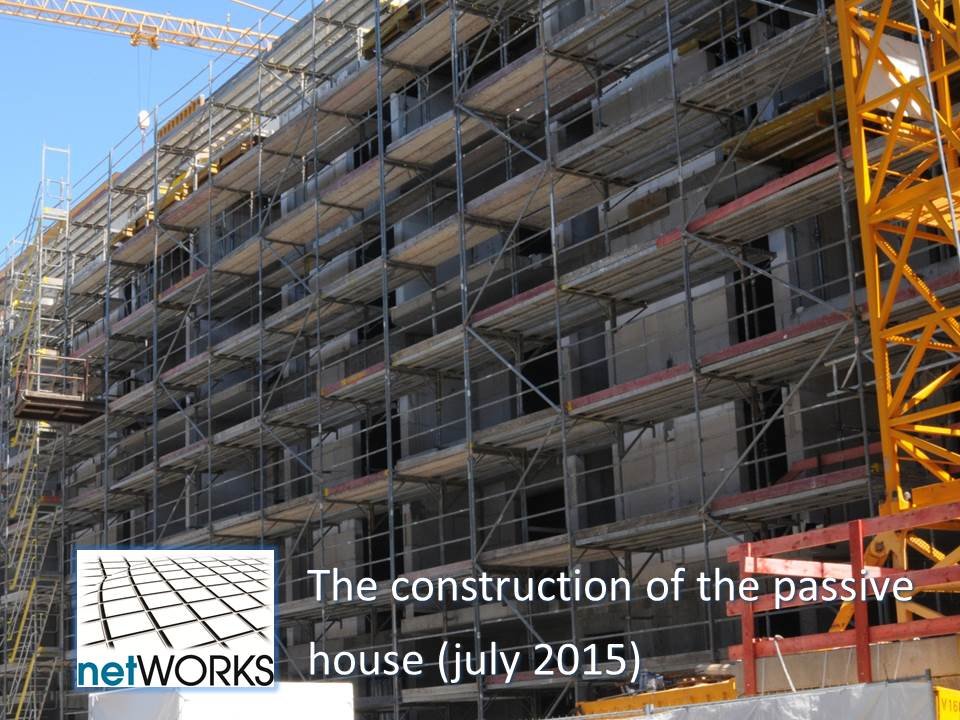
Sustainable architecture is the design and construction of buildings intended to minimize negative environmental impact across their entire life cycle, from the extraction of raw materials through construction, decades of operation, and eventual demolition or reuse. It treats a building not as a finished object but as an ongoing exchange of energy, water, and materials with its surrounding environment, and it tries to make that exchange as light as possible without sacrificing the comfort, safety, or durability occupants expect. The field draws on physics, ecology, materials science, and economics simultaneously, since a design choice that saves energy but requires environmentally destructive materials or an unaffordable budget rarely counts as genuinely sustainable.
Core Strategies
Passive design strategies come first in most sustainable projects because they reduce energy demand before any mechanical system is even specified. Orienting a building to capture winter sun while blocking summer sun, using thermal mass to store and slowly release heat, and designing for natural cross-ventilation can all cut heating and cooling loads substantially with no ongoing energy cost. Building envelope performance, meaning the insulation, air sealing, and window quality of the exterior shell, is widely considered the single highest-leverage factor, since a leaky, poorly insulated envelope forces mechanical systems to work far harder no matter how efficient those systems are individually. Beyond the envelope, designers specify high-efficiency heating, cooling, and lighting systems, often paired with on-site renewable generation such as rooftop solar, and increasingly specify low-carbon materials such as mass timber or recycled steel in place of conventional concrete, whose cement component is a major global source of carbon dioxide emissions.
Certification Systems
Several voluntary certification systems have emerged to verify and publicize sustainable performance, giving building owners a recognizable credential and giving architects a checklist to design against. LEED, developed by the U.S. Green Building Council, remains the most widely used system internationally, scoring projects across categories including energy, water, materials, and indoor environmental quality to award Certified, Silver, Gold, or Platinum ratings. BREEAM, the older British equivalent, and the German DGNB and Passive House standards serve similar functions in their respective regions, with Passive House in particular setting an unusually strict, performance-based energy limit rather than a checklist of design features. Critics note that certification can sometimes reward documentation and point-chasing over genuinely superior building performance, which is why post-occupancy energy monitoring has become an increasingly important supplement to certification at the design stage.
Water, Materials, and Site
Sustainable architecture extends well beyond energy. Water-conscious design incorporates low-flow fixtures, greywater recycling, and permeable paving that lets stormwater soak into the ground rather than overwhelming municipal sewer systems during heavy rain. Material selection increasingly favors products with published environmental product declarations, allowing designers to compare the embodied carbon of competing materials the way they might compare their cost. Site-level strategies such as preserving existing trees, limiting impervious paved surfaces, and designing to reduce the urban heat island effect round out a holistic approach that treats the building and its immediate landscape as a single system rather than separate design problems handled by different consultants.
Economic and Regulatory Momentum
What began as a niche practice associated with a handful of environmentally minded architects has become increasingly mainstream, driven by rising energy costs, tightening building codes, and growing investor demand for certified green buildings in commercial real estate portfolios. Many cities and national governments now require minimum energy performance for new construction, and some jurisdictions are moving toward mandating all-electric buildings to eliminate on-site fossil fuel combustion entirely. Because operating costs over a building’s lifetime typically dwarf its initial construction cost, sustainable design decisions that cost more upfront frequently pay for themselves within years through reduced utility bills, a calculation that has made sustainability as much a financial argument as an environmental one in contemporary practice.
Notable Examples
A number of built projects have become reference points for sustainable architecture in practice. The Bullitt Center in Seattle, completed in 2013, was designed to meet the Living Building Challenge, an even stricter standard than LEED Platinum, generating all its own electricity on site and treating its own wastewater. Bosco Verticale in Milan incorporates hundreds of trees and thousands of shrubs across two residential towers, using vegetation to filter air pollution and moderate the building’s microclimate rather than relying solely on mechanical systems. The Edge in Amsterdam, once described as one of the most sustainable office buildings in the world, combines an extremely efficient envelope with a sensor network that adjusts lighting and temperature to individual desks based on real-time occupancy. These projects matter less as isolated showcases than as proof that the strategies described above, passive design, high-performance envelopes, renewable generation, and rigorous measurement, can be combined at a scale large developers and institutional owners are willing to replicate, which has gradually pulled sustainable design practices out of the niche category and into mainstream commercial construction.
Financing has adapted alongside the design practice itself, with green bonds and sustainability-linked loans now routinely funding large commercial developments on the condition that the completed building hits specific, independently verified energy and emissions targets, giving lenders as much stake in genuine performance as the certification bodies themselves.
None of this removes the underlying tension between upfront cost and long-term savings, and smaller developers without access to patient capital or green financing still often default to conventional construction simply because it remains cheaper to build in the short term, even where it costs more to operate for decades afterward.
Key facts
- Array
Quick checkWhy is the building envelope considered the highest-leverage factor in sustainable architecture?Show answer
A poorly insulated, leaky envelope forces heating and cooling systems to work much harder regardless of how efficient those systems are, so improving the envelope reduces energy demand before any mechanical system is even chosen.
Sources
- Array
Editorially reviewed by Specialty Digest Editorial TeamLast reviewed November 3, 2026Researched and drafted with AI assistanceReport an issue