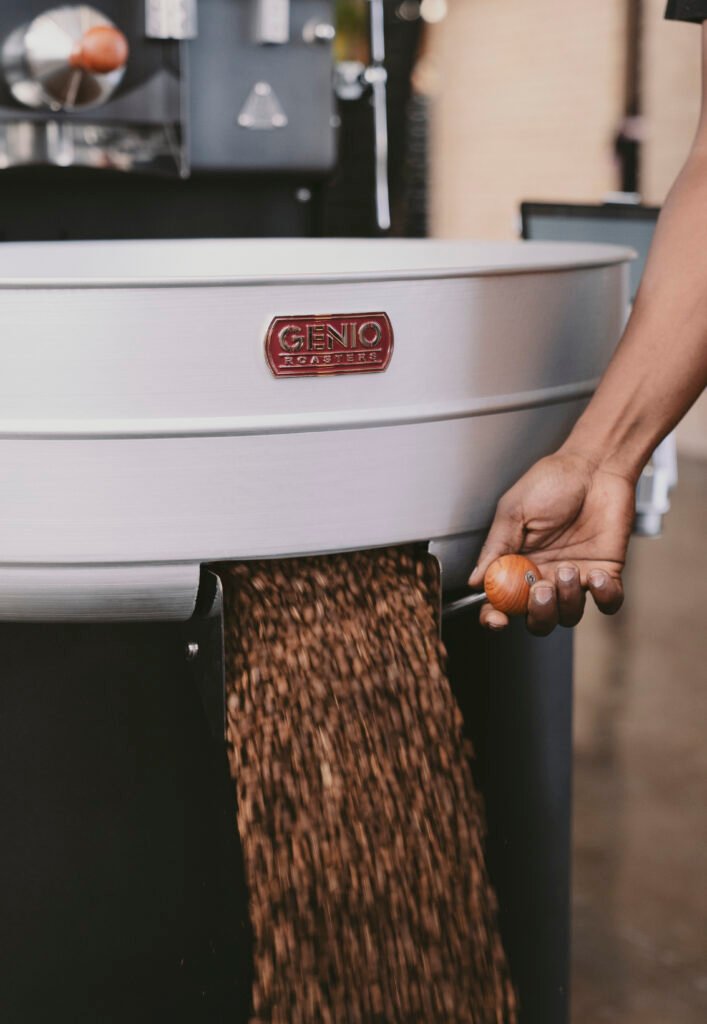
Coffee roasting is the process of heating raw, green coffee beans to transform them chemically and physically into the aromatic brown beans used to brew coffee. Roasting is widely considered one of the most influential steps in determining a coffee’s final flavor, often rivaling or exceeding the impact of the bean’s origin or brewing method.
The Roasting Process
Green coffee beans are heated in a rotating drum or hot air roaster, passing through several distinct physical and chemical transformations as internal temperature rises, including the Maillard reaction, which develops color and complex flavor compounds, and eventually audible cracking sounds called first crack and second crack that mark key structural changes in the bean as trapped moisture and gases expand and escape. Roasters monitor bean color, smell, and the timing of these cracks closely, since even a difference of seconds near the end of a roast can meaningfully change the final flavor profile.
Roast Levels and Flavor
Light roasts, stopped shortly after first crack, tend to preserve more of the bean’s original origin character, including brighter acidity and more distinct fruit or floral notes tied to where the coffee was grown. Medium roasts balance origin character with developed roast flavors like caramel and nuttiness, while dark roasts, taken well past second crack, develop pronounced roasted, sometimes smoky or bitter flavors that can overshadow more delicate origin characteristics, which is part of why specialty coffee roasters favoring origin distinctiveness tend to roast lighter than traditional commercial roasters.
Degassing and Freshness
Freshly roasted beans continue releasing carbon dioxide for days after roasting, a process called degassing, which is why many coffee professionals recommend resting beans for a short period before brewing, since beans used too soon after roasting can produce uneven extraction due to trapped gas interfering with water contact. Roasted coffee also loses flavor progressively after roasting as aromatic compounds oxidize and dissipate, making freshness a significant factor in coffee quality that has driven growing interest in locally roasted, rapidly distributed specialty coffee over beans roasted far in advance and shipped long distances.
Equipment and Roast Profiles
Commercial roasters use drum or fluid-bed machines that apply controlled heat while constantly moving beans to prevent scorching, tracking bean temperature and time on a roast profile curve. Roasters adjust charge temperature, airflow, and drum speed to hit target development times, since beans roasted too quickly can taste underdeveloped and grassy while those roasted too slowly can taste flat and baked.
Origin and Bean Characteristics
Green coffee from different origins responds differently to roasting due to variations in density, moisture content, and sugar composition shaped by altitude, variety, and processing method. High-altitude Arabica beans from regions like Ethiopia or Colombia tend to be denser and benefit from slower roast curves, while beans processed using natural or honey methods carry more residual fruit sugars that caramelize distinctively during roasting.
Specialty Coffee Movement
The rise of specialty coffee shifted roasting philosophy toward lighter roasts that preserve origin character, acidity, and distinct flavor notes rather than the darker, more uniform roasts common in mass-market coffee. Specialty roasters often publish detailed origin information and cupping scores, and many participate in direct trade relationships with producers to secure specific lots prized for unique flavor profiles.
Storage and Freshness
Roasted coffee begins losing its best flavor characteristics within days to weeks as aromatic compounds oxidize and volatile oils degrade, making freshness a central concern for roasters and consumers alike. Properly roasted beans are allowed to rest for a short degassing period after roasting, since carbon dioxide released during roasting can interfere with extraction if brewed too soon, but beyond this window, flavor steadily declines. Specialty roasters typically print roast dates on packaging rather than vague best-by dates, encouraging buyers to consume coffee within a few weeks of roasting for peak quality. Storage recommendations generally favor airtight, opaque containers kept away from heat, light, and moisture, since all three accelerate staling; freezing whole beans in sealed portions can extend freshness for longer-term storage, though repeated temperature cycling from opening and closing a container introduces condensation that can degrade quality faster than stable room-temperature storage in the right container.
Decaffeination and Processing Interplay
Decaffeinated coffee undergoes caffeine removal before roasting, using methods such as the Swiss Water Process, which relies on water and activated carbon rather than chemical solvents, or solvent-based methods using ethyl acetate or methylene chloride under controlled conditions. Because decaffeination alters bean structure and moisture content, roasters often adjust their roast profiles specifically for decaf beans, which tend to brown faster and require closer monitoring to avoid scorching. This interplay between prior processing steps and roasting technique illustrates how roasting is never an isolated step but the final stage in a chain of decisions beginning at the farm and continuing through every intermediate processing choice.
Cupping as a Quality Benchmark
Professional cupping, a standardized sensory evaluation protocol, allows roasters and buyers to score coffee on fragrance, flavor, acidity, body, and aftertaste using a consistent methodology across origins and roast dates. This shared vocabulary and scoring framework lets specialty buyers compare lots objectively before committing to large purchases, anchoring pricing and sourcing decisions in sensory evidence rather than reputation alone.
Roasting for Espresso Versus Filter
Beans destined for espresso are often roasted slightly darker and longer than those intended for filter brewing, since the concentrated extraction method of espresso can emphasize acidity and underdeveloped flavors that filter brewing handles more gently. Roasters frequently maintain separate profiles for the same origin lot depending on its intended brew method, reflecting how roasting decisions must anticipate the final preparation technique rather than treating roasting as a single universal standard.
Key facts
- First crack and second crack mark key structural stages in roasting.nLight roasts preserve more origin character; dark roasts develop stronger roast flavor.nFreshly roasted beans continue releasing carbon dioxide, called degassing.nCoffee flavor progressively declines after roasting due to oxidation.
Quick checkWhat is first crack in coffee roasting?Show answer
First crack is an audible cracking sound during roasting caused by trapped moisture and gases expanding and escaping, marking a key structural change in the bean.
Sources
- Specialty Coffee Association, Coffee roasting science research
Editorially reviewed by Specialty Digest Editorial TeamLast reviewed November 3, 2026Researched and drafted with AI assistanceReport an issue