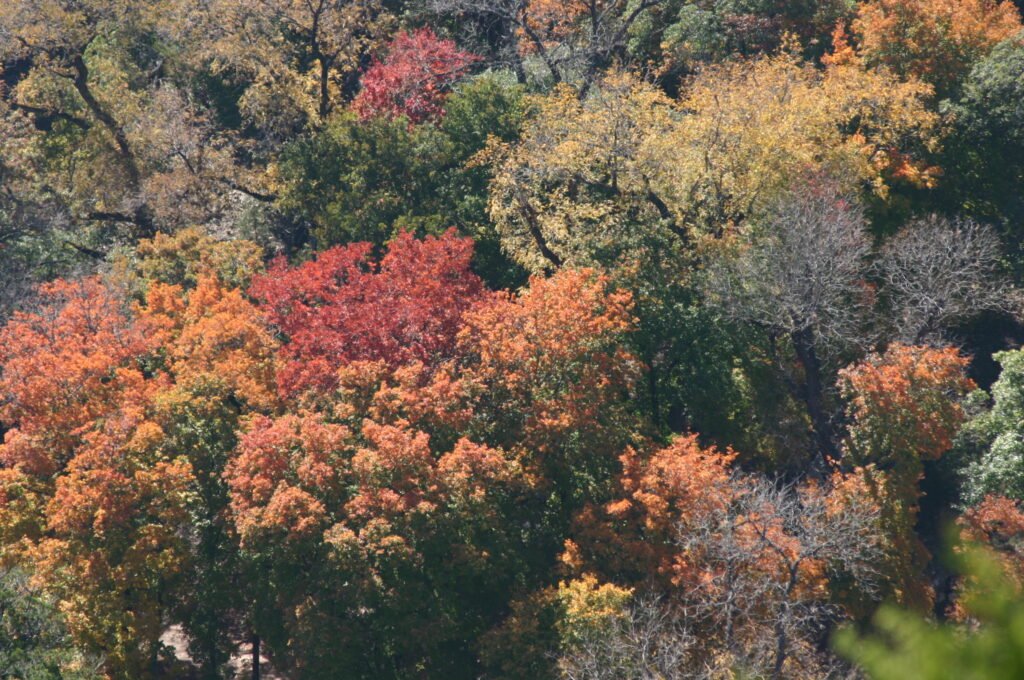
A deciduous forest is a forest ecosystem dominated by tree species that shed their leaves seasonally, typically in autumn in temperate climates, as an adaptation to conserve water and energy during cold winters or dry seasons.
Seasonal Leaf Drop Adaptation
Deciduous trees shed their leaves to avoid the metabolic cost of maintaining foliage during periods when water uptake through frozen or dry soil becomes difficult, and the visible color change preceding leaf drop occurs as chlorophyll breaks down and reveals other pigments that had been masked by green chlorophyll throughout the growing season. This seasonal cycle of leaf-out and leaf drop creates a dramatically different forest canopy and microclimate across the year compared with evergreen forest types.
Global Distribution
Temperate deciduous forests occur primarily in eastern North America, much of Europe, and parts of East Asia, regions sharing a climate pattern of warm, wet summers and cold winters that favors deciduous over evergreen tree strategies, while tropical deciduous forests in some monsoon-influenced regions shed leaves seasonally in response to dry periods rather than cold temperatures. Each of these major deciduous forest regions developed largely independent but ecologically similar plant communities adapted to their respective seasonal climate patterns.
Understory and Seasonal Light Dynamics
Because deciduous canopy is leafless for part of the year, understory plants in deciduous forests often take advantage of the brief high-light window in early spring before canopy leaf-out, a strategy seen in many spring ephemeral wildflowers that complete much of their annual growth and flowering cycle before the closing canopy shades the forest floor for the rest of the growing season.
Wildlife Adaptations
Wildlife in deciduous forests have adapted to the strong seasonal changes in food availability and cover, with many species relying heavily on fall mast crops like acorns and nuts to build fat reserves before winter, while others migrate seasonally or hibernate to cope with reduced food availability during the leafless winter months.
Forestry and Management Considerations
Deciduous forest management often targets valuable hardwood species for furniture and flooring lumber, with silvicultural prescriptions carefully timed around the forest’s seasonal growth cycle, and many deciduous forest regions have experienced significant historical clearing for agriculture followed by substantial regrowth as farmland has been abandoned in some areas over the past century.
Deciduous Forest Soil Dynamics
The annual cycle of leaf drop in deciduous forests contributes substantial organic matter to forest soil each autumn, supporting a distinct decomposer community of fungi, bacteria, and invertebrates that break down leaf litter and recycle nutrients back into forms available for plant uptake, a nutrient cycling process that happens on a markedly different seasonal rhythm than in evergreen coniferous forests with more continuous litter input.
Fall Color and Tourism
The vivid color changes preceding leaf drop in many deciduous forest regions have become a significant tourism draw, supporting substantial seasonal economic activity in areas known for dramatic autumn foliage displays, with timing and intensity of color change varying year to year based on temperature and moisture conditions during the preceding growing season.
Deciduous Forests and Wildlife Timing
Many wildlife species in deciduous forests time breeding and migration to coincide with the brief spring window of high light and insect abundance that follows leaf-out, illustrating how deeply the seasonal rhythm of a deciduous forest shapes the broader ecological calendar of the entire ecosystem it supports.
Deciduous Forest Response to Climate Change
Shifting temperature and precipitation patterns are altering the timing of leaf-out and leaf drop in many deciduous forest regions, with some areas experiencing earlier spring leaf emergence and delayed autumn color change, shifts that can disrupt the carefully timed relationships between tree phenology and the wildlife species that depend on predictable seasonal cues for breeding and migration.
Historical Clearing and Regrowth Patterns
Much of the deciduous forest standing today in regions like eastern North America represents regrowth on land cleared for agriculture one or more centuries ago and later abandoned, meaning these forests, while ecologically valuable, often differ in species composition and structure from the original forest cover present before widespread agricultural clearing began.
As climate shifts continue to reshape seasonal timing, deciduous forests will likely keep offering some of the clearest and most visible signals of broader ecological change occurring across temperate landscapes.
Deciduous Forest Conservation Priorities
Conservation efforts in deciduous forest regions increasingly focus on protecting remaining mature stands while also managing the much larger area of regrowing secondary forest for both timber value and the gradual restoration of greater structural and species diversity over coming decades.
That blend of tradition and foliage science continues to make deciduous forests among the most studied and culturally resonant forest types in the temperate world.
Looking Ahead for Deciduous Forests
Continued monitoring of leaf-out and color-change timing across many deciduous forest regions will remain a valuable, accessible indicator for tracking how climate change is affecting temperate ecosystems in ways ordinary observers can witness directly each year.
That accessibility is part of why deciduous forest phenology has become a popular subject for citizen science monitoring programs tracking climate change impacts across broad geographic areas.
Few forest types offer such a visible, seasonal reminder of how closely plant and animal life remain tied to climate patterns across the temperate world.
That seasonal visibility keeps deciduous forests at the center of public engagement with forest ecology more broadly.
From budding leaves in spring to bare branches in winter, the deciduous forest offers one of nature’s most reliable yearly calendars.
That rhythm has shaped human culture, agriculture, and art in these regions for as long as people have lived among these trees.
Key facts
- Trees shed leaves to conserve water and energy seasonally;Major regions include eastern North America, Europe, and East Asia;Understory plants often exploit the brief high-light window before leaf-out
Quick checkWhy do deciduous trees shed their leaves in autumn?Show answer
To conserve water and energy during winter when water uptake through cold or frozen soil becomes difficult
Sources
- Temperate forest ecology textbooks
Editorially reviewed by Specialty Digest Editorial TeamLast reviewed November 3, 2026Researched and drafted with AI assistanceReport an issue