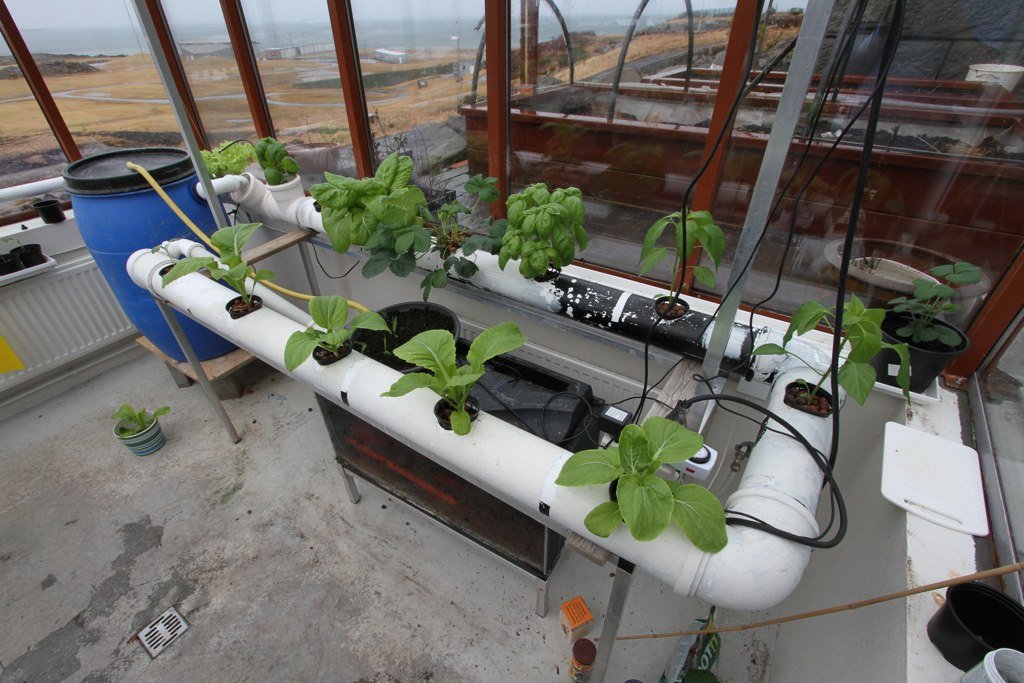
Aquaponics is a food production method that combines fish farming with hydroponic plant cultivation in a single integrated system, where fish waste provides nutrients for plants and the plants help filter and clean the water that returns to the fish. This closed-loop design allows both fish and vegetables to be produced together using substantially less water than conventional separate farming and fish-raising systems.
How the System Works
Fish are raised in tanks, and the ammonia-rich waste they produce is converted by beneficial bacteria into nitrates that plants can absorb as fertilizer, typically in a separate grow bed connected by circulating water. The cleaned water, now stripped of much of its nitrogen content by the plants’ roots, flows back to the fish tank, creating a continuous cycle that reduces the need for added fertilizer or frequent water changes.
Common System Designs
Media-based systems use grow beds filled with gravel or expanded clay to physically support plant roots while hosting the bacteria that convert fish waste, making them popular for smaller or hobbyist setups. Larger commercial operations more often use floating raft systems, where plants grow with their roots suspended directly in nutrient-rich water, or nutrient film technique systems that circulate a thin film of water past plant roots in enclosed channels.
Suitable Species
Tilapia is the most commonly farmed fish in aquaponics systems due to its tolerance for the fluctuating water conditions typical of these setups, though other hardy species such as catfish and certain ornamental fish are also used depending on climate and market goals. Leafy greens, herbs, and certain fruiting vegetables like tomatoes and peppers are commonly grown in aquaponic systems because they thrive on the relatively modest nutrient levels these systems typically provide.
Advantages and Limitations
Aquaponics can use roughly ninety percent less water than traditional soil-based farming for comparable plant yields, since the same water continuously cycles between fish and plants rather than draining away, making it appealing in water-scarce regions. However, aquaponic systems require careful balancing of fish stocking density against plant nutrient demand, and start-up costs along with the technical knowledge needed to maintain healthy bacterial populations can be significant barriers for new growers.
Scale of Use
Aquaponics ranges from small backyard and classroom setups built for education and hobby use to larger commercial operations supplying local restaurants and farmers markets with fresh fish and produce. While it remains a far smaller contributor to overall food production than conventional fish farming or agriculture, growing interest in sustainable and urban food systems has expanded commercial aquaponics in recent years.
Energy and Operating Considerations
Most aquaponics systems require continuous electricity to run water pumps and, in some climates, supplemental lighting or heating, making reliable power access and energy costs important factors in overall system viability. Solar-powered aquaponics setups have been piloted in off-grid and developing-world contexts specifically to address this energy dependency while still capturing the water-saving benefits the technique offers.
Educational and Community Uses
Aquaponics has become a popular teaching tool in schools and community programs because it visibly demonstrates nutrient cycling, biology, and sustainable food production principles in a single, relatively compact system that students can observe directly. Community and urban aquaponics projects have also been used specifically to improve local food access in areas with limited land suitable for conventional agriculture.
Comparing Aquaponics to Hydroponics Alone
Pure hydroponic systems grow plants in nutrient solution without fish, relying on manufactured fertilizer rather than fish waste, which generally allows more precise nutrient control but forgoes the dual food output and the particular water-saving dynamic that aquaponics offers. The choice between the two approaches often comes down to whether a grower specifically values the combined fish and vegetable output enough to manage the added biological complexity aquaponics introduces.
Looking Ahead
Interest in aquaponics continues to grow alongside broader movements toward urban agriculture and local food production, even though it remains a niche approach compared with either conventional fish farming or soil-based horticulture on their own. Research into optimizing fish-to-plant ratios and expanding the range of commercially viable crop and fish combinations is likely to continue supporting modest growth in commercial aquaponics operations.
Related Specialties
Aquaponics sits at the intersection of aquaculture, horticulture, and microbiology, since the beneficial bacteria converting fish waste into plant nutrients are just as essential to a functioning system as the fish and plants themselves.
Economic Considerations
Aquaponics systems carry a distinctive cost structure compared with either standalone fish farming or standalone hydroponics, since the combined system requires more sophisticated monitoring and a wider skill set from the operator. Commercial-scale aquaponics has struggled in many markets to match the simple per-unit economics of separate fish and vegetable operations, partly because balancing fish stocking density against plant nutrient demand limits how much either side of the system can be pushed toward maximum output. Smaller and mid-sized operations have found more success selling directly to local restaurants, farmers markets, and community-supported agriculture programs, where a premium can be charged for fresh, locally grown, pesticide-free produce grown alongside farmed fish. Startup costs for a well-built system, including tanks, grow beds, pumps, and backup power, can be substantial, and new operators are often advised to begin with a smaller pilot system to learn the balancing act between fish and plant needs before scaling up. Energy costs for pumping, aeration, and in colder climates heating are a recurring expense that has to be weighed against the value of water and nutrient savings the system provides.
Workforce and Training
Successful aquaponics operators typically need working knowledge of both fish husbandry and plant science, a combination that few traditional training programs cover together. Specialized courses, online communities, and hands-on apprenticeships at established farms have become the main ways new growers build the cross-disciplinary skills needed to keep both halves of the system healthy and productive at the same time.
Key facts
- Fish waste fertilizes plants, which help clean the water.|Common designs include media beds, floating rafts, and nutrient film systems.|Tilapia is the most common fish used.|Uses roughly 90 percent less water than soil-based farming.
Quick checkHow does aquaponics reduce water use compared to regular farming?Show answer
Aquaponics reuses the same water continuously between fish tanks and plant beds instead of letting it drain away, dramatically cutting the total water needed.
Sources
- FAO Fisheries and Aquaculture Department
Editorially reviewed by Specialty Digest Editorial TeamLast reviewed November 3, 2026Researched and drafted with AI assistanceReport an issue