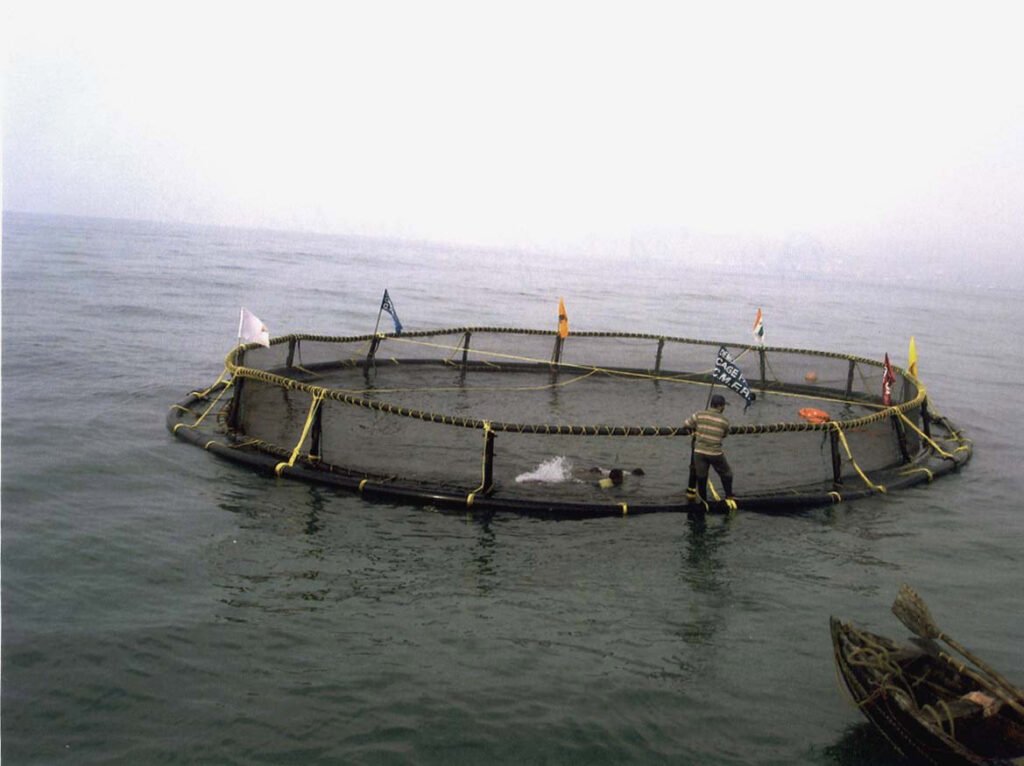
Aquaculture is the farming of fish, shellfish, and aquatic plants under controlled conditions, as distinct from capture fisheries, which harvest wild populations from oceans, rivers, and lakes. It ranges from small freshwater fish ponds and coastal shrimp farms to large offshore cages holding hundreds of thousands of salmon, and it has grown from a relatively minor contributor to the world’s seafood supply into the single largest source of aquatic animal production on the planet.
A historic milestone: aquaculture overtakes wild-catch fisheries
According to the United Nations Food and Agriculture Organization’s State of World Fisheries and Aquaculture 2024 report, global aquaculture produced about 130.9 million tonnes in 2022, including 94.4 million tonnes of aquatic animals such as fish, shrimp, and mollusks, with the remainder made up of farmed algae. That 94.4 million tonnes represented 51 percent of total global aquatic animal production that year, the first time in history that farmed aquatic animals outnumbered wild-caught ones, a milestone the FAO describes as a structural shift in how the world gets its seafood rather than a temporary swing in the data.
Where and how aquaculture happens
Aquaculture takes several distinct forms depending on species and location. Pond-based freshwater aquaculture, common across much of Asia, raises species such as carp and tilapia in constructed or natural ponds. Coastal and brackish-water aquaculture farms shrimp and certain fish species in tidal areas, while open-ocean cage aquaculture, used heavily for Atlantic salmon in countries such as Norway and Chile, holds fish in large netted enclosures anchored in coastal or offshore waters. Mollusk farming, including oysters and mussels grown on ropes or racks suspended in the water column, requires no feed input at all, since the animals filter naturally occurring plankton from the surrounding seawater, making it one of the lower-impact forms of aquaculture per unit produced.
Scale, value, and the leading producers
The FAO estimates the first-sale value of global aquaculture at about 313 billion dollars, out of 472 billion dollars for all fisheries and aquaculture combined, meaning farmed seafood now generates a clear majority of the sector’s total economic value as well as its total volume. Ten countries account for more than 89.8 percent of global aquatic animal production from fisheries and aquaculture combined: China, Indonesia, India, Vietnam, Bangladesh, the Philippines, South Korea, Norway, Egypt, and Chile, with China alone responsible for roughly 36 percent of total aquatic animal output, reflecting decades of sustained government investment in freshwater and coastal aquaculture infrastructure.
Environmental and health considerations
Aquaculture’s environmental footprint varies enormously by method and species. Open-cage finfish farming can release concentrated nutrient waste and uneaten feed into surrounding waters, contributing to localized water pollution and, in poorly sited or poorly managed operations, to algal blooms, while farmed fish escaping their enclosures can interbreed with or spread disease to wild populations. Many aquaculture feeds also rely partly on wild-caught fish processed into fishmeal and fish oil, which has drawn criticism for effectively converting wild fish stocks into farmed fish rather than fully replacing wild-catch pressure, although the industry has shifted toward plant-based and algae-based feed alternatives to reduce that dependence. Shellfish and seaweed aquaculture generally carry a much lighter environmental footprint, since they require no feed input and in some cases can even help filter excess nutrients from coastal waters, which is why some conservation groups actively promote expanding these lower-impact categories even while raising concerns about finfish farming’s drawbacks.
A long history and newer technology
Aquaculture is far from a modern invention: carp farming in ponds is documented in China as early as around 2000 BCE, and freshwater fish culture also has deep historical roots in ancient Egypt and across much of Southeast Asia, long before refrigeration or modern transport made wild-caught fish from distant waters widely available. What has changed dramatically in recent decades is scale and technology. Recirculating aquaculture systems, which filter and reuse water in enclosed tanks rather than relying on a constant flow of fresh water or open ocean exchange, allow fish farming in locations far from a coastline and with much tighter control over water quality, temperature, and disease, though the equipment and energy costs involved make these systems more expensive to build and operate than traditional ponds or open-water cages. Selective breeding programs have also substantially improved growth rates and disease resistance in major farmed species over the past several decades, contributing to higher yields from the same amount of water and feed.
Why aquaculture keeps growing
Demand for seafood has risen steadily as the global population has grown and diets have shifted, while wild-catch fisheries have largely plateaued or declined in many regions due to overfishing and depleted stocks, leaving aquaculture as the primary source of growth in global seafood supply. The FAO projects total aquatic animal production to rise roughly 10 percent by 2032, a forecast driven almost entirely by continued aquaculture expansion alongside a modest recovery in some capture fisheries, rather than by any expected rebound in overall wild-catch volume. Governments in major producing countries have generally supported this expansion through infrastructure investment, research into disease-resistant broodstock, and improved feed efficiency, treating aquaculture as a strategic tool for food security as wild fish populations face mounting pressure.
FAQs
Is farmed fish less nutritious than wild-caught fish? Not necessarily. Nutritional content varies by species, feed, and farming method rather than by farmed status alone; some farmed fish, such as salmon, can have comparable or even higher fat content than their wild counterparts depending on how they are raised and fed.
Does aquaculture reduce pressure on wild fish populations? It can, by supplying seafood demand without directly depleting wild stocks, but the benefit is partial where farmed species are fed fishmeal made from wild-caught fish, which is why shellfish, seaweed, and improved feed formulations are often highlighted as the aquaculture methods with the clearest net benefit for wild fish conservation.
Key facts
- 130.9 million tonnes produced globally in 2022 (FAO)
- 2022: first year farmed aquatic animals outnumbered wild-caught ones (51%)
- First-sale value ~USD 313 billion of a USD 472 billion fisheries+aquaculture total
- Top 10 countries produce over 89.8% of global output; China ~36%
Related concepts
Quick checkDoes aquaculture reduce pressure on wild fish populations?Show answer
Partly: it can, but farmed species fed on wild-caught fishmeal only partially offset wild-catch pressure.
Sources
- FAO. The State of World Fisheries and Aquaculture 2024 (SOFIA). 2024 (accessed 2026-11-01)
Editorially reviewed by Specialty Digest Editorial TeamLast reviewed November 1, 2026Researched and drafted with AI assistanceReport an issue