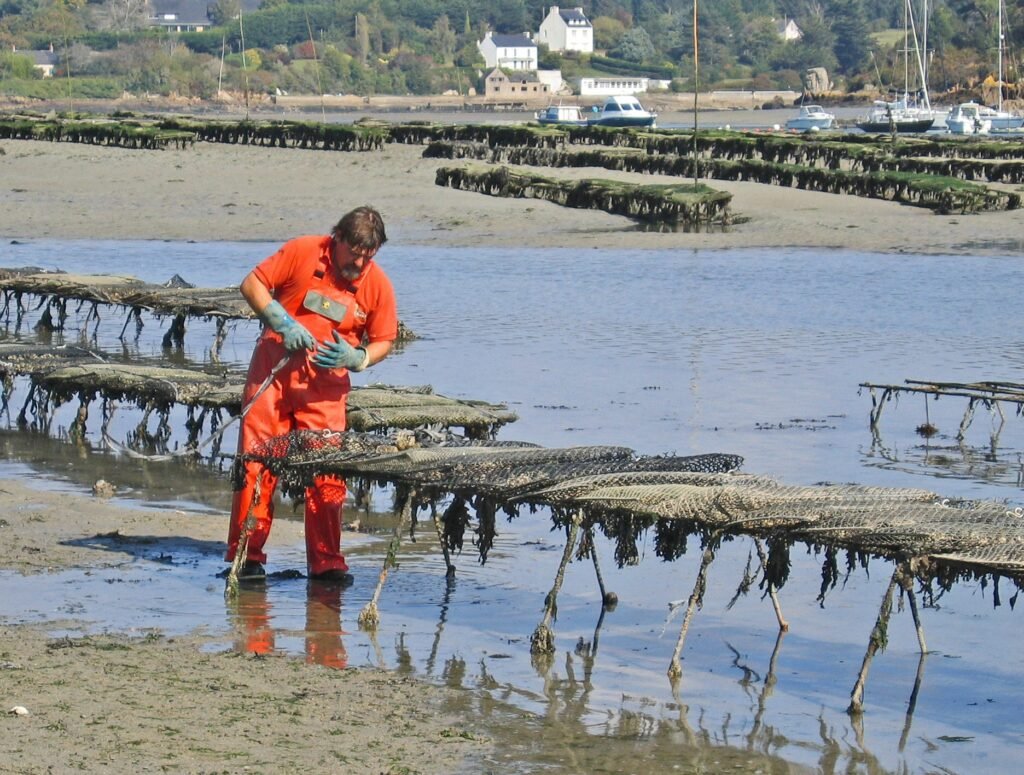
Shellfish farming is the cultivation of mollusks such as oysters, mussels, clams, and scallops in coastal or offshore waters, typically using methods that rely on the shellfish’s natural ability to filter food from the surrounding water rather than requiring manufactured feed. It represents one of the most resource-efficient forms of aquaculture, since farmed shellfish feed themselves on naturally occurring plankton and organic matter.
Common Cultivation Methods
Oysters are often grown in suspended mesh bags, cages, or on racks positioned in the intertidal zone or shallow subtidal waters, allowing farmers to control growth density and protect young oysters from predators. Mussels are frequently grown on ropes or long suspended lines hanging from floating rafts, letting them attach naturally and grow in the water column where plankton is abundant, while clams are typically seeded directly into prepared intertidal or subtidal sediment plots.
Why Shellfish Need No Added Feed
Because oysters, mussels, and clams are filter feeders that extract phytoplankton and other suspended organic particles directly from seawater, shellfish farming avoids the feed costs and feed-sourcing environmental concerns that affect fish farming for carnivorous species. This filter-feeding habit also means shellfish farms can provide a genuine water quality benefit, since a single oyster can filter many gallons of water each day while feeding.
Site Selection and Water Quality
Successful shellfish farming depends heavily on clean water with adequate plankton levels and stable salinity, which is why most farms are sited in estuaries, bays, and coastal areas with good tidal flow and minimal pollution. Many regions require regular water quality testing and can temporarily close shellfish farms to harvesting if contamination, such as harmful algal blooms or bacterial pollution, is detected, since shellfish readily concentrate contaminants from the water they filter.
Economic and Ecological Role
Shellfish farming supports significant coastal employment in many regions and has expanded rapidly in places such as the Pacific Northwest, the Gulf Coast, and parts of Europe and Asia, often alongside efforts to restore natural shellfish reef habitats that provide additional ecosystem benefits. Restored and farmed oyster reefs in particular can help stabilize shorelines and provide habitat for other marine species, giving shellfish farming an ecological value beyond food production alone.
Challenges Facing the Industry
Ocean acidification, driven by rising atmospheric carbon dioxide, can interfere with young shellfish’s ability to form shells properly, posing a long-term threat to shellfish farming in some regions. Coastal development, water pollution from upstream sources, and increasingly frequent harmful algal blooms linked to warming waters also create ongoing challenges for maintaining the clean water conditions shellfish farming depends on.
Harvesting and Processing
Shellfish are typically harvested by hand or with simple mechanical tools once they reach market size, then sorted, cleaned, and often held briefly in clean water tanks to allow them to purge sand and grit before sale. Processing for products like shucked oysters or packaged mussel meat adds an additional labor-intensive step that supports further employment beyond the farming operation itself.
Regulatory Oversight
Because shellfish can concentrate bacteria, viruses, and toxins from the water they filter, most countries maintain strict water quality monitoring and classification systems for shellfish growing areas, with mandatory closures when contamination is detected. These food safety systems are essential to maintaining consumer confidence and preventing illness, given that some shellfish, particularly oysters, are often eaten raw.
Restoration Connections
Techniques developed for commercial shellfish farming, including hatchery production of larvae and methods for attaching young shellfish to structures, have been directly applied to oyster and mussel reef restoration projects aimed at rebuilding natural habitat rather than producing food for sale. This overlap between commercial and restoration shellfish work has strengthened collaboration between industry, researchers, and conservation organizations in several coastal regions.
Looking Ahead
Growing interest in low-impact protein sources is expected to support continued expansion of shellfish farming in many coastal regions, particularly as its minimal feed and water quality benefits align well with broader sustainability goals in food production. Climate adaptation research, aimed at developing more resilient shellfish strains and farming practices suited to changing ocean chemistry, is likely to remain an active area of investment.
Related Specialties
Shellfish farming draws on marine biology, water quality science, and food safety regulation together, reflecting the close connection between healthy coastal ecosystems and a viable shellfish industry.
Economic Considerations
Shellfish farming tends to have a more favorable cost profile than finfish aquaculture, since most bivalve species do not require manufactured feed, drawing their nutrition instead from naturally occurring plankton in the surrounding water. This keeps operating costs relatively low once gear is in place, though the upfront investment in lines, cages, racks, or rafts, along with the vessels and equipment needed to tend them, can still be significant. Growout times vary by species and region, with oysters often reaching market size in one to three years and some clam and mussel species taking a similar span, which means farms need enough working capital to carry stock through that period before generating revenue. Market prices for shellfish can swing seasonally and are sensitive to water quality closures, which can shut down harvesting for weeks or months at a time following heavy rainfall or algal bloom events. Many successful shellfish operations diversify across multiple species or combine farming with tourism, such as farm tours and tasting experiences, to smooth out the revenue gaps that closures and seasonal demand can create.
Workforce and Training
Shellfish farm labor ranges from seasonal deckhands who help with planting and harvest to more specialized roles overseeing water quality monitoring and regulatory compliance. In many coastal communities, shellfish farming provides an important source of steady marine-sector employment, and apprenticeship arrangements with established growers remain a common path into the trade for newcomers.
Key facts
- Shellfish filter-feed naturally, requiring no manufactured feed.|Common methods include suspended cages, ropes, and seeded sediment plots.|Can improve water quality by filtering large volumes daily.|Threatened by ocean acidification and harmful algal blooms.
Quick checkWhy don't farmed shellfish need to be fed by farmers?Show answer
Shellfish like oysters and mussels are filter feeders that naturally extract plankton and organic particles directly from seawater, so farmers do not need to supply manufactured feed.
Sources
- NOAA Fisheries; FAO Fisheries and Aquaculture Department
Editorially reviewed by Specialty Digest Editorial TeamLast reviewed November 3, 2026Researched and drafted with AI assistanceReport an issue