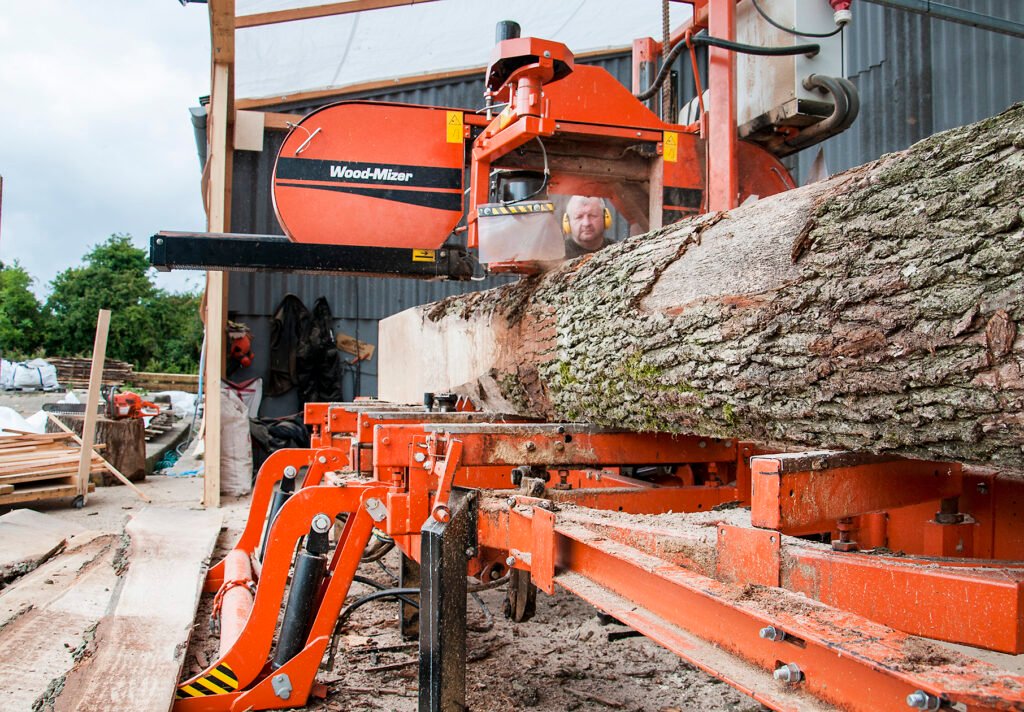
A sawmill is a facility where logs are cut into lumber, boards, and other sawn wood products using large saws and processing equipment. Sawmills form the critical link between forest harvesting and the construction, furniture, and paper industries, converting raw round logs into standardized dimensional products that builders and manufacturers can use directly.
Sawmill Operations
Logs arriving at a sawmill are first debarked and sorted by species and diameter before being cut along their length using band saws, circular saws, or large gang-saw systems designed to maximize the volume of usable lumber extracted from each log. Modern mills increasingly use computer-controlled scanning systems that analyze each log shape and internal defects to calculate the most efficient cutting pattern before the physical sawing even begins.
Byproducts and Efficiency
A substantial portion of each log, including bark, sawdust, and off-cuts, does not become finished lumber, but modern sawmills have become adept at converting these byproducts into wood pulp, particleboard feedstock, biomass fuel, or mulch rather than treating them as waste. This drive toward near-total log utilization has become an important part of sawmill economics, since byproduct sales can meaningfully offset the cost of processing raw timber into finished lumber.
Mill Scale and Types
Sawmills range from small, portable operations capable of processing a handful of logs per day for local landowners to massive industrial facilities running continuously and processing hundreds of logs per hour using highly automated equipment. Portable and small mills often serve niche markets, custom orders, or remote areas where transporting raw logs to a larger facility would be impractical, while large mills achieve efficiency through scale and highly specialized machinery dedicated to specific log sizes and species.
Safety and Workforce
Sawmill work historically carried significant injury risk due to the large rotating blades and heavy log-handling equipment involved, prompting extensive safety regulation and the adoption of automated, remotely operated machinery that keeps workers further away from the most hazardous cutting operations. Modern mills increasingly rely on a smaller number of highly trained technicians to operate and maintain computerized systems rather than large crews performing manual cutting and sorting tasks.
Economic Considerations
Sawmill profitability depends heavily on log costs, lumber recovery rates, and the market price for finished lumber, which can fluctuate significantly with housing construction demand and broader economic conditions. Mills located closer to both timber supply and major lumber markets generally hold a cost advantage over more remote operations, since transportation represents a significant share of total cost for both incoming logs and outgoing finished lumber products.
Looking Ahead
Sawmills continue to invest in optimization software and scanning technology that extract more usable lumber from each log, a trend likely to accelerate as timber supply constraints in some regions put pressure on mills to improve yield rather than simply process more raw logs. Growing demand for mass timber products like cross-laminated panels is also prompting some mills to adjust their cutting patterns and product mixes to serve this expanding segment of the construction market.
Related Specialties
Sawmill operations are closely tied to lumber grading, since grading typically happens on the same production line immediately after boards are cut to size. Sawmilling also connects directly to forest management, as the species, size, and quality of timber harvested upstream directly shapes what a sawmill can economically produce.
Environmental Management
Modern sawmills face regulatory requirements covering air emissions from drying kilns, wastewater from log washing and processing, and noise affecting nearby communities, prompting investment in filtration, water treatment, and sound dampening equipment at many facilities. Many mills have also adopted certification programs verifying that the timber they process comes from legally harvested, sustainably managed forests, a credential increasingly demanded by environmentally conscious buyers and some regulatory markets.
Regional Variation
Sawmill design and scale vary considerably by region depending on the dominant local timber species, labor costs, and available capital, with some regions favoring many small, flexible mills suited to diverse hardwood species and others favoring a smaller number of massive softwood mills built around a narrow range of standardized products. These regional differences also shape export patterns, since mills built around a specific species or product type often find their most natural markets among buyers seeking exactly that specialization.
Byproduct Economics in Detail
The relative value of sawmill byproducts can sometimes influence cutting decisions themselves, since a mill that has secured a strong contract for pulp chips or biomass fuel may adjust its cutting patterns slightly to generate more of the byproduct a buyer wants, even if it means a small reduction in prime lumber yield. This interdependence between lumber production and byproduct markets has made some sawmills attentive to conditions in pulp, particleboard, and biomass fuel markets that might otherwise seem unrelated to their core lumber business.
Mill operators generally track lumber recovery rates closely as a key performance metric, since even small improvements in how efficiently logs convert into usable lumber can translate into meaningful gains in overall profitability over time.
Workforce training programs at larger sawmill operations increasingly combine traditional mechanical skills with instruction on computerized scanning and optimization systems.
Some sawmills now publish sustainability reports detailing their certified timber sourcing and byproduct utilization rates, responding to growing buyer interest in supply chain transparency.
Trade associations representing sawmill operators often provide market data and benchmarking tools that help individual mills compare their performance against regional and national industry averages.
Succession planning has become a growing concern for family-owned sawmills as experienced operators retire and newer automated systems require different skills from incoming staff.
Key facts
- Converts raw logs into dimensional lumber; modern mills use computer-guided scanning for cutting efficiency; byproducts feed pulp, particleboard, and biomass markets.
Quick checkWhat do modern sawmills typically do with bark, sawdust, and off-cuts?Show answer
Convert them into wood pulp, particleboard feedstock, biomass fuel, or mulch rather than discarding them as waste.
Sources
- Based on general forest products and sawmilling industry literature.
Editorially reviewed by Specialty Digest Editorial TeamLast reviewed November 3, 2026Researched and drafted with AI assistanceReport an issue