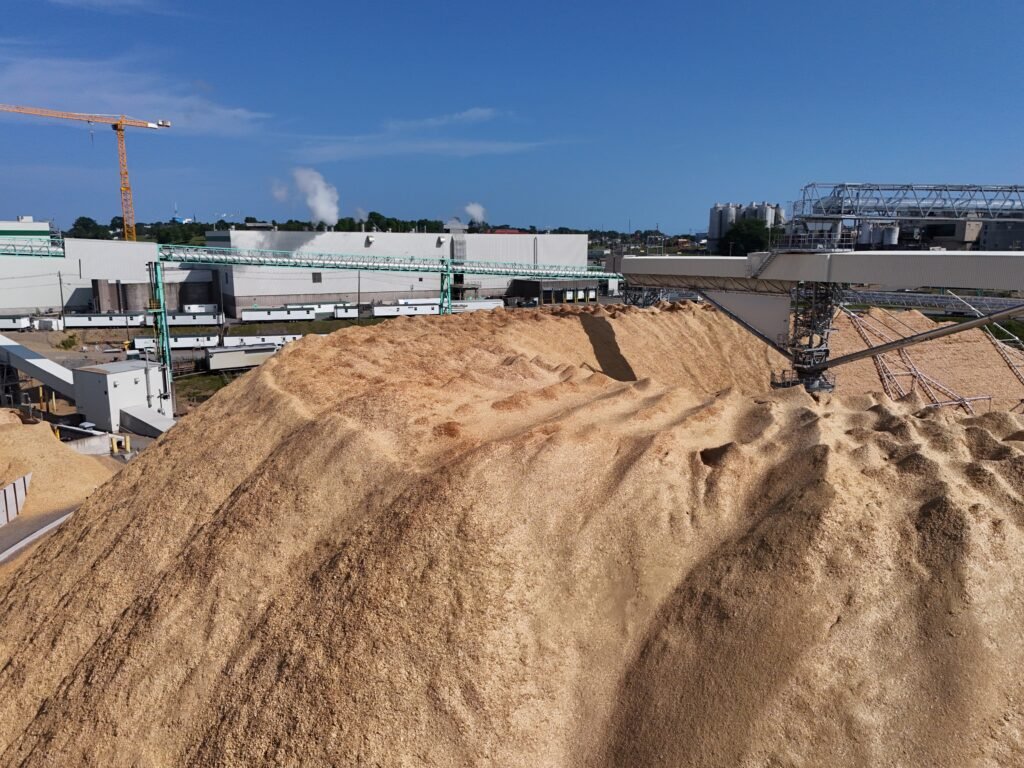
Wood pulp is a fibrous material produced by mechanically or chemically breaking down wood into its cellulose fibers, forming the primary raw material used to manufacture paper, cardboard, and a range of other cellulose-based products. Producing pulp separates the useful cellulose fibers from lignin and other wood components that would otherwise weaken paper or cause it to yellow over time.
Production Methods
Mechanical pulping grinds wood directly into fibers using high-pressure refiners, producing pulp efficiently but leaving most of the lignin intact, which limits the strength and longevity of the resulting paper. Chemical pulping, most commonly the kraft process, instead uses heat and chemical solutions to dissolve away lignin and other non-cellulose components, yielding stronger, more durable fibers at the cost of lower overall yield from each log processed.
Products and Byproducts
Beyond standard paper and cardboard, wood pulp feeds into specialty products such as tissue, dissolving pulp used in textiles like rayon, and various packaging materials. Modern pulp mills also recover chemical byproducts from the pulping process, including turpentine and lignin derivatives, and many mills burn residual organic material to generate a significant share of their own energy needs.
Recycled and Recovered Fiber
Recovered paper has become an increasingly important supplement to virgin wood pulp in many paper mills, reducing the demand for freshly harvested timber while providing a lower-cost fiber source for products where the highest strength and brightness are not required. Recycled fiber generally degrades in quality each time it is reprocessed, since fibers shorten and weaken with repeated recycling, which limits how many times paper can realistically be recycled before the fiber becomes unsuitable for most paper products.
Environmental Considerations
Pulp mills consume large quantities of water and energy and have historically been associated with significant air and water pollution, prompting decades of regulatory pressure and technological investment in cleaner production methods such as closed-loop water systems and chemical recovery processes. Many modern mills now generate a substantial share of their own electricity by burning biomass byproducts and recovered chemicals, reducing both waste output and reliance on external energy sources.
Economic Considerations
Pulp mill economics depend heavily on wood fiber costs, energy prices, and the global market price for finished pulp, which can swing significantly based on demand from paper, packaging, and textile manufacturers around the world. Large, capital-intensive mills benefit from economies of scale that smaller operations struggle to match, which has driven consolidation in the pulp industry even as demand for certain products, such as packaging for e-commerce shipments, has grown steadily in recent years.
Looking Ahead
Growing demand for sustainable packaging, driven partly by efforts to replace single-use plastics, has created new growth opportunities for wood pulp-based packaging materials, pushing some pulp mills to retool production toward specialty packaging-grade fiber. At the same time, dissolving pulp used in textile fibers like rayon and lyocell is drawing increasing interest as an alternative to synthetic fibers derived from petroleum, broadening the pulp industry customer base beyond traditional paper markets.
Related Specialties
Wood pulp production connects closely to sawmill operations, since many pulp mills rely on sawmill byproducts such as chips and sawdust as a significant portion of their raw material supply. It also overlaps with chemical engineering, given the complex chemical processes involved in separating cellulose fibers from lignin during chemical pulping.
Pulp Grades and Specifications
Different end uses demand pulp with distinct fiber length, strength, and brightness characteristics, which is why mills often specialize in producing pulp tailored to a specific downstream product such as newsprint, packaging board, or high-brightness printing paper. Softwood species generally yield longer fibers prized for strength in packaging applications, while hardwood species produce shorter fibers that contribute smoothness and printability valued in fine writing and printing papers.
Global Production Patterns
Pulp production capacity has shifted significantly over recent decades toward regions with abundant, fast-growing plantation timber and lower production costs, while demand growth has been strongest in rapidly developing economies with expanding packaging and paper needs. This has made wood pulp a significant global commodity, traded in large volumes between producing and consuming regions and subject to the same kinds of price cycles seen in other major commodity markets.
Semi-Chemical and Other Processes
Beyond the dominant mechanical and kraft chemical methods, semi-chemical pulping combines a mild chemical treatment with mechanical refining, offering a middle ground in terms of yield, fiber strength, and production cost that suits certain packaging and specialty paper applications. Mills choose among these processes based on the specific fiber properties their target paper products require and the relative cost of chemicals, energy, and wood supply available to them.
Ongoing research into alternative fiber sources, including agricultural residues and fast-growing non-wood plants, continues to explore supplementing traditional wood pulp in regions where timber supply is limited relative to paper demand.
Quality control throughout pulping remains essential, since inconsistent fiber properties can create problems later in paper machine runs and finished product performance.
Mills producing specialty pulp grades often maintain close working relationships with downstream paper and textile manufacturers to fine-tune fiber properties to exact customer specifications over time.
Mills located near coastal ports often specialize in export-oriented pulp production, taking advantage of efficient shipping access to serve distant international paper and textile manufacturers.
Continuous process improvements in chemical recovery have gradually reduced the environmental footprint of kraft pulping over recent decades.
Fiber testing laboratories play an important quality assurance role, verifying that pulp shipments meet the strength and brightness specifications promised to downstream paper manufacturers.
Long-term supply contracts between pulp mills and major paper manufacturers help stabilize pricing and production planning for both parties across market cycles.
Key facts
- Produced via mechanical or chemical processes; kraft process is the dominant chemical method; feeds paper, tissue, and dissolving pulp markets.
Quick checkWhat is the main difference between mechanical and chemical wood pulping?Show answer
Mechanical pulping grinds fibers leaving lignin intact, while chemical pulping dissolves away lignin for stronger fibers.
Sources
- Based on general pulp and paper industry literature.
Editorially reviewed by Specialty Digest Editorial TeamLast reviewed November 3, 2026Researched and drafted with AI assistanceReport an issue