Overview
Access control systems govern who is permitted to enter a building or restricted area and under what circumstances, replacing or supplementing a human guard checking identification at a door. Modern systems typically combine a credential, such as a card or code, with a reader and a centralized management platform that can grant, revoke, or schedule access rights without needing to physically rekey locks.
Credential Types and Logging
Credentials range from simple PIN codes and magnetic key cards to more advanced biometric methods such as fingerprint or facial recognition, each offering a different balance of convenience, cost, and resistance to sharing or theft. Nearly all modern systems log every entry and exit attempt, creating a detailed audit trail that security teams can review after an incident to reconstruct who was present in a given area at a given time, a capability that has made access logs a standard tool in internal investigations.
Core Technologies and Credentials
Modern access control systems authenticate individuals using one or more credential types, commonly grouped as something a person has, something a person knows, or something a person is. Physical credentials include proximity cards, smart cards, and key fobs that communicate with a reader using radio frequency identification. Knowledge based credentials include personal identification numbers and passwords entered on a keypad. Biometric credentials rely on physical traits such as fingerprints, facial geometry, iris patterns, or hand shape, captured and matched against a stored template. Many organizations combine two or more of these methods, a practice called multi factor authentication, to reduce the risk posed by a lost card or a shared code. Behind the readers, a central controller and software platform manage permissions, logging every entry attempt and allowing administrators to grant or revoke access instantly rather than rekeying locks. Modern systems increasingly integrate with video surveillance, so that an access event automatically pulls up the corresponding camera footage. Cloud based access control platforms now let security teams manage multiple sites from a single dashboard, issue temporary credentials remotely, and generate detailed audit trails for compliance purposes.
Integration with Broader Security Operations
Access control systems rarely operate in isolation, and most modern installations are designed to integrate with other building and security systems. Integration with video management platforms allows a single access event, such as a badge presented at a locked door, to automatically call up live or recorded footage from the nearest camera, giving operators immediate visual confirmation of who actually used the credential. Integration with visitor management software streamlines the process of issuing temporary access for guests, contractors, or delivery personnel, while automatically expiring those credentials at the end of a scheduled visit. Human resources systems are often linked to access control platforms so that when an employee is terminated, their credentials are automatically deactivated across every connected door, eliminating the delay and risk associated with manual revocation. Fire alarm integration ensures that access controlled doors can unlock automatically during an emergency to allow safe evacuation, a requirement enforced by building and fire codes in most jurisdictions. Elevator access control extends the same credential based restrictions to specific floors, commonly used in multi tenant office buildings and hospitals to limit movement to authorized areas. These integrations collectively transform access control from a simple locking mechanism into a central hub for building security operations.
Emerging Trends: Mobile Credentials and Cloud Platforms
Mobile credentials, which allow a smartphone to function as an access control card using near field communication or Bluetooth technology, have gained significant adoption as organizations look to reduce the cost and inconvenience of issuing physical cards while improving security since phones are rarely shared or lent out the way a badge might be. Cloud based access control platforms have shifted the industry away from traditional on premises server hardware, allowing organizations with multiple locations to manage credentials, review access logs, and configure permissions from any internet connected device rather than requiring specialized software installed at each site. This shift has also changed the business model for many access control providers, moving toward subscription based pricing rather than large upfront hardware purchases. Touchless access control, accelerated partly by health concerns around shared surfaces, has pushed demand for systems that can grant entry through facial recognition, mobile credentials, or long range card readers that do not require physical contact. Interoperability remains an ongoing challenge in the industry, as many access control systems use proprietary protocols that make it difficult for organizations to combine hardware and software from different manufacturers, leading to efforts by industry groups to establish common standards. Artificial intelligence is beginning to influence access control through anomaly detection, flagging unusual patterns such as a credential being used at an atypical time or location that might indicate a stolen or cloned card.
Common Vulnerabilities and Mitigation
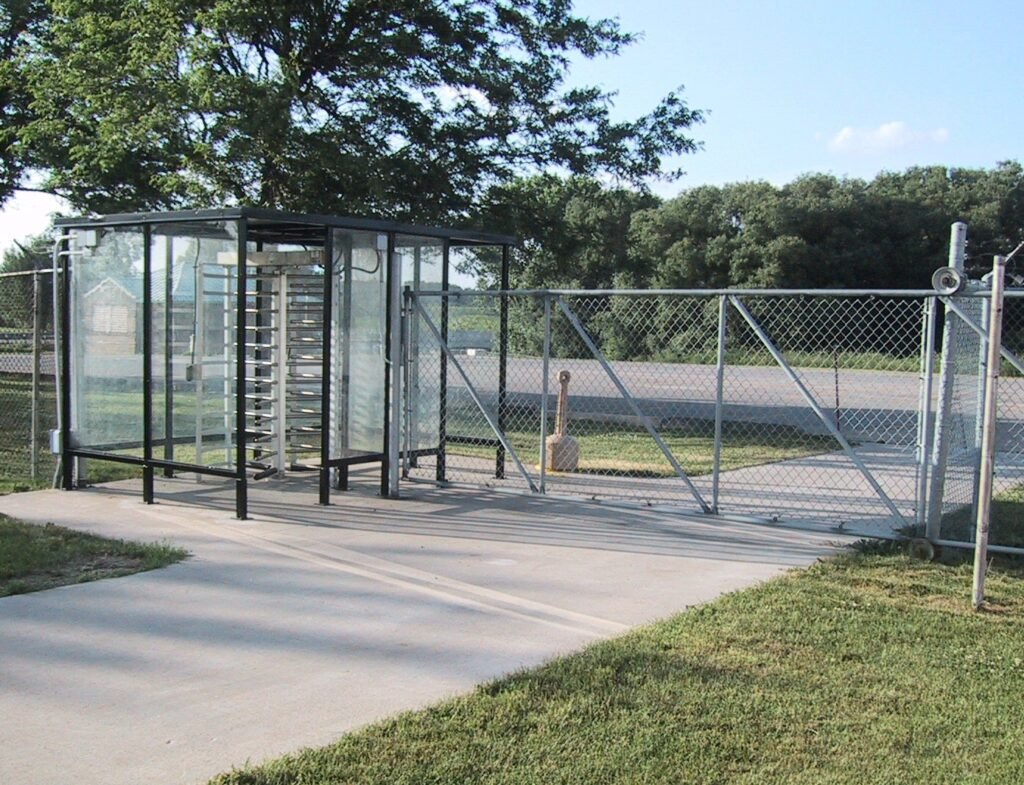
Despite their sophistication, access control systems remain vulnerable to several well documented weaknesses that security professionals must actively guard against. Tailgating, where an unauthorized person follows closely behind someone with valid credentials through a controlled door, defeats even the most advanced reader technology and requires procedural solutions such as staff training and turnstiles that physically limit passage to one person per credential. Credential cloning, particularly of older low frequency proximity cards using outdated encryption, has prompted a shift toward more secure smart card technology that encrypts communication between card and reader. Door propping, where staff leave a secured door open for convenience, undermines access control entirely and is typically addressed through door position sensors that trigger an alarm if a controlled door remains open beyond a set time limit. Regular access audits that review who holds credentials to sensitive areas help catch permission creep, where employees accumulate access rights from previous roles that were never revoked as responsibilities changed.
Key facts
- Array
Quick checkWhat do access control systems regulate?Show answer
Who may enter a facility or restricted area, and when they are permitted to do so.
Sources
- Array
Editorially reviewed by Specialty Digest Editorial TeamLast reviewed November 4, 2026Researched and drafted with AI assistanceReport an issue