Origins in Curitiba
Bus rapid transit traces its modern form to Curitiba, Brazil, where city planners in the 1970s built a network of dedicated busways, tube-shaped boarding stations with pre-paid fare collection, and articulated buses to move large passenger volumes without the capital cost of building a subway or light rail line. The Curitiba model demonstrated that a bus-based system, if given the same operational advantages typically reserved for rail, including exclusive right-of-way and signal priority at intersections, could carry comparable passenger volumes at a small fraction of rail construction cost. This insight spread internationally over subsequent decades, with cities across Latin America, Asia, Africa, and eventually North America and Europe adopting versions of the model.
Core Design Elements
A full bus rapid transit system typically combines several elements that together distinguish it from conventional bus service: physically separated running ways that keep buses out of mixed traffic, stations rather than simple curbside stops, fare payment completed before boarding to speed passenger loading, and traffic signal priority or preemption that lets approaching buses extend green lights. Systems that implement only some of these elements, often called “BRT-lite,” deliver smaller speed and reliability gains than full BRT corridors, which has led transit planning organizations to publish standardized scoring frameworks that rate corridors by how many genuine BRT features they include rather than by name alone.
Cost and Implementation Advantages
Because bus rapid transit can often be built within existing road rights-of-way using conventional paving rather than rail track, overhead wire, or tunnel construction, a BRT corridor typically costs a small fraction of what a comparable light rail or subway line would cost per mile, while still achieving a meaningful share of rail’s capacity and speed benefits. This cost advantage has made BRT particularly attractive to rapidly growing cities in lower- and middle-income countries that need to expand transit capacity quickly without the long construction timelines and financing burdens that heavy infrastructure projects require.
Measuring BRT Quality Worldwide
To bring consistency to a term that different cities apply loosely, the Institute for Transportation and Development Policy publishes a standardized BRT Standard scorecard that rates corridors on criteria including running way exclusivity, station design, fare collection method, and intersection treatment, awarding bronze, silver, or gold ratings to systems that meet escalating thresholds of genuine BRT performance. This scoring framework has become an influential reference for cities planning new corridors and for international development lenders deciding which projects to finance, since it gives a comparable benchmark across cities that might otherwise each claim “BRT” status for systems with widely varying actual performance.
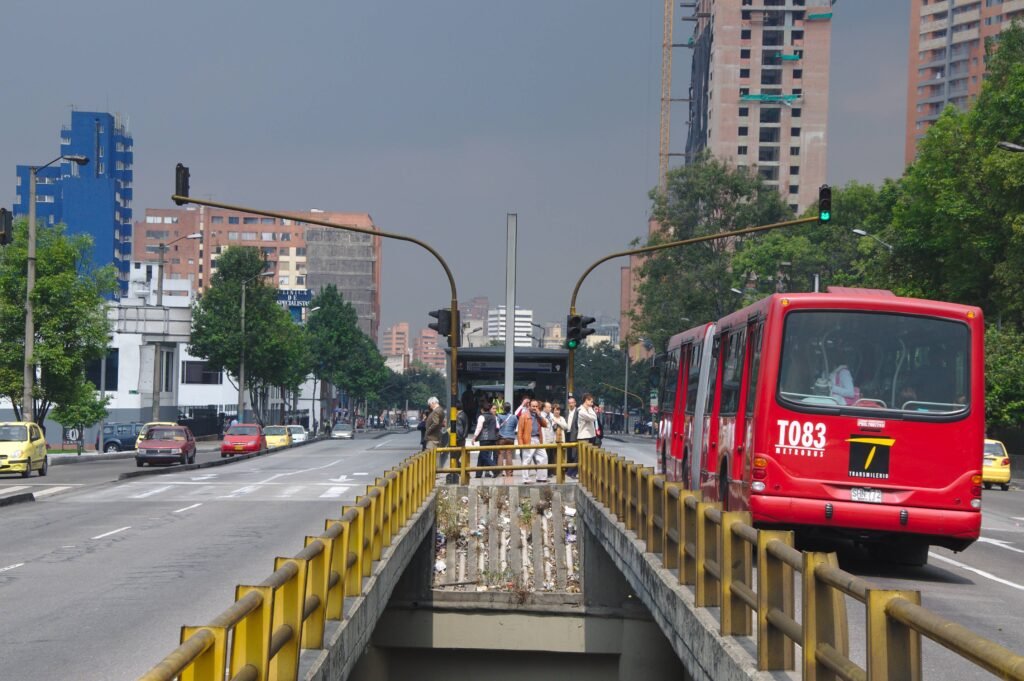
Leading gold-standard systems, including corridors in Bogota, Guangzhou, and Istanbul, carry passenger volumes per hour that rival or exceed many light rail lines, demonstrating that a sufficiently well-designed bus corridor can approach rail-level capacity without rail-level construction cost, though achieving this performance requires sustained political commitment to protecting dedicated lanes from encroachment by general traffic over time.
Addressing Lane Encroachment Over Time
A persistent challenge for mature BRT corridors is protecting their dedicated lanes from gradual encroachment by general traffic, delivery vehicles, and parking, especially once the political attention that accompanied a corridor’s opening has faded and enforcement resources are redirected elsewhere. Cities that have sustained high BRT performance over many years generally invest in physical separation, raised curbs or barriers rather than painted lane markings alone, precisely because painted-only lanes have proven far more vulnerable to encroachment and far harder to enforce consistently than physically separated ones.
Some corridors have also faced pressure to convert dedicated lanes back to general traffic use during periods of political change, a reversal that transportation researchers point to as evidence that BRT performance depends as much on sustained institutional commitment as on initial engineering design.
Feeder bus integration, where ordinary local buses are redesigned to connect efficiently with BRT stations rather than duplicating the BRT route, has also proven important for maximizing a corridor’s total ridership beyond those living or working directly along the trunk line itself.
Global Spread and Regional Adaptation
Following its origins in Curitiba, bus rapid transit spread first across Latin America, most notably in Bogota’s TransMilenio system, which opened in 2000 and became an influential reference point for cities worldwide seeking to replicate its combination of high capacity and comparatively modest construction cost. The model subsequently spread to major cities in Asia, including Guangzhou and Jakarta, and to Africa, where cities such as Lagos and Dar es Salaam built BRT corridors specifically to address severe congestion and inadequate existing bus service, adapting station design and fare collection to local conditions including informal settlement density and existing paratransit competition from minibus operators.
North American and European adoption came somewhat later and has generally produced lower-intensity “BRT-lite” corridors compared with the full-featured systems common in Latin America, reflecting both lower population densities along most candidate corridors and greater political resistance to converting general traffic lanes to exclusive bus use in cities where private car ownership rates are considerably higher.
Maintenance of dedicated busway pavement, which bears concentrated heavy bus traffic along the same narrow path repeatedly rather than distributing wear across a full traffic lane, also requires more frequent resurfacing than ordinary mixed-traffic lanes.
Driver training specific to BRT operations, including precision docking at raised platforms for level boarding, represents another operational investment distinct from standard mixed-traffic bus driving.
Real-time passenger information displays at BRT stations, showing countdown times to the next arrival, have also become a standard expectation among riders comparing bus service against rail alternatives.
Key facts
- Array
Quick checkWhat distinguishes bus rapid transit from ordinary bus service?Show answer
Dedicated lanes, off-board fare collection, and signal priority that let buses move with rail-like speed and reliability.
Sources
- Array
Editorially reviewed by Specialty Digest Editorial TeamLast reviewed November 4, 2026Researched and drafted with AI assistanceReport an issue