What Kind of Place Is Canada?
Canada is a country occupying the northern two-fifths of North America, bordered only by the United States to the south and surrounded by the Pacific, Atlantic, and Arctic Oceans on its other coasts. It is the second-largest country in the world by area, covering nearly 10 million square kilometers, yet it remains one of the most sparsely populated nations relative to its size, with an estimated population of about 41.4 million people as of April 2026. Canada is a federal parliamentary democracy and constitutional monarchy, made up of 10 provinces and 3 territories, with Ottawa as its capital and Toronto as its largest city.
The country has two official languages, English and French, a legacy of its British and French colonial history, and it is home to First Nations, Métis, and Inuit peoples whose presence on the land predates European contact by thousands of years.
Key Takeaways
- Canada is the world’s second-largest country by area, spanning nearly 10 million square kilometers across six time zones.
- Its population was estimated at roughly 41.4 million in early 2026, with growth recently slowing as immigration levels declined.
- Canada is a federal parliamentary democracy and constitutional monarchy with a bicameral Parliament made up of the Senate and the House of Commons.
- English and French are both official languages; about 98% of Canadians speak at least one of them.
- Indigenous peoples, including First Nations, Métis, and Inuit communities, make up about 5% of the population.
- Canada’s economy is deeply integrated with that of the United States, its largest trading and energy partner.
- The country’s history includes the residential school system, a documented and sobering chapter that continues to shape reconciliation efforts today.
Geography
Canada’s landmass is organized into seven broad physiographic regions: the Appalachian Uplands in the east, the Great Lakes-St. Lawrence Lowlands, the Canadian Shield covering much of the country’s core, the Hudson Bay Lowlands, the Arctic Lands in the far north, the Interior Plains, and the western Cordillera along the Pacific coast. This range produces enormous environmental diversity, from rugged coastal mountains and open prairie to boreal forest and Arctic tundra. Mount Logan, in Yukon, is the country’s highest peak at 19,551 feet, one of more than 21,000 named mountains within its borders.
Forests cover about 347 million hectares of Canadian territory, roughly 9% of the world’s forest cover, and the country holds nearly a quarter of the planet’s remaining wetlands. Permafrost underlies about 40% of the terrain, concentrated in the north, making Canada’s terrain and climate significant to global discussions of carbon storage and a warming Arctic.
Brief History
Indigenous peoples have lived across the territory that is now Canada for thousands of years before European contact, developing distinct nations, languages, and governance systems. French explorers and settlers established colonies along the St. Lawrence River beginning in the early 1600s, and Britain gained control of most French territory following the Seven Years’ War in 1763. In 1867, the Constitution Act joined several British colonies into the Dominion of Canada, a self-governing federation that gradually expanded westward and gained full legislative independence from Britain, formalized when Canada patriated its constitution in 1982.
This history includes a sustained and damaging period in which the Canadian government, working with church organizations, operated a residential school system aimed at assimilating Indigenous children. According to Crown-Indigenous Relations and Northern Affairs Canada, approximately 150,000 Indigenous children were removed from their families and communities to attend roughly 140 residential schools. Most of these schools closed by the mid-1970s, though the last federally run institution did not close until the late 1990s. The government has acknowledged the physical, emotional, and spiritual harm caused by this system and, since 2021, has funded community-led efforts to locate unmarked graves at former school sites as part of an ongoing reconciliation process with Indigenous survivors, leaders, and communities.
Government and Economy
Canada operates as a constitutional monarchy and parliamentary democracy. King Charles III is head of state, represented domestically by a Governor General who acts on the advice of the Prime Minister while retaining a constitutional right to advise, encourage, and warn. Parliament consists of the Crown, an appointed 105-member Senate, and an elected House of Commons with 343 seats. Government authority is divided constitutionally among federal, provincial and territorial, and municipal levels, a structure set out in the Constitution Act, 1867.
Canada’s economy grew relatively slowly in 2025: real gross domestic product rose 1.7% for the year, the weakest annual pace since the contraction of 2020, and GDP declined 0.2% in the fourth quarter as exports, particularly to the United States, softened. That softness underscores how closely tied Canada’s economy is to its southern neighbor. Nearly 3.6 billion Canadian dollars in goods and services crossed the Canada-U.S. border daily in 2024, and the United States is Canada’s largest trading partner while Canada is the largest single foreign supplier of energy to the United States, with two-way energy trade reaching roughly 216.8 billion Canadian dollars that year. The Canada-United States-Mexico Agreement, in effect since July 2020, provides the formal framework for this trade.
Culture and People
Canada’s population is concentrated overwhelmingly near its southern border, with most residents living within about 150 miles of the United States. English is the first official language spoken by about 76.1% of the population and French by about 22.0%, and 98.1% of Canadians speak at least one of the two official languages, though the share of the population with French as a mother tongue has declined over recent decades even as bilingualism has grown in some regions. Roughly 23.2% of residents report a mother tongue other than English or French, reflecting decades of immigration from around the world.
Indigenous peoples numbered about 1.8 million in the 2021 census, roughly 5% of the total population, comprising First Nations (about 1.05 million), Métis (about 624,000), and Inuit (about 70,500) communities, a population that grew 9.4% between 2016 and 2021, outpacing the non-Indigenous population. Recent demographic data also shows Canada’s population growth slowing sharply, with a small overall decline recorded in early 2026 as permanent immigration fell and, for the first time in recent memory, deaths outnumbered births in a given quarter.
What Canada Is Best Known for Globally
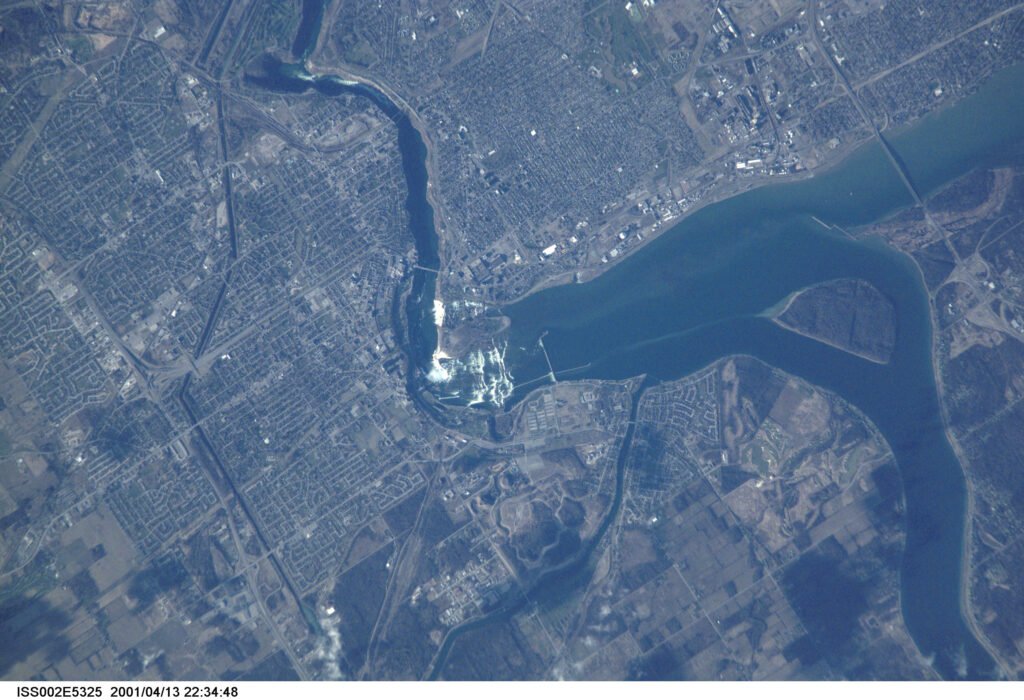
Among Canada’s natural features, Niagara Falls is the single most internationally recognizable, and it is most iconically photographed from the Canadian side, where the Horseshoe Falls drops an average of 57 meters across a crest line about 670 meters wide. During peak tourist season, more than 2,832 cubic meters of water pour over the falls each second, a volume that makes Niagara Falls exceptional not for its height but for the sheer power of its flow. Geologically, the falls formed roughly 12,500 years ago as meltwater from the last Ice Age carved a route between Lake Erie and Lake Ontario, reaching their present location about 5,500 years ago.
Beyond Niagara Falls, Canada is widely recognized for its vast expanses of wilderness and boreal forest, its bilingual federal structure, and its close economic and cultural relationship with the United States, the effects of which are visible in everything from shared supply chains to cross-border media consumption.
Why Canada Matters
Canada matters globally as one of the most economically integrated neighbors of the United States, supplying more energy to the U.S. than any other country and anchoring a trade relationship that supports millions of jobs on both sides of the border. Its vast forests and permafrost make it consequential to global climate and carbon-storage discussions, while its scale, at nearly 10 million square kilometers, gives it outsized importance in Arctic governance and resource stewardship. Domestically, Canada’s ongoing reconciliation with Indigenous peoples, following a documented history of harm through the residential school system, remains a closely watched example of how a wealthy democracy confronts and works to address historical injustice within its own institutions.
Sources
- Statistics Canada, “The Daily: Canada’s population estimates, first quarter 2026”
- Government of Canada, Open Science and Data Platform, “Land”
- Encyclopaedia Britannica, “Canada”
- Government of Canada, “Democracy in Canada”
- Statistics Canada, “The Daily: Gross domestic product, income and expenditure, fourth quarter 2025”
- Global Affairs Canada, “Canada-United States relations”
- Government of Canada, Canadian Heritage, “Statistics on official languages in Canada”
- Statistics Canada, “First Nations people, Métis and Inuit in Canada” (2021 Census)
- Crown-Indigenous Relations and Northern Affairs Canada, “Residential schools and reconciliation”
- Niagara Parks Commission, “Niagara Falls Geology Facts & Figures”
Key facts
- Canada is the world's second-largest country by area, covering nearly 10 million square kilometers.2
- The population was estimated at about 41.4 million as of April 2026, with growth slowing due to lower immigration and, for the first time in recent memory, more deaths than births in a quarter.1
- English and French are official languages; 98.1% of Canadians speak at least one of them.7
- Indigenous peoples make up about 5% of the population, comprising First Nations, Métis, and Inuit communities.8
- Real GDP grew 1.7% in 2025, the slowest annual pace since the 2020 downturn, as exports to the United States weakened.5
Quick checkWhat kind of government does Canada have?Show answer
Canada is a federal parliamentary democracy and constitutional monarchy, with King Charles III as head of state represented by a Governor General, and a Parliament made up of an appointed Senate and an elected House of Commons.
Sources
- Statistics Canada. The Daily: Canada's population estimates, first quarter 2026. 2026 (accessed 22 September 2026)
- Government of Canada, Open Science and Data Platform. Land. Undated (accessed 22 September 2026)
- Encyclopaedia Britannica. Canada. Undated (accessed 22 September 2026)
- Government of Canada. Democracy in Canada. Undated (accessed 22 September 2026)
- Statistics Canada. The Daily: Gross domestic product, income and expenditure, fourth quarter 2025. 2026 (accessed 22 September 2026)
- Global Affairs Canada. Canada-United States relations. Undated (accessed 22 September 2026)
- Government of Canada, Canadian Heritage. Statistics on official languages in Canada. Undated (accessed 22 September 2026)
- Statistics Canada. First Nations people, Métis and Inuit in Canada (2021 Census). 2022 (accessed 22 September 2026)
- Crown-Indigenous Relations and Northern Affairs Canada. Residential schools and reconciliation. Undated (accessed 22 September 2026)
- Niagara Parks Commission. Niagara Falls Geology Facts & Figures. Undated (accessed 22 September 2026)
Editorially reviewed by Specialty Digest Editorial TeamLast reviewed September 22, 2026Researched and drafted with AI assistanceReport an issue