Overview
Deliberate practice refers to a highly structured form of training involving specific, effortful activities designed to improve performance in a particular skill or domain. Unlike casual repetition, deliberate practice requires a performer to work at the edge of their current ability, receive immediate feedback, and pursue clearly defined, often narrowly focused improvement goals. The concept originated in psychologist Anders Ericsson research on expert performance across domains including music, chess, and athletics.
Key Characteristics
Several features distinguish deliberate practice from ordinary training. It is purposeful, aimed at a specific, well-defined aspect of performance rather than general activity. It requires sustained effort and concentration, often making it mentally and physically demanding in ways that playful or casual repetition is not. Crucially, it depends on timely, specific feedback, frequently from a coach or instructor, that allows the performer to identify errors and adjust technique accordingly.
Application in Sport
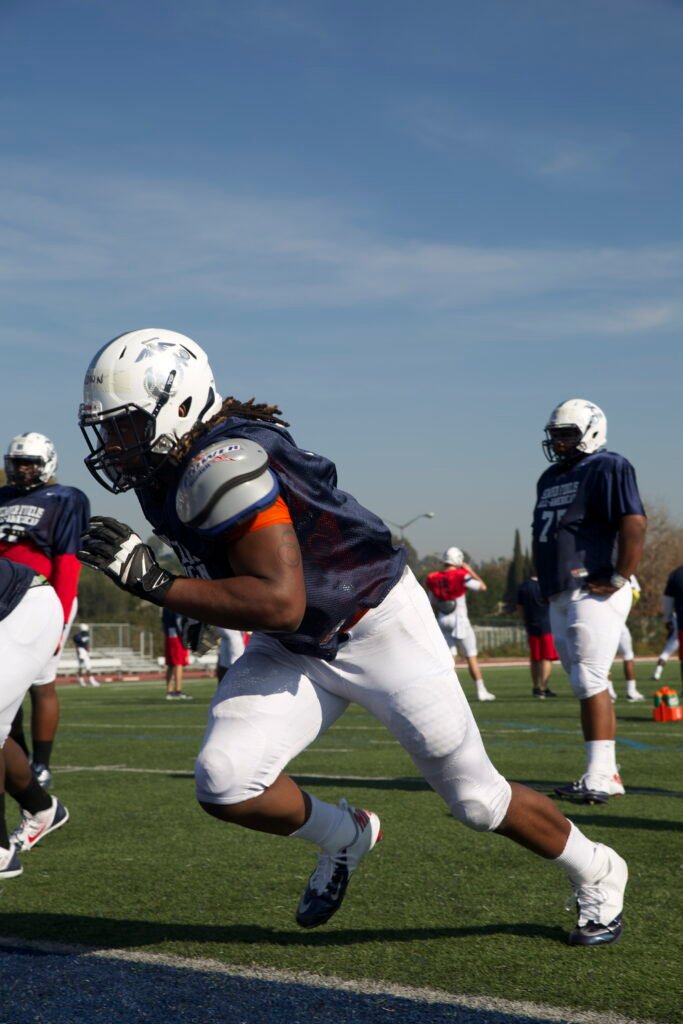
Coaches apply deliberate practice principles by designing drills that isolate specific technical weaknesses, providing athletes with video analysis or real-time correction, and progressively increasing difficulty as competence improves. The widely popularized claim that roughly 10,000 hours of deliberate practice reliably produces expertise, often attributed loosely to Ericsson research, has drawn substantial scientific criticism for oversimplifying a more nuanced and context-dependent relationship between practice volume and skill acquisition.
Scientific Scrutiny of the 10,000-Hour Rule
The popularized notion that exactly 10,000 hours of practice reliably produces expertise has drawn significant scientific pushback, with Ericsson himself clarifying that his original research never claimed a fixed hour threshold guarantees mastery. Subsequent research has found substantial variation in the amount of deliberate practice required across different domains and individuals, with factors such as starting age, quality of coaching, and even genetic predisposition all influencing the relationship between practice volume and eventual skill level.
Role of the Coach or Instructor
Because deliberate practice depends heavily on accurate, timely feedback, the quality of coaching or instruction available to a learner significantly affects how efficiently deliberate practice translates into improved performance. A knowledgeable coach can identify subtle technical flaws invisible to the learner themselves, design progressively challenging exercises targeting specific weaknesses, and calibrate the difficulty of practice tasks to keep a learner working productively at the edge of their current ability without becoming overwhelmed or discouraged.
Beyond Sport
Deliberate practice principles originally studied in domains such as music and chess have been widely applied to athletics, and increasingly to other skill-based fields such as surgery and aviation, wherever expert performance depends on refined, complex motor or cognitive skills developed through sustained, structured practice. The core insight that purposeful, feedback-rich practice outperforms mere repetition appears to generalize reasonably well across these varied performance domains, even as the specific hour requirements and practice structures differ considerably.
Athletes and coaches seeking to apply deliberate practice principles effectively should prioritize identifying a small number of specific weaknesses to target in any given session rather than attempting to improve everything simultaneously.
Video review has become an increasingly valuable tool for deliberate practice in sport, since it allows athletes to receive detailed visual feedback on technique that might otherwise be difficult to convey through verbal coaching alone.
Looking Ahead
As wearable technology and artificial intelligence tools become more accessible, future applications of deliberate practice principles may increasingly incorporate automated, real-time feedback systems that reduce dependence on constant human coaching presence, potentially expanding access to high-quality deliberate practice for athletes without access to elite coaching resources.
Self-regulated learners, who can accurately assess their own weaknesses and seek out appropriately challenging practice conditions independently, tend to progress faster even when formal coaching access is limited or inconsistent.
Mental rehearsal and visualization techniques are sometimes incorporated alongside physical deliberate practice, allowing athletes to reinforce correct movement patterns and tactical decisions even outside of scheduled physical training sessions.
Journals in sports science and psychology continue to publish research refining understanding of exactly what makes certain forms of practice more effective than others across different sports and skill types.
Team environments present particular challenges for deliberate practice design, since individualized feedback and progressively challenging tasks are harder to deliver at scale compared with one-on-one coaching settings common in individual sports.
Some researchers have begun studying how deliberate practice principles interact with athlete intrinsic motivation, since sustaining the effortful concentration deliberate practice requires over months or years depends heavily on an athlete genuine engagement with the process.
Some coaches use structured training logs that require athletes to reflect explicitly on what they learned from each practice session, reinforcing the purposeful, reflective quality that distinguishes deliberate practice from passive repetition.
Some elite training centers now employ dedicated performance psychologists specifically to help athletes maintain the motivation and focus deliberate practice requires over the sustained, often repetitive periods needed to reach high performance levels.
Deliberate practice principles have also informed the design of simulation-based training tools, which allow athletes to rehearse specific decision-making scenarios repeatedly under controlled conditions before facing similar situations in actual competition.
Programs built around deliberate practice must also guard against overuse injury and burnout, since the same focused repetition that builds skill can accumulate physical and mental strain if volume and recovery are not managed together. Youth development pathways increasingly schedule deliberate practice blocks alongside unstructured play, recognizing that early specialization without variety can narrow an athlete movement vocabulary even as it sharpens one specific skill. Coaches who track practice quality rather than just hours logged tend to produce steadier long-term gains, since a session spent repeating a flawed pattern without correction can reinforce the very fault it was meant to fix.
Key facts
- Array
Quick checkHow does deliberate practice differ from ordinary practice?Show answer
Deliberate practice involves highly structured, effortful activities with specific goals and immediate feedback aimed at improving particular weaknesses, unlike casual repetition which may not push a performer beyond their comfort zone.
Sources
- Array
Editorially reviewed by Specialty Digest Editorial TeamLast reviewed November 4, 2026Researched and drafted with AI assistanceReport an issue