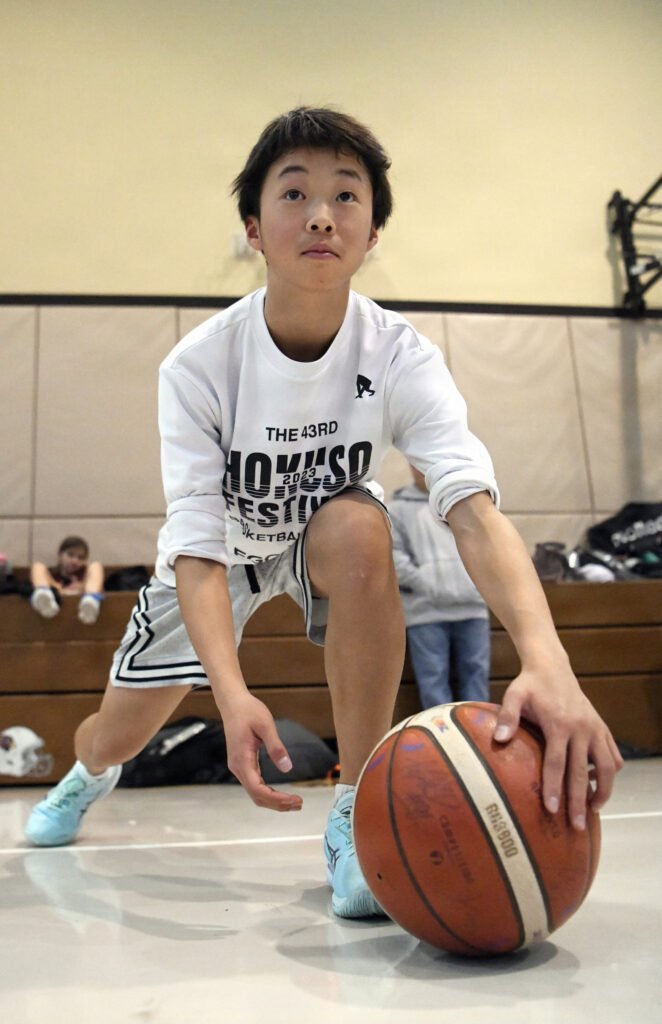
Overview
Skill acquisition describes the process through which athletes learn new motor skills and progressively refine them through practice, instruction, and feedback. A widely used model developed by Fitts and Posner describes this process across three stages: an initial cognitive stage in which the learner must consciously think through each component of a movement, an associative stage in which movements become smoother and more consistent with repeated practice, and an autonomous stage in which skills become largely automatic, freeing conscious attention for tactical decision-making during competition.
Practice Design
How practice is structured significantly affects skill acquisition outcomes. Blocked practice, in which a learner repeats the same skill many times in succession, tends to produce faster initial improvement but less durable long-term retention compared with random practice, in which multiple skills are interspersed, forcing the learner to retrieve and adapt movement patterns repeatedly. Coaches must balance these approaches depending on whether the immediate goal is building basic competence or preparing athletes for the variable demands of actual competition.
Feedback and Transfer
The timing and specificity of feedback also shapes skill acquisition, with research generally favoring feedback that is specific enough to guide correction but not so frequent that it prevents the learner from developing internal error-detection capabilities. A central challenge in skill acquisition research is ensuring that skills learned in practice environments actually transfer to the more complex, variable, and pressured conditions of real competition.
Contextual Interference Effect
Research on skill acquisition has documented what is known as the contextual interference effect, in which practice conditions that feel harder and produce slower apparent progress during training, such as random practice of varied skills, often produce better long-term retention and transfer than easier blocked practice conditions. This counterintuitive finding has significant implications for how coaches structure practice sessions, suggesting that short-term performance during training is not always a reliable indicator of genuine long-term learning.
Implicit Versus Explicit Learning
Researchers distinguish between explicit learning, in which athletes consciously think about technical instructions while performing a skill, and implicit learning, in which skills develop through guided discovery or constrained practice environments without extensive verbal instruction. Some evidence suggests implicit learning may produce skills that hold up better under competitive pressure, since explicitly learned technical cues can sometimes be disrupted by the anxiety and attentional narrowing that occurs during high-stakes competition.
Variability in Practice
Introducing variability into practice conditions, such as practicing a skill under different physical positions, speeds, or environmental conditions, has been shown to improve an athlete ability to adapt skills to the unpredictable conditions of actual competition, compared with practicing the exact same movement pattern repeatedly under constant conditions. This principle has significant implications for how coaches design training sessions intended to produce skills that transfer effectively to competitive performance.
Coaches designing practice sessions must balance the research-supported benefits of challenging, variable practice against the risk of overwhelming less experienced athletes who may need more initial repetition to build basic competence first.
Technology such as motion capture and wearable sensors increasingly allows coaches to provide more precise, objective feedback during skill acquisition than was previously possible through visual observation alone.
Looking Ahead
As motion tracking and artificial intelligence tools become more sophisticated and affordable, coaches at all levels may gain access to objective skill acquisition feedback previously available only to elite, well-resourced programs, potentially narrowing the coaching quality gap between well-funded and under-resourced sporting environments.
Constraints-led approaches to skill acquisition, which manipulate task, environmental, and individual constraints rather than providing explicit verbal instruction, have gained popularity as an alternative framework particularly suited to sports involving rapid, unpredictable decision-making.
Skill acquisition specialists increasingly collaborate with strength and conditioning staff, recognizing that physical capacity limitations can sometimes constrain an athlete ability to execute a technically correct movement pattern regardless of how much they practice it.
Coaches new to constraints-led approaches often require specific professional development to shift away from more traditional instruction-heavy coaching habits toward designing environments that guide discovery-based learning.
Differential learning, a related approach that intentionally introduces substantial movement variability rather than correcting toward a single ideal technique, has gained research attention as another alternative to traditional repetition-based skill instruction.
Skill acquisition research increasingly draws on ecological dynamics theory, which frames skilled movement as emerging from the interaction between an athlete, their task, and their environment rather than as a fixed motor program stored and retrieved from memory.
Coaches working with younger athletes often need to adjust skill acquisition approaches to account for shorter attention spans and developing cognitive capacities compared with the approaches typically used with adult elite athletes.
Skill acquisition specialists often work most closely with sports involving open, unpredictable environments, such as team invasion sports, where athletes must continuously adapt technique to rapidly changing situational demands.
Debate continues within skill acquisition research about the relative merits of explicit instruction versus more discovery-based approaches, with most practitioners now favoring a blended approach suited to the specific skill and athlete involved.
Skill acquisition specialists often distinguish between practice that looks impressive in a controlled drill and practice that actually transfers to the unpredictable demands of competition, favoring variable and representative training designs over repetitive closed drills whenever the goal is lasting skill retention. Constraints-based coaching, which shapes the practice environment rather than issuing direct verbal instruction, has become a popular tool for encouraging athletes to discover efficient movement solutions on their own. Video feedback and external focus cues, which direct attention to the effect of a movement rather than the body part producing it, are both widely used to speed the acquisition process.
Key facts
- Array
Quick checkWhat are the three classic stages of skill acquisition?Show answer
The classic model describes three stages: the cognitive stage, where a learner consciously thinks through each movement; the associative stage, where movements become smoother with practice; and the autonomous stage, where skills become largely automatic and require minimal conscious attention.
Sources
- Array
Editorially reviewed by Specialty Digest Editorial TeamLast reviewed November 4, 2026Researched and drafted with AI assistanceReport an issue