Overview
Doctrine refers to a formally established teaching or body of beliefs that a religious community holds as authoritative and expects its members to accept. Unlike more open theological speculation, doctrine typically carries an official or binding status, shaping how a community understands scripture, defines orthodoxy, and distinguishes itself from other traditions or internal movements.
How Doctrine Develops
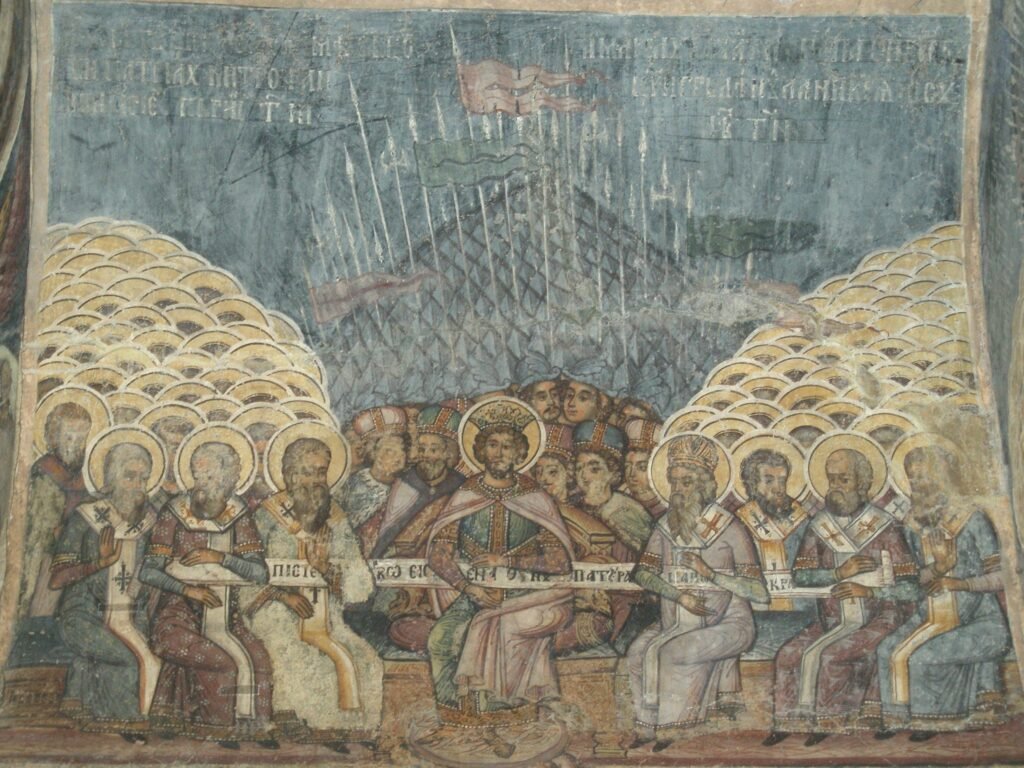
Doctrine often develops gradually, shaped by scriptural interpretation, accumulated tradition, and responses to specific controversies or challenges that arise within a religious community over time. Formal bodies such as councils, synods, or recognized religious authorities frequently play a central role in reviewing competing positions and settling on an official formulation.
Doctrine Across Traditions
Different religious traditions vary considerably in how centralized their doctrinal authority is, with some relying on a clearly defined hierarchy to issue binding rulings and others depending more heavily on communal consensus or ongoing scholarly interpretation. This variation shapes how much doctrinal diversity a given tradition can accommodate without fracturing into separate movements.
Doctrine and Practice
While doctrine primarily concerns belief, it frequently shapes religious practice as well, since official teaching often carries implications for ritual, ethics, and community life. Disputes over doctrine have historically been a major driver of religious schism, reform movements, and the formation of new denominations or sects.
Role Today
Contemporary religious communities continue to grapple with how doctrine should respond to new scientific knowledge, social change, and interfaith encounter, while maintaining continuity with inherited tradition. These ongoing negotiations illustrate that doctrine, even when formally fixed, remains a living and sometimes contested part of religious life.
Doctrine and Heresy
Historically, the formal establishment of doctrine has often gone hand in hand with the identification of heresy, positions judged incompatible with accepted teaching and therefore excluded from the bounds of orthodox belief. This process of boundary-setting, while sometimes contentious, has played a significant role in shaping the distinct theological identities of different religious communities and denominations over time.
Doctrine and Lived Faith
For most ordinary believers, doctrine is encountered less through formal theological texts than through preaching, religious education, and participation in communal worship and ritual life. This means the practical transmission of doctrine often depends heavily on how effectively religious leaders translate formal teaching into accessible language and lived practice for their communities.
Doctrine and Reform
Periods of significant religious reform have often involved explicit challenges to established doctrine, with reformers arguing that prevailing teaching had drifted from the tradition original sources or authentic spirit. These reform movements illustrate that doctrine, despite its formal and sometimes rigid appearance, remains subject to ongoing reassessment within the life of a religious tradition.
Comparative Doctrine
Scholars of comparative religion often study how different traditions formalize and transmit doctrine, noting both striking similarities in function, such as defining communal boundaries, and significant differences in method, authority structure, and tolerance for internal diversity. This comparative approach helps illuminate what is distinctive about any single tradition approach to doctrinal authority.
Doctrine and Authority
The question of who holds the authority to establish or revise doctrine remains one of the most consequential issues within religious institutions, shaping everything from formal governance structures to the everyday authority of local religious leaders. How a tradition resolves this question often says as much about its broader self-understanding as the content of any particular doctrine itself.
Closing Summary
Doctrine, for all its formal and sometimes technical character, ultimately functions to preserve and transmit a religious community most deeply held convictions across generations, anchoring communal identity even amid significant historical and cultural change.
That transmission, carried out through countless teachers and communities, is part of what gives doctrine its lasting social and spiritual weight.
Doctrine and Change
Even traditions that present doctrine as fixed and unchanging have, upon closer historical examination, often revised or refined their official teaching in response to new questions, challenges, or deeper reflection on inherited sources, suggesting that doctrinal stability and genuine development are not necessarily incompatible within a living religious tradition.
That capacity for careful, considered change, rather than constant upheaval, is often what allows a doctrinal tradition to remain both stable and responsive over time.
Final Considerations
Understanding how doctrine forms, stabilizes, and occasionally shifts offers valuable insight into the inner workings of religious communities more broadly, revealing the careful balance many traditions strike between fidelity to the past and responsiveness to the present.
This balance between continuity and careful development remains a defining feature of how living religious traditions sustain themselves across centuries of change.
That durability is a large part of why doctrinal study remains essential for anyone studying religion seriously.
Doctrine and the Individual Believer
For individual believers, engaging seriously with doctrine often means moving beyond simple acceptance toward genuine understanding, wrestling personally with how official teaching connects to their own lived experience and questions. This personal engagement, encouraged by many traditions, helps ensure doctrine remains a living conviction rather than a purely external requirement imposed from outside.
That personal wrestling with inherited teaching is often what transforms doctrine from mere information into genuine conviction.
Readers studying doctrine for the first time often find its careful, deliberate structure more approachable than its reputation for complexity might suggest.
That accessibility encourages deeper and more confident engagement with the tradition as a whole.
That clarity rewards careful, patient study.
Its reach continues growing steadily each year.
Interest keeps rising steadily among new students and believers each year.
Steady growth continues in nearly every corner of the world today.
Growth keeps continuing steadily.
Growth holds steady.
Key facts
- Array
In the news
Quick checkHow does doctrine typically become officially established within a religious tradition?Show answer
Doctrine is typically established through a combination of scriptural interpretation, accumulated tradition, and formal decision-making processes specific to each religious community, such as councils, synods, or recognized religious authorities, which review competing interpretations and settle on an official position intended to guide belief and practice across the wider community.
Sources
- Array
Editorially reviewed by Specialty Digest Editorial TeamLast reviewed November 4, 2026Researched and drafted with AI assistanceReport an issue