Durban is South Africa’s third-largest city and the busiest port in Africa, located on the Indian Ocean coast of KwaZulu-Natal province. Settled by British traders in 1824 near a lagoon long controlled by the Zulu kingdom and named in 1835 for Cape Colony governor Sir Benjamin D’Urban, it has grown into a major subtropical port city known for its beaches and its large community of South Africans of Indian descent.
Where Is Durban Located?
Durban lies on South Africa’s eastern Indian Ocean coast in KwaZulu-Natal province, built around a natural harbor and lagoon that has made it the country’s principal port. The city and its surrounding area are governed by the eThekwini Metropolitan Municipality, whose Zulu name refers to the bay at the city’s heart.
A Brief History of Durban
British traders settled near the bay in 1824, and the growing settlement was named Durban in 1835 in honor of Sir Benjamin D’Urban, then governor of the Cape Colony. During the nineteenth century, British colonial authorities brought large numbers of indentured laborers from India to work the region’s sugar plantations, founding what remains one of the largest communities of people of Indian descent anywhere outside India.
A Modern Port and Sporting City
Durban’s harbor developed into the busiest port in Africa by container traffic, anchoring the regional economy, and the city later built major new infrastructure, including Moses Mabhida Stadium, to host matches during the 2010 FIFA World Cup.
Durban Today
Durban’s economy centers on its port, manufacturing, and a large tourism sector drawn by its warm subtropical climate and Indian Ocean beaches, which make it one of South Africa’s most visited coastal destinations.
Moses Mabhida Stadium
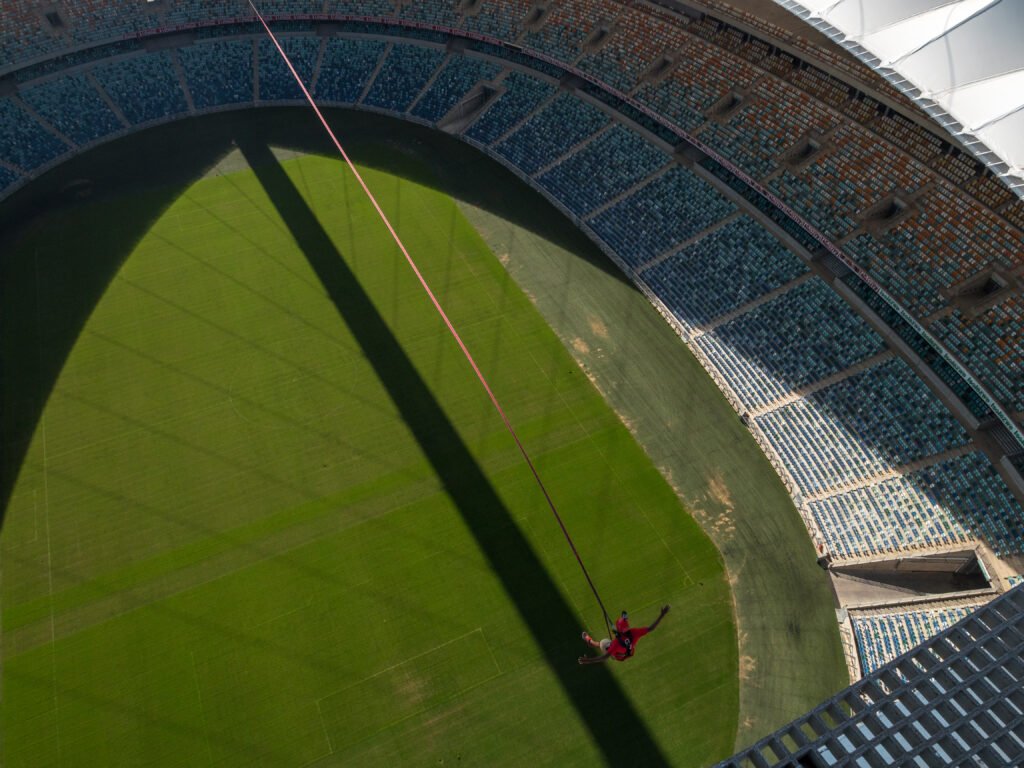
Durban’s most recognizable modern landmark is Moses Mabhida Stadium, built for the 2010 FIFA World Cup and named for a leader of the South African Communist Party and the African National Congress. The stadium is distinguished by a single sweeping arch that spans its roof from end to end, visible across much of the city, and a cable car known as the SkyCar that carries visitors to a viewing platform near the arch’s summit.
What Is Durban Known For?
Durban is known as Africa’s busiest port, for its beaches and subtropical climate, and for its large and influential community of South Africans of Indian descent, whose culture and cuisine have shaped the city.
Why Durban Matters
Durban matters as the commercial gateway for much of South Africa’s trade, as a center of South African Indian culture and history, and as a coastal city whose modern landmarks, like Moses Mabhida Stadium, now stand alongside a long maritime and colonial past.
Key Takeaways
- Durban is South Africa’s third-largest city and busiest port, on the Indian Ocean coast of KwaZulu-Natal.
- It was settled in 1824 and named in 1835 for Cape governor Sir Benjamin D’Urban.
- Nineteenth-century indentured labor migration from India created one of the largest communities of Indian descent outside India.
- The city is governed by the eThekwini Metropolitan Municipality.
- Moses Mabhida Stadium, built for the 2010 World Cup, is Durban’s most recognizable modern landmark.
Sources
- South African Government | “About Government” | gov.za/about-government
Key facts
- Durban is South Africa's third-largest city and busiest port, on the Indian Ocean coast.
- It was settled in 1824 and named in 1835 for Cape governor Sir Benjamin D'Urban.
- Nineteenth-century indentured labor migration from India created a major South African Indian community.
- The city is governed by the eThekwini Metropolitan Municipality.
- Moses Mabhida Stadium, built for the 2010 World Cup, is Durban's most recognizable modern landmark.
Quick checkWhat makes Durban distinctive among South African cities?Show answer
Durban is Africa's busiest port and home to one of the largest communities of Indian descent outside India, a legacy of nineteenth-century indentured labor migration.
Sources
- South African Government. About Government. Undated (accessed Accessed 2026-10-21)
Editorially reviewed by Specialty Digest Editorial TeamLast reviewed October 21, 2026Researched and drafted with AI assistanceReport an issue