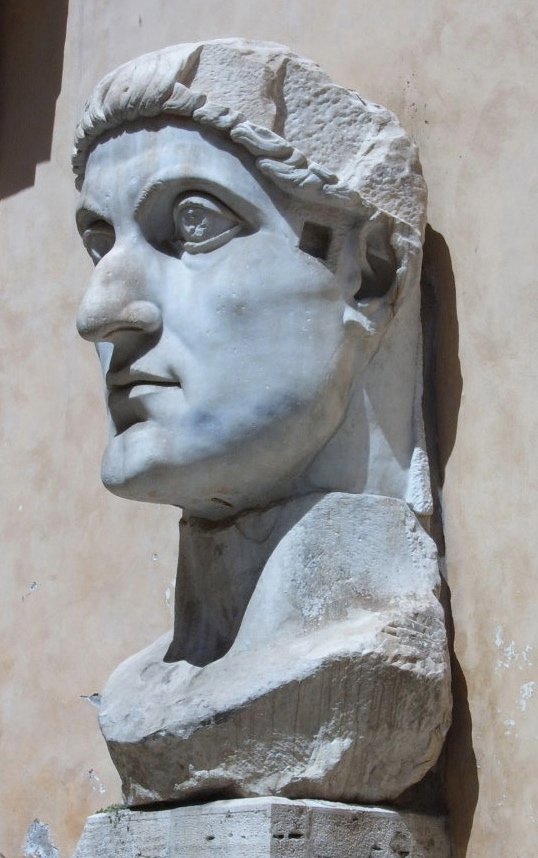
Overview
The Edict of Milan was a landmark proclamation issued jointly by Roman emperors Constantine and Licinius in 313 CE, establishing religious toleration for Christianity and other religions throughout the Roman Empire and marking a decisive turning point in the status of the Christian faith within Roman society and governance.
Historical Context
The edict followed several earlier periods of sometimes severe persecution directed at Christians under various Roman emperors, including particularly intense campaigns under Diocletian shortly before the edict was issued, making the shift toward official toleration a dramatic and consequential change in imperial religious policy.
Content and Scope
Rather than establishing Christianity as the sole official religion, the edict granted general religious toleration, allowing Christians and adherents of other faiths to practice openly and restoring property previously confiscated from Christian communities during earlier periods of persecution under prior imperial administrations.
Constantine Later Role
Constantine own personal relationship with Christianity deepened considerably in subsequent years, and he became an increasingly active patron of the church, convening the Council of Nicaea in 325 CE and supporting substantial church building projects, even as the empire did not become officially Christian until decades later under a different emperor.
Long-Term Significance
The edict set in motion a profound transformation in the relationship between Christianity and Roman imperial power, moving the faith from a persecuted minority religion toward eventual dominance within the empire over the following century, with lasting consequences for the subsequent development of European religious and political history.
Role Today
The Edict of Milan remains a pivotal reference point in the history of religious freedom and the relationship between church and state, studied as a foundational moment in the transformation of Christianity from a persecuted sect into the dominant religion of the later Roman world.
Earlier Toleration Efforts
The Edict of Milan built upon an earlier, more limited toleration edict issued by Galerius in 311 CE, which had already begun easing persecution shortly before Constantine and Licinius issued their more comprehensive and influential proclamation two years later in 313.
Historians continue to debate the precise legal form and wording of the original edict, since no single original document survives, with scholarly reconstruction relying on later historical accounts, including the writings of the church historian Eusebius, who preserved related correspondence and historical narrative from the period.
Impact on Church Institutions
Following the edict, Christian communities regained the ability to hold property and organize openly, contributing to rapid institutional growth, substantial new church construction, and significantly increased visibility and influence for Christian clergy within broader Roman civic and political life.
Comparison with Later State Religion
The edict should be distinguished from the later, more decisive step taken under Emperor Theodosius in 380 CE, which established Christianity as the official state religion of the Roman Empire, a stronger measure that went considerably further than the toleration, rather than establishment, that Constantine and Licinius had granted decades earlier.
This distinction matters for accurately understanding the pace of Christianity rise within Roman society, which proceeded gradually across several decades following the edict rather than through any single immediate and complete transformation of imperial religious policy and practice.
Constantine Motivations
Historians continue to debate Constantine personal motivations, including how far his support for Christianity reflected genuine religious conviction versus shrewd political calculation regarding the growing size and influence of the Christian population within his empire, a debate that remains active within modern scholarship on the period.
Scholarly Debate over Interpretation
Some historians emphasize the edict primarily as a pragmatic political measure aimed at securing stability and support from an increasingly significant religious community, while others give greater weight to genuine religious conviction, reflecting an ongoing and likely irresolvable historical debate over the precise balance of motivations behind this consequential imperial decision.
Regardless of underlying motivation, the practical consequences of the edict proved immense, fundamentally altering the trajectory of Christian institutional development and setting conditions that would eventually enable Christianity rapid growth into the dominant religious force across the later Roman and medieval European world.
Closing Note
The Edict of Milan endures as a foundational moment in the history of religious liberty, marking the pivotal transition point after which Christianity moved from persecuted minority faith toward eventual dominance across the later Roman world.
Historians continue to debate its precise significance, a sign of how consequential this brief but pivotal proclamation ultimately proved to be.
Final Thought
Few documents from antiquity carry such outsized historical consequence relative to their brief original text, reshaping the trajectory of an empire and a faith that would go on to shape the following two millennia.
Its legacy remains foundational to the history of religious freedom worldwide.
Each new generation of historians continues to find fresh angles for examining its lasting consequences.
Few short proclamations have carried quite so much weight across the following centuries of history.
Its echo persists across many histories of religious freedom even now.
Historians, theologians, and legal scholars alike continue to study its significance closely.
That scrutiny shows no sign of ending soon, given how pivotal the moment proved to be.
New studies of its context keep appearing regularly, deepening the historical record considerably further still.
Interest shows no sign of fading anytime soon among historians of late antiquity.
It remains a cornerstone topic for historians of the late Roman Empire.
It endures as a defining chapter of Roman and Christian history.
The agreement reached at Milan did not establish Christianity as the official religion of the empire, a step that would not occur until later in the fourth century, but it ended the systematic persecution that had periodically targeted Christian communities under earlier emperors. Property confiscated from churches during previous persecutions was ordered returned, and communities gained the legal standing to own buildings and hold assets collectively. The change had immediate practical effects on church organization, since bishops could now meet openly, build larger structures for worship, and accept donations without fear of legal reprisal. Constantine himself continued to patronize both traditional Roman religious practices and Christianity for much of his reign, and historians continue to debate the sincerity and timing of his personal conversion. The shift in imperial policy set the stage for the Council of Nicaea in 325, where bishops gathered under state sponsorship to settle doctrinal disputes that had grown urgent now that the church operated with open government support.
Key facts
- Array
Quick checkWho jointly issued the Edict of Milan?Show answer
Roman emperors Constantine and Licinius jointly issued the edict in 313 CE.
Sources
- Array
Editorially reviewed by Specialty Digest Editorial TeamLast reviewed November 4, 2026Researched and drafted with AI assistanceReport an issue