Colic as a Defining Emergency
Colic, a general term for abdominal pain in horses, represents one of the most common and potentially serious emergencies equine veterinarians encounter, since the underlying cause can range from relatively mild and self-resolving gas buildup to severe conditions such as intestinal displacement or torsion that can become fatal within hours without surgical intervention. Equine veterinarians must quickly distinguish mild cases manageable with pain relief and monitoring from surgical emergencies requiring immediate referral to a hospital equipped for equine abdominal surgery, a triage decision that significantly affects patient outcomes and one of the signature clinical skills of equine practice.
Practice Structure and Farm-Based Care
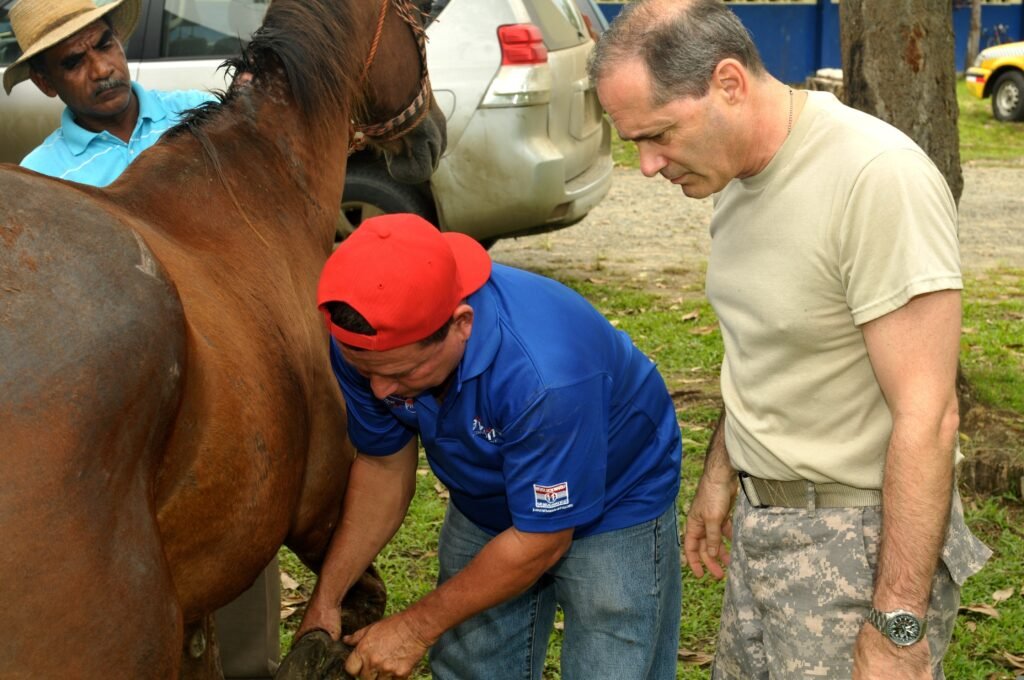
Unlike most small animal veterinary practice, which is centered in fixed clinic locations, a substantial portion of equine veterinary work occurs at the horse’s own farm or stable, with veterinarians traveling in equipped mobile units to perform examinations, routine procedures, and even some surgeries on-site rather than requiring every patient to be transported to a clinic. This farm-based practice model reflects both the practical difficulty of transporting large animals and the economic reality that many routine equine procedures can be performed safely and effectively without a hospital setting.
Lameness as a Core Clinical Focus
Lameness evaluation, assessing the cause of abnormal gait or discomfort during movement, occupies a central place in equine veterinary practice given how directly a horse’s athletic and working value depends on sound limb function, driving demand for specialized diagnostic tools including nerve blocks to localize pain, radiography, and increasingly advanced imaging such as MRI for difficult cases. Many equine veterinarians pursue additional training specifically in sports medicine and lameness given the significant demand from performance horse owners seeking to maintain their animals’ competitive soundness.
Vaccination and Preventive Herd Health
Equine veterinarians place considerable emphasis on preventive care, including vaccination protocols tailored to a horse’s geographic location, travel and competition exposure, and age, since certain diseases such as tetanus and various encephalitis viruses carry serious consequences but are effectively preventable through routine vaccination. Group housing situations common at boarding facilities and competition venues add further infectious disease risk considerations, since horses frequently commingle with animals from other farms whose vaccination and health status may be unknown.
Reproductive medicine also represents a significant component of equine practice, particularly for breeding operations, encompassing everything from breeding soundness examinations to pregnancy monitoring and foaling assistance.
Sports Medicine and Performance Horses
The substantial economic value of competition and racing horses has driven significant investment in equine sports medicine, a subspecialty focused on optimizing performance, preventing injury, and managing the unique physiological demands athletic horses face, including rigorous conditioning program oversight and early detection of subtle lameness before it progresses to a more serious, performance-limiting injury. This economic dimension distinguishes equine veterinary medicine somewhat from most companion animal and even much livestock practice, since owners of high-value performance horses often pursue more extensive and costly diagnostic and treatment options than would be economically rational for animals of lower individual value.
Dental care in horses follows a distinct schedule from small animals, with routine floating typically recommended annually, since uneven wear patterns can develop relatively quickly in a horse’s continuously erupting teeth if left unaddressed between visits.
Neonatal foal care represents a particularly demanding area of equine practice, since newborn foals can deteriorate rapidly from conditions that would progress more slowly in adult horses, requiring equine veterinarians to recognize and respond to subtle warning signs quickly during the critical first days of life.
Regulatory oversight of medications used in competition horses adds a distinct compliance dimension to equine practice, since many jurisdictions prohibit certain substances during competition to ensure fair play, requiring veterinarians to carefully time treatments around competition schedules.
Ambulatory equine practices must maintain well-stocked mobile pharmacies and diagnostic equipment in their vehicles, since unlike clinic-based small animal practice, much equine diagnostic and treatment capability must travel to the patient rather than the reverse.
Geriatric Equine Care
As improved veterinary care has extended average horse lifespans considerably, equine practitioners increasingly manage geriatric-specific conditions such as pituitary dysfunction and age-related dental changes, requiring tailored management approaches distinct from those used for younger adult horses.
Collaboration between equine veterinarians and farriers, specialists in hoof care and shoeing, is often essential for managing lameness conditions originating in or affected by hoof structure and balance.
Body condition scoring systems adapted specifically for horses help veterinarians and owners objectively track weight and nutritional status over time, supporting early intervention when a horse trends toward unhealthy weight extremes.
Castration and other routine reproductive procedures in male horses remain commonly performed standing under sedation with local anesthesia in many cases, rather than requiring full general anesthesia and recumbent positioning.
Infectious Disease Outbreak Response
Equine veterinarians play a frontline role in detecting and containing contagious disease outbreaks at boarding and competition facilities, where dense horse populations create elevated transmission risk.
Vaccination record documentation for competition and traveling horses often must meet specific regulatory requirements beyond standard veterinary recommendations, adding an administrative dimension to equine preventive care.
Hoof abscess and laminitis represent two of the most common and painful lower-limb conditions equine veterinarians manage, each requiring prompt recognition and treatment to prevent chronic complications.
Community outreach programs connecting equine veterinarians with underserved horse owners have expanded access to basic preventive care in some rural regions.
Insurance considerations for high-value horses often influence how aggressively owners pursue advanced diagnostic workups following injury or unexplained performance decline.
Regional differences in equine veterinary practice reflect varying horse population densities and the dominant uses, whether racing, recreation, or ranch work, found in each area.
Key facts
- Array
Quick checkWhy is colic considered one of the most serious emergencies in equine veterinary medicine?Show answer
Colic, abdominal pain in horses, can result from conditions ranging from mild gas buildup to life-threatening intestinal twisting, and a horse's digestive anatomy makes some causes rapidly fatal without prompt veterinary intervention.
Sources
- Array
Editorially reviewed by Specialty Digest Editorial TeamLast reviewed November 4, 2026Researched and drafted with AI assistanceReport an issue