Overview
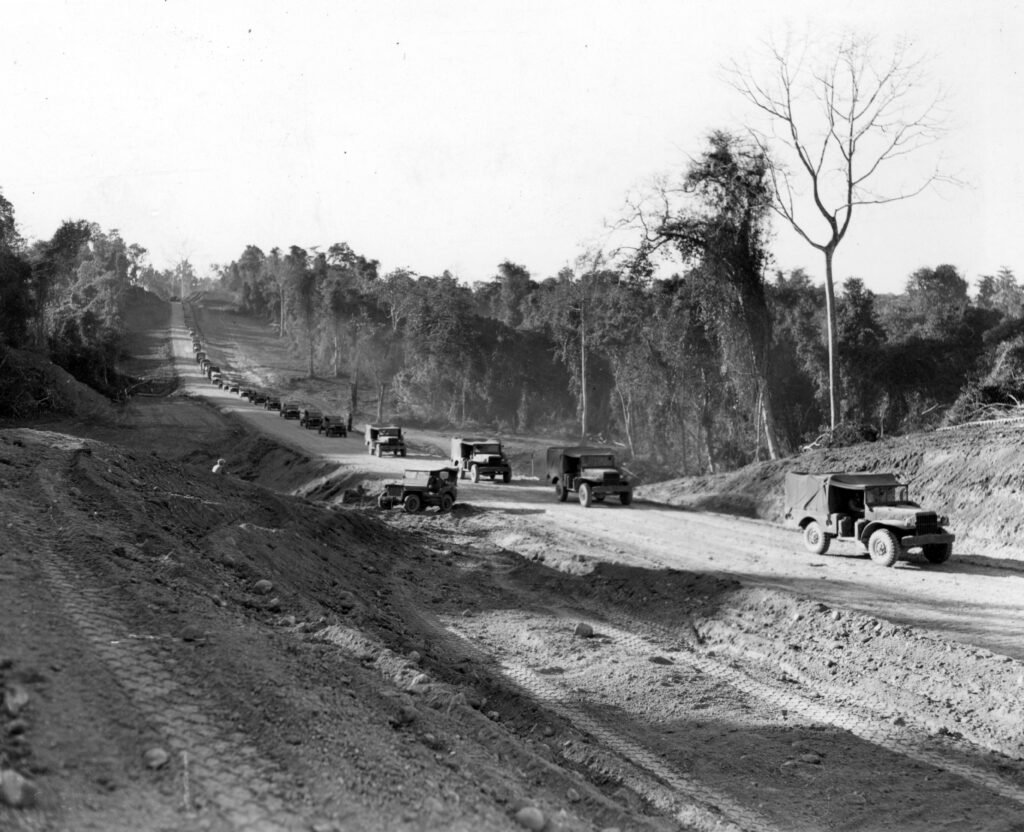
Military logistics covers the planning, movement, and sustainment of the people, equipment, and supplies that armed forces need to operate. It includes transportation of troops and materiel, the supply of fuel, food, and ammunition, maintenance of vehicles and weapons, and the evacuation and treatment of casualties.
Historical importance
Logistics has shaped the outcome of conflicts throughout history, often more decisively than tactical skill on the battlefield. Napoleon famously observed that an army marches on its stomach, and many historic campaigns collapsed not because of defeat in battle but because supply lines could not keep pace with advancing forces, particularly in harsh terrain or over long distances.
Core functions
Modern military logistics is typically organized around several functions: transportation of personnel and cargo by land, sea, and air; supply chain management for consumables such as fuel, food, and ammunition; maintenance and repair of equipment; and medical logistics, including the evacuation of wounded personnel to appropriate levels of care. Each function requires careful forecasting, since shortages at the front line often trace back to planning failures far from combat.
Contemporary challenges
Expeditionary warfare, in which forces operate far from their home territory, places especially heavy demands on logistics, requiring secure supply lines across oceans or contested regions. Modern militaries increasingly rely on computerized tracking systems, predictive analytics, and private contractors to manage the scale and complexity of sustaining forces deployed around the world.
Strategic lift and distribution
A central logistical challenge is strategic lift, the capacity to move large quantities of troops, vehicles, and supplies across long distances by sea, air, or land. Sealift remains the most economical way to move heavy equipment and bulk supplies, while airlift offers speed at much higher cost, making it suitable mainly for urgent or time sensitive needs. Once materiel arrives in a theater, distribution networks of trucks, railways, and forward supply depots move it closer to the front lines where it is actually needed.
Maintenance and sustainment
Keeping vehicles, weapons, and equipment operational requires a sustained maintenance effort, ranging from basic repairs performed by unit level mechanics to major overhauls conducted at specialized depots far from the front. Spare parts logistics can be especially challenging for complex modern equipment, since a shortage of a single critical component can render expensive vehicles or aircraft unusable until replacement parts arrive.
Private contractors and modern trends
Since the late twentieth century, many militaries have increasingly relied on private contractors to handle logistics functions that were once performed entirely by uniformed personnel, including transportation, base support, and even some maintenance work. This shift has allowed militaries to focus uniformed personnel on combat roles, though it has also raised questions about accountability and the security of supply chains that depend on civilian contractors operating in dangerous environments.
Fuel and energy logistics
Modern mechanized militaries consume enormous quantities of fuel, making petroleum logistics a central and often underappreciated element of sustained operations. Armored vehicles, aircraft, and naval vessels all depend on continuous fuel supply, and historical campaigns have repeatedly stalled when fuel reserves ran low even while other supplies, including ammunition, remained adequate, illustrating how a single logistical bottleneck can constrain an entire operation regardless of tactical success elsewhere.
Humanitarian and civil applications
The systems and expertise developed for military logistics frequently find application in humanitarian relief operations, where militaries are often among the few organizations capable of rapidly delivering large quantities of food, medicine, and shelter materials to disaster affected areas, particularly when civilian infrastructure has been damaged or destroyed and commercial supply chains cannot function normally.
Just in time versus stockpiling
Logistics planners face a persistent tension between maintaining large forward stockpiles of supplies, which provide a buffer against disruption but are costly and vulnerable to attack, and relying on just in time delivery systems that reduce costs but leave forces more exposed if supply lines are cut, a tradeoff that has become especially visible during recent conflicts involving contested logistics networks.
Logistics as a target
Because military operations depend so heavily on functioning supply lines, logistics infrastructure itself has become a frequent target in modern warfare. Attacks on fuel depots, transportation hubs, and supply convoys can achieve strategic effects disproportionate to the resources required to carry them out, since degrading an opponents logistics can immobilize forces that remain otherwise intact, making logistics protection an increasingly important component of overall military planning rather than a purely administrative afterthought.
Enduring importance
Despite being less visible and less studied than tactics or grand strategy, logistics continues to determine what military operations are actually achievable, a reality that remains as true for modern expeditionary forces equipped with advanced technology as it was for ancient armies dependent on wagons and pack animals.
Logistics planning tools
Modern militaries rely on sophisticated computerized planning tools to forecast consumption rates, schedule resupply convoys, and track inventory across widely dispersed units, a significant advance over the largely manual logistics planning methods used throughout most of military history, though these digital systems introduce their own vulnerabilities if the underlying networks are compromised or disrupted during a conflict.
Closing note
These basic logistical realities are expected to persist even as new technologies continue to reshape the tools used to manage them.
Planners continue to treat logistics as a decisive factor in determining what any military force can realistically sustain over an extended campaign.
It remains one of the least glamorous yet most consequential dimensions of military capability.
Its basic logic has outlasted many generations of equipment and technology.
It is studied, planned, and tested continuously across virtually every modern armed force.
Key facts
- Array
Quick checkWhy is logistics often considered as important as strategy in military planning?Show answer
Even the best strategic plan fails if forces lack the fuel, ammunition, food, and equipment needed to execute it, so logistics determines what a military force can realistically sustain in the field.
Sources
- Array
Editorially reviewed by Specialty Digest Editorial TeamLast reviewed November 4, 2026Researched and drafted with AI assistanceReport an issue