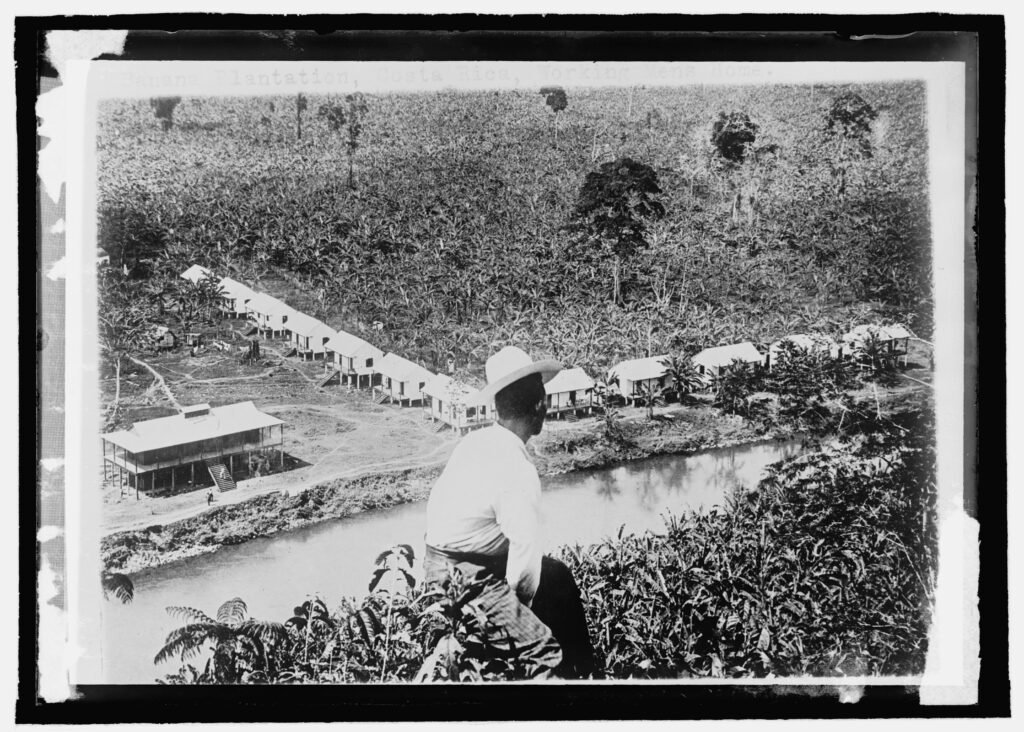
Monoculture is the agricultural practice of growing a single crop species, or in some cases a single genetically similar variety of that crop, across a large area of land, often over many consecutive growing seasons. It stands in contrast to polyculture and crop rotation, which deliberately grow multiple species together or alternate different crops on the same land over time, and it has become the dominant model for producing many of the world’s major commodity crops, including corn, soybeans, wheat, and rice, largely because it simplifies planting, harvesting, and mechanization at a large scale.
Why monoculture became the dominant model
Growing one crop across a large, uniform field allows farmers to use the same machinery, the same planting and harvesting schedule, and the same pest and fertilizer management across the entire area, substantially reducing labor and equipment costs compared with managing a patchwork of different crops with different needs. This efficiency has made monoculture the backbone of industrial-scale commodity agriculture, particularly in regions such as the American Midwest, where vast, largely uniform fields of corn and soybeans dominate the landscape and supply both food and animal feed markets around the world. Modern plant breeding and genetic uniformity, including the widespread use of hybrid and genetically modified seed varieties bred for consistent performance, have reinforced this model, since growers can plant the same high-performing variety across thousands of acres with predictable results under normal conditions.
The core vulnerability: genetic uniformity
Monoculture’s central risk is that a field planted with one crop, or one genetically similar variety of that crop, offers no natural barrier to slow the spread of a pest or disease that happens to be well suited to attacking it; once that pest or pathogen establishes itself, it can spread rapidly and virtually unchecked across the entire planting, since every plant is similarly vulnerable. A mixed planting of different species or varieties, by contrast, tends to contain an outbreak naturally, since a pathogen well adapted to one species or variety is less likely to spread efficiently to a different one growing nearby.
A cautionary case: the Gros Michel banana
The history of the commercial banana illustrates this vulnerability vividly. Through the first half of the twentieth century, the Gros Michel variety dominated banana exports to markets such as the United States, prized for its flavor and shipping durability, and propagated by cloning cut suckers from existing plants rather than by seed, meaning every commercial Gros Michel plant was genetically identical to every other. Starting in the 1950s and accelerating through the 1960s, a fungal pathogen causing Fusarium wilt, often called Panama disease, spread through Caribbean and Central American plantations, and because the entire commercial crop shared the same genetic vulnerability, the disease devastated Gros Michel production across the region. Growers eventually replaced it almost entirely with the Cavendish variety, a different, disease-resistant banana that is now itself grown as a near-total global monoculture and, following the same cloning-based propagation, is genetically uniform in essentially the same way Gros Michel was. A newer, more virulent strain of the same Fusarium pathogen, known as Tropical Race 4, has already been detected on Cavendish plantations in Colombia, and researchers estimate that developing a resistant replacement variety could take 15 to 20 years, illustrating that the underlying vulnerability was never actually solved, only reset with a different variety.
An earlier warning: the Irish Potato Famine
The Gros Michel banana was not the first widely cited monoculture collapse. In the 1840s, Ireland’s food supply depended heavily on a single potato variety known as the Lumper, grown almost continuously across much of the country’s farmland. When the pathogen Phytophthora infestans, which causes late blight, reached Ireland in 1845, the Lumper’s genetic uniformity offered no resistance, and the resulting Great Famine killed roughly a million people and drove mass emigration over the following years, standing as one of history’s starkest illustrations of how dependence on a single, genetically uniform crop variety can turn a plant disease into a humanitarian catastrophe.
Soil, pests, and long-term land effects
Beyond acute disease outbreaks, repeatedly growing the same crop on the same land depletes the specific soil nutrients that crop draws on most heavily and can allow populations of crop-specific pests and weeds to build up steadily in the soil and surrounding environment over successive seasons, since there is no break in the pest’s preferred host plant to interrupt its life cycle. These cumulative pressures are a major reason crop rotation exists as a standard alternative or complement to continuous monoculture, deliberately alternating different crops with different nutrient needs and different pest vulnerabilities on the same land across seasons to break these buildup cycles naturally.
Monoculture versus biodiversity
Large monoculture plantings also reduce habitat variety and food sources for wildlife compared with more diverse farming or natural landscapes, since a single crop species generally supports a narrower range of insects, birds, and other organisms than a mixed planting or a natural ecosystem would. This reduction in on-farm biodiversity is one reason some conservation and sustainable agriculture advocates promote practices such as agroforestry, hedgerow planting, and diversified crop rotations as ways to retain at least some of monoculture’s efficiency advantages while reducing its ecological costs.
FAQs
Is all large-scale farming monoculture? No. Large-scale farms can and sometimes do practice crop rotation or grow multiple crops across different fields in the same operation; monoculture specifically refers to growing the same crop, often the same variety, repeatedly on the same land, not simply to farming at a large scale.
Could the Cavendish banana disappear the way the Gros Michel did? It is a genuine risk rather than a settled certainty: the Tropical Race 4 strain of Fusarium wilt has already reached Cavendish plantations in Latin America, and because Cavendish is propagated as a genetically uniform clone just as Gros Michel was, researchers consider a repeat of that earlier collapse possible if a widely effective resistant replacement is not developed in time.
Key facts
- Dominant model for corn, soybeans, wheat and rice production
- Genetic uniformity removes natural barriers to pest/disease spread
- Gros Michel banana collapse (1950s-60s, Fusarium wilt/Panama disease) is a classic case
- Cavendish banana, its replacement, faces the same risk from Tropical Race 4
Related concepts
Quick checkIs all large-scale farming monoculture?Show answer
No, large farms can rotate or diversify crops; monoculture specifically means repeatedly growing the same crop/variety on the same land.
Sources
- EarthDate (University of Texas). Yes, We Had No Bananas. https://www.earthdate.org/episodes/yes-we-had-no-bananas
Editorially reviewed by Specialty Digest Editorial TeamLast reviewed November 1, 2026Researched and drafted with AI assistanceReport an issue