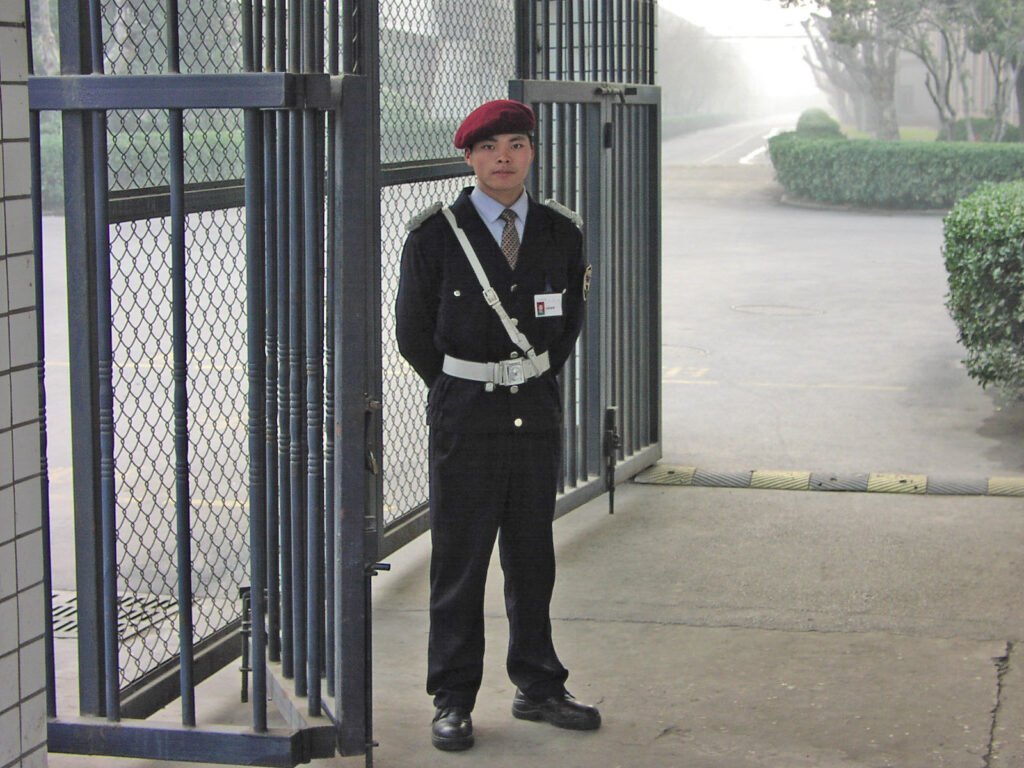
Overview
The private security industry consists of companies and individuals paid to protect people, property, and information, filling roles that public police departments either cannot or do not cover. It has grown into a major economic sector in its own right, and in many countries the number of private security employees now exceeds the number of sworn public police officers, reflecting a long-term shift in how both businesses and individuals manage protection needs.
Scope of Services
Services offered under the private security umbrella range widely, from uniformed guards stationed at a building entrance to armed transport for valuables, electronic alarm monitoring, private investigation, and executive protection for high-profile clients. Consulting firms within the industry also advise corporations and governments on risk assessment and security program design without necessarily providing guards themselves, reflecting how the field has broadened well beyond its traditional guard-at-the-door image.
Growth and Scope of the Industry
The private security industry has expanded steadily since the mid twentieth century, driven by population growth, rising concern about crime, and the limited capacity of public police forces to patrol every commercial site. In many countries, the number of private security personnel now exceeds the number of sworn police officers. The industry spans a wide range of services, including uniformed guarding, alarm monitoring, armored transport, investigative work, consulting, and electronic security system installation. Large multinational firms operate alongside thousands of small regional companies, creating a fragmented but fast growing market. Retail chains, shopping centers, office complexes, hospitals, schools, and residential communities all rely on private security providers to supplement or replace traditional law enforcement coverage. Economic pressures on municipal budgets have pushed many property owners and businesses toward contracted security rather than waiting for limited police response. Technology has also reshaped the field, with remote video monitoring and analytics reducing the need for some on site guard positions while creating new specialized roles in control rooms. Industry associations and trade groups track employment trends, publish best practice guidance, and lobby for licensing standards across different jurisdictions.
Regulation and Licensing
Licensing requirements for private security companies and personnel vary significantly between countries and even between states or provinces within the same country. Many jurisdictions require security guard license applicants to pass a background check, complete a minimum number of training hours, and in some cases pass a written examination covering legal authority and use of force. Companies providing armed security services typically face additional requirements, including firearms qualification renewed on a regular basis and specific insurance coverage. Some countries regulate the industry through a national authority, while others leave oversight to local or regional agencies, creating inconsistent standards across borders for companies operating internationally. Industry trade associations, including ASIS International and national security federations, have pushed for more uniform licensing standards and professional certification programs to raise the overall quality of the workforce. Critics of the industry have pointed to uneven enforcement of licensing rules, concerns about inadequate training in some low cost providers, and questions about accountability when private security personnel use force. In response, several jurisdictions have strengthened continuing education requirements and expanded the categories of misconduct that can result in license revocation, aiming to professionalize a workforce that now rivals public policing in scale.
Technology Trends and Future Outlook
The private security industry continues to be reshaped by advancing technology, with artificial intelligence increasingly applied to video analytics, enabling automated detection of loitering, unauthorized access attempts, or abandoned objects without requiring a human operator to watch every camera feed continuously. Drone technology has entered the field for large property patrols, perimeter inspection, and event monitoring, offering aerial coverage that would otherwise require significant foot patrol staffing. Remote guarding services, where a central monitoring center watches multiple client sites simultaneously through networked cameras and can speak to visitors through two way audio systems, have grown as a lower cost alternative to full time on site guards for certain applications. These shifts have sparked debate within the industry about the future balance between technology and human personnel, with many experts predicting that routine monitoring tasks will increasingly shift toward automated systems while human guards focus on tasks requiring judgment, deescalation skills, and physical presence. Workforce challenges also shape the industry outlook, including high turnover rates in guard positions, wage pressures as minimum wage laws rise in many regions, and ongoing efforts to improve training standards and career pathways. Industry growth projections generally remain positive, driven by continued urbanization, concern about mass violence incidents, and expanding commercial real estate requiring protection, even as the specific mix of services and technologies used to deliver that protection continues to evolve.
Economic Impact and Employment
The private security industry represents a substantial source of employment across both developed and developing economies, often ranking among the largest private employers in a given country when guard services, investigation firms, and alarm monitoring companies are combined. Entry level positions typically require minimal formal education, making the field an accessible point of entry into the workforce for many individuals, while specialized roles in consulting, executive protection, or cybersecurity integration command significantly higher compensation and often require advanced certifications or military and law enforcement backgrounds. Economic downturns have historically had mixed effects on the industry, since budget pressures can reduce security spending at some organizations while simultaneously driving demand at others seeking lower cost alternatives to public policing or insurance requirements following increased crime. Mergers and acquisitions have consolidated significant portions of the industry under a small number of large multinational firms, even as thousands of independent local operators continue to serve regional markets, particularly for smaller commercial clients and residential communities.
Key facts
- Array
Quick checkHow does private security differ from public policing?Show answer
Private security is hired by and answers to a paying client rather than the public, and generally lacks police powers of arrest.
Sources
- Array
Editorially reviewed by Specialty Digest Editorial TeamLast reviewed November 4, 2026Researched and drafted with AI assistanceReport an issue