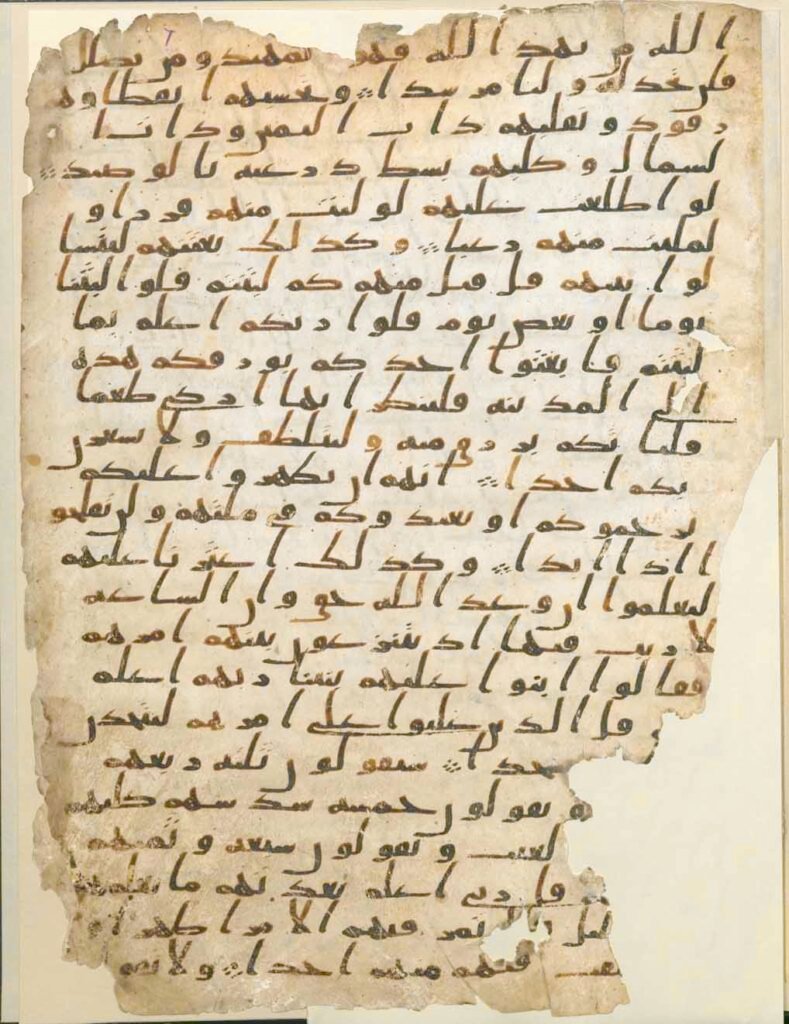
Overview
The Quran is the central religious text of Islam, believed by Muslims to be the literal and unaltered word of God revealed to the Prophet Muhammad through the angel Gabriel over a period of approximately twenty-three years. Composed in Arabic and organized into 114 chapters, known as surahs, the Quran holds a place of unmatched authority within Islamic theology, law, and daily religious practice.
Structure and Content
The surahs of the Quran vary considerably in length and are arranged roughly from longest to shortest rather than chronologically, covering themes including theology, law, moral guidance, narrative accounts of earlier prophets, and detailed instruction regarding worship and conduct. Verses, known as ayat, form the basic unit of the text and are frequently cited individually in religious discussion and legal reasoning.
Revelation and Compilation
According to Islamic tradition, the Quran was revealed to Muhammad gradually over more than two decades in response to specific historical circumstances, and was compiled into a single authoritative written text within a few decades following his death. Muslims hold that this process preserved the text with exceptional accuracy, a claim reinforced by a long tradition of memorization alongside written transmission.
Memorization and Recitation
Memorizing the entire Quran, a practice and achievement known as becoming a hafiz, is highly honored within Muslim communities and has served historically as a primary means of preserving and transmitting the text across generations. Formal recitation of the Quran, governed by a specialized discipline known as tajwid, is considered both a religious obligation and an art form in its own right.
Interpretation and Law
Quranic interpretation, known as tafsir, forms an extensive field of Islamic scholarship, producing commentary addressing linguistic, legal, historical, and theological dimensions of the text across many centuries. Alongside the hadith literature, the Quran serves as the primary source for Islamic law, shaping legal reasoning across the major schools of Islamic jurisprudence.
Role Today
The Quran remains central to Muslim religious life worldwide, recited daily in prayer, studied intensively in religious education, and consulted as the ultimate source of authority on matters of belief and practice. Its influence extends well beyond religious observance alone, having profoundly shaped Arabic language, literature, and culture across the Muslim world.
Preservation and Standardization
Tradition holds that the third caliph, Uthman, commissioned an authoritative written edition during the seventh century, consolidating earlier partial written records and the extensive memorization already maintained by companions of the Prophet. This standardized consonantal text, later supplemented with vowel markings to aid correct pronunciation, became the basis for the text used throughout the Muslim world today, with regional reading traditions preserving minor variations in recitation style.
Memorization of the complete text remains a widely practiced devotional discipline. A person who completes this memorization is honored with the title hafiz, and competitions in recitation and memorization are held in many Muslim-majority countries, reflecting the central cultural and spiritual value placed on preserving the text through both oral and written transmission working together.
Literary Features
The text is organized into 114 chapters called surahs, arranged roughly by length rather than chronological order of revelation, with the longer chapters generally placed earlier in the book. Surahs are further divided into verses called ayat. The language is noted for its distinctive rhythmic and rhetorical qualities, which Islamic scholarship has long studied as a central feature of the text and a key component of classical Arabic literary heritage.
Schools of Interpretation
Across history, scholars have developed varied interpretive approaches, including literal exegesis, legal interpretation feeding into Islamic jurisprudence, and mystical readings associated with Sufi tradition. These approaches coexist within a broader interpretive tradition that continues to generate extensive commentary addressing both classical questions and contemporary circumstances facing Muslim communities worldwide.
Role in Daily Life
Beyond scholarly study, the text structures daily religious practice for observant Muslims, with passages recited during the five daily prayers and verses commonly inscribed on buildings, artwork, and personal items. Its language has also profoundly shaped classical and modern Arabic, with many everyday expressions and literary conventions tracing their origin to its distinctive phrasing and vocabulary.
Artistic and Calligraphic Tradition
The text has inspired an extensive tradition of calligraphic art, with skilled calligraphers developing elaborate scripts to render its verses in forms considered both devotionally significant and artistically accomplished. Architectural decoration across the Muslim world frequently incorporates carved or painted verses, making the written form of the text a visible and celebrated feature of religious and civic buildings throughout many regions and historical periods.
Translation of the text into other languages has historically been approached with caution, since many scholars hold that only the original Arabic carries full scriptural status, with translations serving as aids to understanding rather than replacements for the source text used in formal worship and recitation settings across Muslim communities worldwide.
Reciters trained in the art of tajwid apply precise rules of pronunciation and rhythm, preserving an oral performance tradition considered inseparable from the written text itself.
This combination of disciplined oral performance and preserved written text continues to anchor Muslim religious life across diverse linguistic and cultural settings today.
It remains, by any measure, one of the most memorized and recited texts in human history.
Scholars across many disciplines continue to study its language, structure, and historical context in considerable depth.
Legal and Ethical Guidance
Beyond devotional and narrative content, the text contains direct guidance on matters of personal conduct, family relations, commerce, and community governance, forming a core source that jurists draw upon when developing more detailed legal rulings across different schools of Islamic jurisprudence active throughout history and into the present day.
Key facts
- Array
Quick checkWhy do many Muslims consider translations of the Quran to be something other than the Quran itself?Show answer
Because the Quran is understood by Muslims as the literal word of God revealed specifically in Arabic, with its precise wording, rhythm, and linguistic structure considered integral to its sacred character, most scholars and ordinary believers regard any translation as an interpretation or approximation of meaning rather than scripture in the full sense, which is why the original Arabic text remains central to recitation, memorization, and formal religious study.
Sources
- Array
Editorially reviewed by Specialty Digest Editorial TeamLast reviewed November 4, 2026Researched and drafted with AI assistanceReport an issue