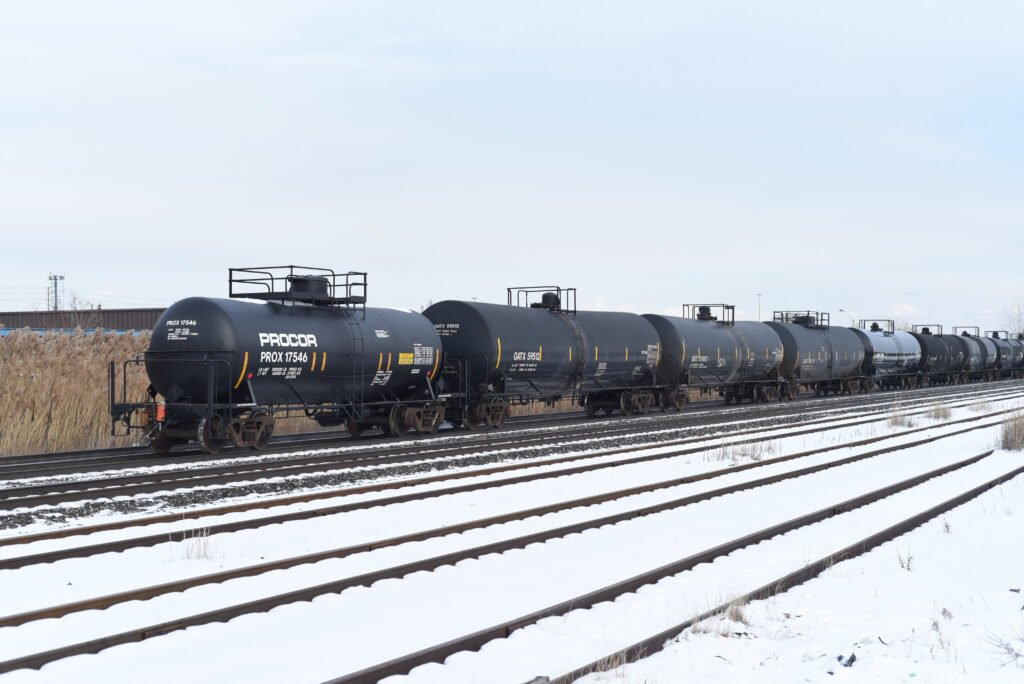
What Rail Freight Covers
Rail freight is the movement of goods by train rather than truck, ship, or aircraft. It is particularly well suited to moving large volumes of bulk commodities such as coal, grain, and ore over long distances, where rail’s significant cost and fuel efficiency advantages over trucking outweigh its generally slower transit times.
Carload Versus Intermodal Rail Freight
Traditional carload freight involves loading bulk commodities or specialized goods directly into dedicated railcars designed for that cargo type, such as hopper cars for grain or tank cars for liquids. Intermodal rail freight instead carries standardized shipping containers that can also move by ship and truck, combining rail’s cost efficiency over long distances with trucking’s flexibility for first- and last-mile delivery.
Rail Freight Economics
Railroads achieve significant fuel efficiency moving freight compared with trucking, since a single train can move the cargo equivalent of dozens or even hundreds of trucks while consuming substantially less fuel per ton moved. This efficiency advantage grows with distance, making rail freight most competitive on longer routes where trucking’s speed advantage matters less.
Rail Freight Infrastructure and Capacity
Rail freight capacity depends on track capacity, siding length for passing trains, and terminal capacity for loading and unloading. Freight railroads invest heavily in infrastructure to expand capacity on high-traffic corridors, since track congestion can significantly slow transit times and reduce the reliability advantage rail freight otherwise offers over other long-haul transportation modes.
Unit Trains
Unit trains carry a single bulk commodity, such as coal or grain, from one origin to one destination without being broken apart and reassembled along the way, achieving significant efficiency gains compared with traditional mixed-freight trains that must be sorted and reassembled at classification yards along their route.
Rail Freight Classification Yards
Classification yards, sometimes called hump yards, sort individual railcars from incoming trains and reassemble them into new outbound trains headed toward different destinations, a process essential for mixed carload freight but unnecessary for unit trains or intermodal trains that travel directly between a single origin and destination.
Competition Between Rail and Trucking
Rail freight and trucking compete directly for certain freight categories, particularly intermodal container traffic, with shippers choosing based on the specific balance of cost, speed, and reliability each mode offers for a given route and cargo type, and many large shippers using a strategic mix of both modes depending on shipment characteristics.
Rail Freight Pricing and Contracts
Rail freight rates are typically negotiated through contracts between shippers and railroads covering specific volume commitments and service terms, with pricing influenced by factors including distance, commodity type, car type required, and the level of competition present on a given route, since some rail corridors are served by only one railroad.
Intermodal Rail Growth
Intermodal rail freight, carrying containers that also move by truck and ship, has grown substantially as a share of total rail freight volume in recent decades, reflecting the broader growth of containerized global trade and railroads’ strategic investment in intermodal terminal infrastructure and double-stack rail car technology to capture this growing traffic segment.
Challenges Facing Rail Freight
Rail freight faces ongoing challenges including aging infrastructure in some networks, competition from increasingly efficient trucking, and the fixed-route nature of rail that limits its flexibility compared with trucks that can reach almost any location with road access, requiring railroads to continuously demonstrate cost and reliability advantages to retain shipper business.
Interline Agreements Between Railroads
Rail freight shipments frequently travel over tracks owned by more than one railroad company, particularly in freight systems like that of the United States where numerous Class I, regional, and short line railroads interconnect across a vast network. Interline agreements govern how railroads hand off railcars to one another, how revenue from a through shipment is divided among the carriers that handled different legs of the journey, and how liability is apportioned if cargo is damaged along the way. These agreements, along with industry-standard railcar interchange rules, allow a single loaded railcar to move seamlessly across several railroads’ track without the shipper needing to arrange separate contracts with each carrier, though interline shipments can take longer than single-carrier moves because of the handoff time required at interchange yards.
Unit Trains for Bulk Commodities
For commodities that move in very large, steady volumes between a single origin and destination, railroads often operate unit trains, which consist entirely of railcars carrying one commodity moving as a dedicated train rather than being switched and recombined with other traffic along the way. Coal, grain, and crude oil have historically been major unit train commodities, since loading an entire train at a single mine, elevator, or terminal and unloading it at a single destination eliminates the classification yard switching that otherwise consumes significant time in general freight operations. Unit trains allow both the railroad and the shipper to achieve much higher asset utilization and lower per-ton costs than mixed freight service, which is why major utilities, grain cooperatives, and refineries often invest in dedicated unloading infrastructure specifically to receive unit train deliveries.
Precision scheduled railroading, a operating philosophy adopted by several major North American railroads, emphasizes fixed train schedules and asset utilization over traditional hump-yard switching, a shift that has reduced costs for some railroads while drawing criticism over service reliability for certain shippers.
Railcar leasing companies supply much of the specialized rolling stock used in rail freight, allowing shippers and railroads to access purpose-built cars for commodities like tank cars or covered hoppers without the capital commitment of owning a dedicated fleet outright.
Key facts
- Array
Quick checkWhat types of cargo are best suited to rail freight?Show answer
Bulk commodities such as coal, grain, and ore, as well as containerized goods moving long distances where rail's cost efficiency outweighs its slower speed compared with trucking.
Sources
- Array
Editorially reviewed by Specialty Digest Editorial TeamLast reviewed November 4, 2026Researched and drafted with AI assistanceReport an issue