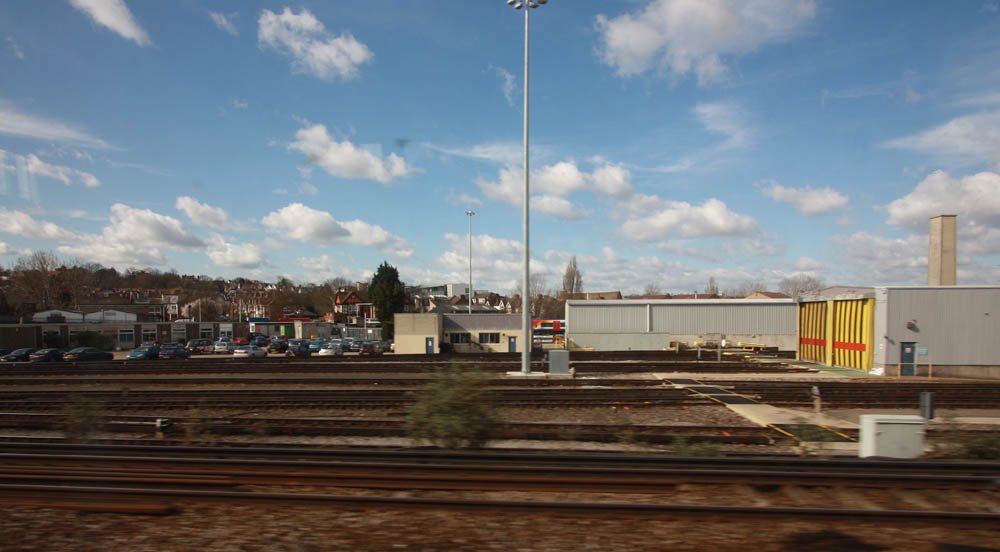
What Railway Transport Covers
Railway transport moves passengers and freight using trains running on fixed steel rail tracks. The steel-wheel-on-steel-rail design creates significantly less rolling resistance than road vehicles, allowing trains to move very large loads efficiently, particularly over long distances where this efficiency advantage compounds over many miles of travel.
Freight Versus Passenger Railways
Many countries operate largely separate freight and passenger rail networks or services, though some railways carry both. Freight railways focus on moving bulk commodities, containers, and other goods, often prioritizing cost efficiency over speed, while passenger railways prioritize schedule reliability, comfort, and in some countries, high travel speeds.
Rail Infrastructure Requirements
Railways require substantial fixed infrastructure investment, including the physical track, signaling systems that keep trains safely separated, and maintenance facilities. Unlike road transport, where vehicles from different operators share common infrastructure built largely by government, railways often involve closer integration between the infrastructure owner and the operating railway.
Rail Network Ownership Models
Railway ownership and operation structures vary significantly by country, ranging from fully vertically integrated railways that own both track and trains to structures that separate infrastructure ownership from train operations, allowing multiple train operators to run service over shared track owned by a separate infrastructure entity.
Rail Gauge Standards
Railways around the world use different track gauges, the distance between the two rails, with standard gauge being the most widely used worldwide, though several countries maintain different gauge standards for historical reasons, creating interoperability challenges when goods or trains need to cross between networks using different gauges.
High-Speed Rail Development
Many countries have invested in dedicated high-speed rail lines designed for passenger trains traveling well above conventional rail speeds, requiring specially engineered track, signaling, and often entirely separate right-of-way from conventional freight and passenger rail to achieve the speeds and safety margins high-speed operation demands.
Rail’s Role in Urban Transit
Beyond intercity travel and freight, railway technology also underpins urban transit systems including subways, light rail, and commuter rail, which apply the same fundamental steel-wheel-on-steel-rail principles at different scales and speeds suited to dense urban travel patterns rather than long-distance intercity movement.
Railway Regulation and Government Involvement
Railways are typically subject to significant government regulation given their historical role as critical infrastructure and, in many cases, natural monopoly characteristics on specific routes, with regulatory oversight covering safety standards, and in some countries, pricing for freight or access terms for competing train operators using shared infrastructure.
Railway Employment and Labor
Railways employ a specialized workforce including train crews, maintenance-of-way workers who maintain track and infrastructure, and signaling technicians, with safety-critical roles typically requiring specific certification and ongoing training given the serious consequences of operational errors in railway work.
Rail’s Environmental Advantages
Railways generally offer significant environmental advantages over road transport for both freight and passengers, since trains move large volumes of cargo or people using substantially less energy per unit moved than trucks or cars, making rail investment a frequently cited strategy for reducing transportation sector emissions in national climate policy.
Government Ownership Models Worldwide
Railway transport has historically required such large upfront capital investment that most national networks were built, and remain substantially owned or subsidized, by national or regional governments rather than purely private capital. Models vary considerably: some countries maintain fully vertically integrated state railways that own infrastructure and operate trains together, others separate infrastructure ownership from train operations and allow multiple competing operators to run services over shared tracks, and a smaller number, most notably in parts of the freight-dominated United States network, rely on investor-owned railroads that built and still own their own lines. The European Union has pushed member states toward infrastructure-operations separation specifically to allow competing train operators onto previously monopoly national networks, with mixed results depending on how fairly track access is allocated and priced between the incumbent and new entrants.
Rail’s Comparative Energy Efficiency
Railway transport’s low rolling resistance between steel wheel and steel rail gives it a substantial energy efficiency advantage over road transport for moving large volumes of freight or passengers, an advantage that grows further when the railway is electrified and powered by a low-carbon electricity grid. This efficiency has made rail central to many national decarbonization strategies for both freight and passenger transport, driving investment in electrification of previously diesel-operated lines and new high-speed passenger corridors intended to shift travelers away from short-haul domestic flights. Realizing these efficiency gains in practice depends heavily on how full trains run and how directly rail routes compete with road and air alternatives on journey time, since an electrified railway running near-empty trains delivers far less environmental benefit than one operating at high utilization.
Freight and passenger operations on the same railway network can create scheduling tension, since passenger trains typically demand strict on-time performance while freight trains move at lower priority, requiring careful timetable planning where both share tracks.
Gauge differences between national rail networks, such as the break between standard gauge and broader or narrower gauges used in parts of the former Soviet Union, Iberia, and elsewhere, continue to constrain seamless international rail freight movement and require either gauge-changing technology or cargo transfer at border points.
Noise and vibration from rail operations near residential areas have also become a growing regulatory concern, prompting investment in quieter rail fastening systems, noise barriers, and operational restrictions on night running in some urban corridors.
Rail infrastructure managers must also plan for extreme weather resilience, since heat-related rail buckling and flood damage to embankments have grown more frequent concerns for network reliability in a changing climate.
More in Maritime and Rail Transport
Key facts
- Highly efficient for moving large volumes of freight or passengers over long distances
- Requires significant fixed infrastructure investment in track and signaling
- Includes both freight railways and passenger rail systems
Related concepts
Quick checkWhat makes railway transport efficient for long-distance movement?Show answer
Trains can move very large volumes of freight or passengers using relatively little fuel per unit moved, because steel wheels on steel rails create far less friction than rubber tires on pavement.
Sources
- International Maritime Organization
- Association of American Railroads
Editorially reviewed by Specialty Digest Editorial TeamLast reviewed November 4, 2026Researched and drafted with AI assistanceReport an issue