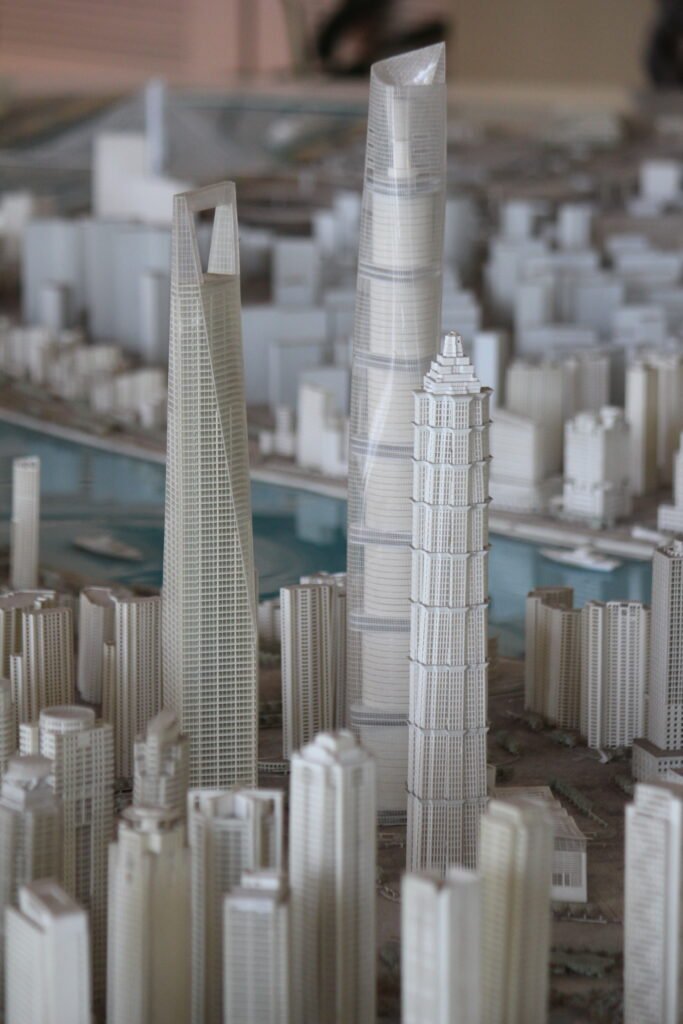
A smart city is an urban area that uses networked digital technology, sensors, and data analysis to monitor and manage its infrastructure, services, and resources more efficiently, with the stated goal of improving quality of life, reducing waste, and making municipal operations more responsive. The term covers an unusually broad range of applications, from traffic
Smart City Read More »
An urban area that uses networked digital technology and data analysis to manage infrastructure and services more efficiently.
Structural steel is steel fabricated into specific shapes, such as beams, columns, and trusses, and used as the primary load-bearing frame of a building or other structure. Valued for its high strength relative to weight, consistency as a manufactured material, and suitability for prefabrication, structural steel has been a dominant framing material for mid- and
Structural Steel Read More »
Steel fabricated into beams, columns, and other shapes used as the primary load-bearing frame of a building.
Sustainable architecture is the design and construction of buildings intended to minimize negative environmental impact across their entire life cycle, from the extraction of raw materials through construction, decades of operation, and eventual demolition or reuse. It treats a building not as a finished object but as an ongoing exchange of energy, water, and materials
Sustainable Architecture Read More »
Building design and construction aimed at minimizing environmental impact across a building's full life cycle.
Timber framing is a construction method that builds a structure’s skeleton from large, solid wooden beams and posts joined together, traditionally using carved mortise-and-tenon joints secured with wooden pegs rather than metal fasteners. It predates industrial nails and bolts by centuries and produces a visually distinctive structure, often left exposed both inside and outside the
Timber Framing Read More »
A construction method that builds a structural skeleton from large wooden beams and posts joined with carved joinery.
Transit-oriented development is an approach to urban planning that concentrates housing, jobs, retail, and other amenities within easy walking distance of a public transit station, typically defined as a quarter- to half-mile radius, with the goal of making transit a convenient and attractive alternative to driving. Rather than treating a train or bus station as
Transit-Oriented Development Read More »
An urban planning approach that concentrates dense, mixed-use, walkable development around public transit stations.
Urban planning is the professional discipline concerned with designing and regulating the physical layout, land use, infrastructure, and growth of towns and cities. It sits at the intersection of architecture, civil engineering, economics, environmental science, and public policy, since decisions about where roads, housing, parks, and factories go shape nearly everything about how people live,
Urban Planning Read More »
The discipline of designing and regulating the physical layout, land use, and growth of towns and cities.
Urban sprawl refers to the rapid, low-density outward expansion of a city into surrounding undeveloped land, typically characterized by car-dependent single-use development, large residential subdivisions disconnected from jobs and shops, and highway-oriented commercial strips. It is distinguished from ordinary urban growth by its specific pattern: low density, strict separation of residential, commercial, and office uses,
Urban Sprawl Read More »
The rapid, low-density, car-dependent outward expansion of a city into surrounding undeveloped land.
Walkability is a measure of how friendly an area is to walking, based on factors such as the presence and quality of sidewalks, the distance between destinations, street connectivity, safety from traffic, and the overall experience of moving through a place on foot rather than by car. Planners treat walkability as both a desirable urban
Walkability Read More »
A measure of how friendly an area is to walking, based on sidewalks, destination distance, connectivity, and safety.
Waterproofing is the application of materials and systems designed to prevent water from penetrating a building structure, protecting foundations, roofs, walls, and other building elements from moisture intrusion that can cause structural damage, mold growth, and deterioration of finishes over time. Waterproofing differs from water-resistant construction in that it aims to create a continuous, impermeable
Waterproofing Read More »
The application of materials and systems designed to prevent water penetration into a building structure.
Zoning is the legal mechanism by which local governments divide land into designated districts and regulate what can be built or operated within each one, controlling factors such as permitted land use, building height, density, setbacks from property lines, and parking requirements. It is the single most consequential tool in the urban planner’s toolkit because
Zoning Read More »
The legal mechanism by which local governments divide land into districts and regulate permitted use, height, and density within each.