Trinidad and Tobago is a twin-island republic off the northeastern coast of South America, the southernmost nation in the Caribbean. Built on one of the region’s longest-running oil and natural gas industries, it is also known worldwide as the birthplace of steelpan music and one of the Caribbean’s largest Carnival celebrations.
Where Is Trinidad and Tobago Located?
Trinidad and Tobago lies at the southern end of the Caribbean island chain, just off the northeastern coast of Venezuela, separated from the South American mainland by the narrow Gulf of Paria and the Columbus Channel. Trinidad, the larger and more populous island, lies to the south, while smaller Tobago sits about 30 kilometers to the northeast. Port of Spain, on Trinidad’s northwestern coast, is the capital.
Geography
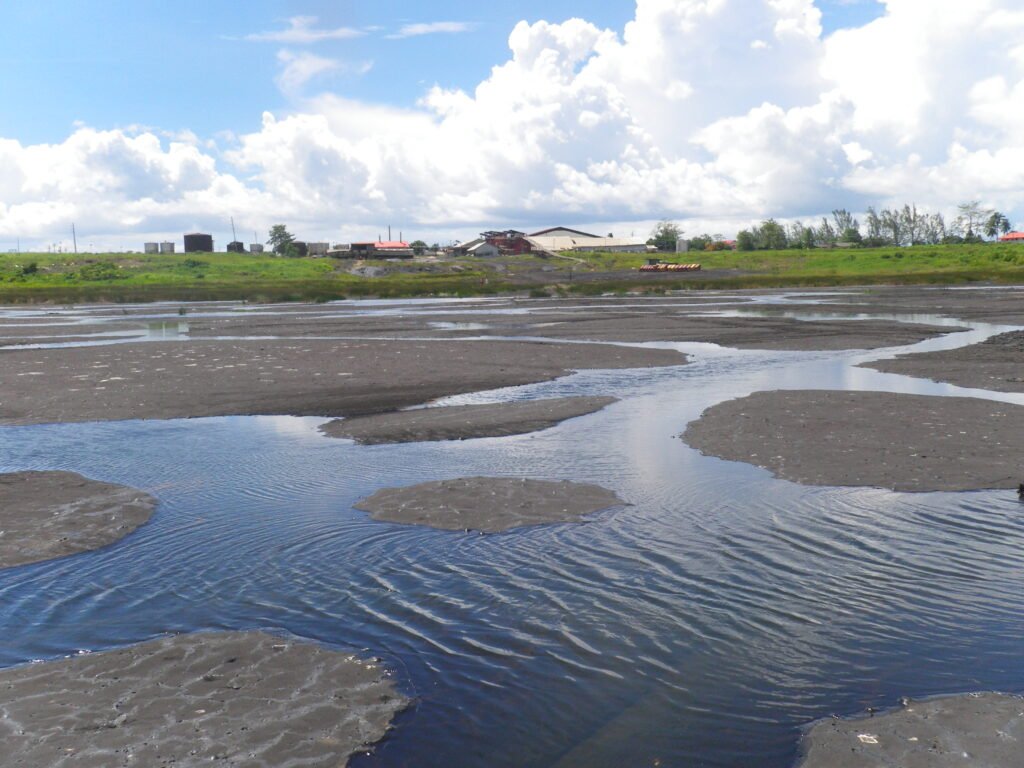
Trinidad’s terrain includes the Northern Range, an extension of South America’s coastal mountain system that reaches over 900 meters, along with central plains and swamps such as the Caroni Swamp, a major wetland and bird sanctuary. In the island’s southwest lies Pitch Lake, the largest natural deposit of asphalt in the world, a lake of semi-solid bitumen covering around 40 hectares. Tobago, more compact and hilly, is fringed by coral reefs and beaches and has a more forested, less industrialized landscape than Trinidad.
A Brief History of Trinidad and Tobago
Colonial Rule and a Diverse Population
Trinidad was a Spanish colony from the late fifteenth century until Britain seized it in 1797, while Tobago changed hands repeatedly among Spanish, British, French, Dutch, and Courlander (Baltic German) colonizers before becoming British in 1814. Slavery, abolished in the British Empire in 1834, had been used to staff sugar and cocoa plantations on both islands; after abolition, Britain brought large numbers of indentured laborers from India to Trinidad between 1845 and 1917, a migration that reshaped the islands’ demographics and created the large Indo-Trinidadian community that remains today.
Unification and Independence
Trinidad and Tobago were administered separately for most of their colonial history before being unified as a single British colony in 1889. The country gained independence from Britain in 1962 and became a republic within the Commonwealth in 1976, with a president as head of state replacing the British monarch.
Government and Economy
Trinidad and Tobago is a parliamentary republic. According to World Bank data, it is classified as a high-income economy, with a population of approximately 1.37 million as of 2025. The economy has long been built on oil, discovered and commercially exploited from the nineteenth century, and natural gas, which today underpins a substantial liquefied natural gas and petrochemical export industry, making Trinidad and Tobago one of the Caribbean’s wealthiest nations on a per capita basis. This resource dependence also exposes the economy to global energy price swings, and the government has pursued diversification into financial services, manufacturing, and tourism, particularly on Tobago.
Culture and People
Trinidad and Tobago’s population reflects its colonial and migration history, with Trinidadians of Indian and African descent each making up roughly two-fifths of the population, alongside smaller communities of mixed, European, Chinese, Syrian-Lebanese, and Indigenous heritage. English is the official language, while Trinidadian Creole and Tobagonian Creole are widely spoken, and Hindi and other Indian languages have influenced local vocabulary and religious practice, with Hinduism and Islam practiced alongside Christianity. The islands are internationally celebrated as the birthplace of steelpan music, developed from oil drums in Trinidad’s urban communities in the twentieth century, as well as calypso and soca music, all central to Trinidad’s Carnival, one of the largest and most influential Carnival celebrations in the world.
What Is Trinidad and Tobago Known For?
The country’s most distinctive natural landmark is Pitch Lake in La Brea, southwestern Trinidad, the world’s largest natural deposit of asphalt, which has supplied pitch for roads and shipbuilding for centuries and was noted by the English explorer Sir Walter Raleigh, who used it to caulk his ships in 1595. Trinidad and Tobago is equally well known for its Carnival, steelpan music, which originated nowhere else in the world, and its status as one of the earliest sites of commercial oil production anywhere, with wells near Pitch Lake dating to the 1850s.
Why Trinidad and Tobago Matters
Few places illustrate the layered colonial history of the Caribbean as clearly as Trinidad and Tobago, where Spanish, French, Dutch, and British rule, followed by the mass migration of indentured Indian laborers after the abolition of slavery, produced one of the region’s most ethnically and religiously diverse societies. Its long history as an oil and gas producer, beginning in the nineteenth century at Pitch Lake and continuing today through liquefied natural gas exports, has made it one of the wealthiest economies in the Caribbean and a significant energy supplier within the Western Hemisphere. Its cultural exports, above all the steelpan, a genuinely new musical instrument invented in the twentieth century, and its globally influential Carnival, have given the twin-island nation cultural reach far beyond its small size.
Key Takeaways
- Trinidad and Tobago is the southernmost Caribbean nation, located just off the northeastern coast of Venezuela.
- Trinidad was Spanish until 1797, and Tobago changed hands among several European powers before both were unified as one British colony in 1889.
- Independence came in 1962, with the country becoming a republic in 1976.
- Pitch Lake in La Brea is the largest natural asphalt deposit in the world and has been used since at least the sixteenth century.
- The population, about 1.37 million in 2025, is roughly evenly divided between Indo-Trinidadian and Afro-Trinidadian communities.
- Trinidad is the birthplace of the steelpan, the only acoustic musical instrument widely credited as a twentieth-century invention.
Sources
- World Bank Open Data, Trinidad and Tobago country data (TTO) [1]: data.worldbank.org/country/TT
- World Bank Open Data API, Country Query (TTO) [2]: api.worldbank.org
[INTERNAL LINK NEEDED: Venezuela] – Venezuela does not yet have a published Specialty Digest Places entry to link to.
Key facts
Quick checkWhat is Pitch Lake in Trinidad known for?Show answer
It is the largest natural deposit of asphalt (pitch) in the world.
Sources
- World Bank Open Data. Trinidad and Tobago. 2026 (accessed Date accessed: 2026-10-04)
- World Bank Open Data API. Country Query TTO. 2026 (accessed Date accessed: 2026-10-04)
Editorially reviewed by Specialty Digest Editorial TeamLast reviewed October 4, 2026Researched and drafted with AI assistanceReport an issue