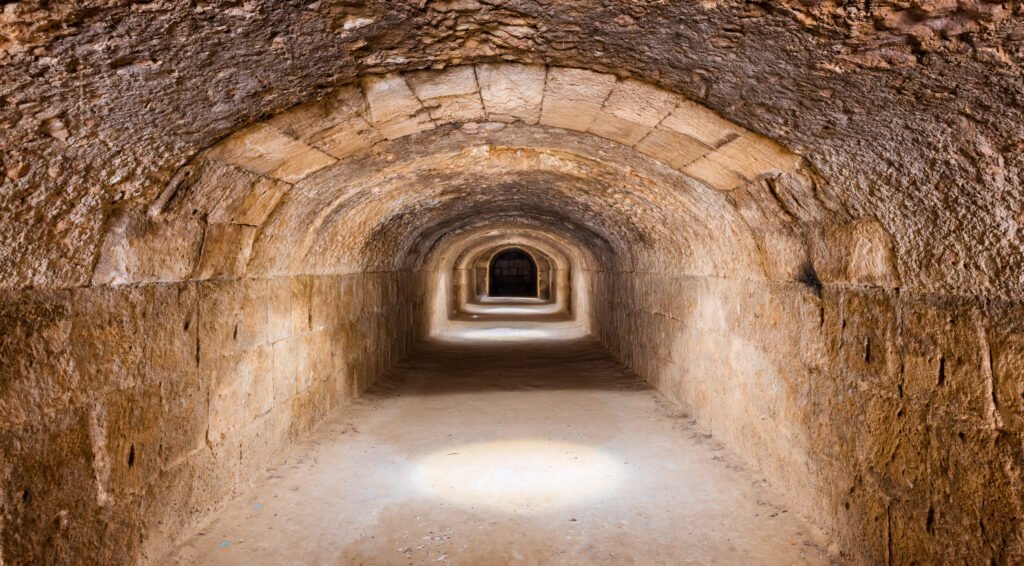
Tunisia is a North African country on the Mediterranean coast, the site of ancient Carthage and the starting point of the wave of uprisings known as the Arab Spring. Its compact size belies a history stretching from Phoenician and Roman antiquity through Arab and Ottoman rule to French colonization and, in the twenty-first century, a closely watched experiment in democratic transition.
Where Is Tunisia Located?
Tunisia sits on the Mediterranean coast of North Africa, bordered by Algeria to the west and Libya to the southeast, making it the smallest of the three Maghreb countries of the central and western North African coast. Its capital, Tunis, lies on the Gulf of Tunis in the northeast, close to the ruins of ancient Carthage.
Geography
Northern Tunisia is hilly and fertile, an extension of the Atlas Mountains, and receives the most reliable rainfall, supporting agriculture including olives, cereals, and citrus. Central Tunisia consists of steppe and dry plains, while the south merges into the Sahara Desert, including the Chott el Djerid salt pan. Tunisia’s Mediterranean coastline, stretching for over a thousand kilometers, supports both its fishing industry and large-scale coastal tourism, though the World Bank identifies water scarcity as an increasingly urgent challenge to the country’s long-term growth.
A Brief History of Tunisia
Carthage and Rome
Phoenician settlers founded Carthage near modern Tunis around the ninth century BCE, and it grew into a major Mediterranean trading power and Rome’s principal rival, fighting the three Punic Wars before Rome destroyed the city in 146 BCE. Rome later rebuilt Carthage and developed the province of Africa into one of the empire’s wealthiest grain-producing regions, building major cities and monuments including the amphitheater at Thysdrus, present-day El Jem, constructed in the third century CE.
Islamic Conquest and Ottoman Rule
Arab Muslim armies conquered the region in the seventh century, founding Kairouan in 670 CE, which became one of the most important religious and intellectual centers in the Islamic world and remains home to the Great Mosque of Kairouan, among the oldest in North Africa. Successive Arab, Berber, and Ottoman rulers governed Tunisia until France established a protectorate in 1881.
Independence and the Arab Spring
Tunisia gained independence from France in 1956 under Habib Bourguiba, who introduced sweeping secularizing reforms, including a Code of Personal Status that banned polygamy and expanded women’s legal rights, among the most progressive family law codes in the Arab world at the time. In December 2010, the self-immolation of street vendor Mohamed Bouazizi in protest against police harassment and economic hardship triggered mass protests that, within weeks, forced President Zine El Abidine Ben Ali, in power since 1987, to flee the country in January 2011. The uprising, often called the Jasmine Revolution, is widely credited with sparking the broader wave of uprisings across the Arab world known as the Arab Spring. Tunisia’s subsequent transition produced a new constitution in 2014, though the country’s democratic institutions were significantly reshaped after President Kais Saied, elected in 2019, suspended parliament in July 2021 and assumed expanded executive powers, a move his supporters described as necessary to break political paralysis and critics characterized as a serious setback for Tunisia’s post-2011 democratic gains. A new constitution expanding presidential authority was approved by referendum in 2022, and Saied was re-elected in 2024.
Government and Economy
Tunisia is a republic with a strong presidency following the 2022 constitutional changes. The World Bank classifies Tunisia as a lower-middle-income country with a population of approximately 12 million. Its economy grew 2.7 percent in 2025 and 2.4 percent year on year in the first half of 2026, though the World Bank projects growth will ease to 2.3 percent for the full year and average only around 2.1 percent from 2027 to 2028. Key economic sectors include agriculture, particularly olives, dates, cereals, and citrus, component manufacturing, retail, and tourism along the Mediterranean coast. The World Bank identifies addressing the country’s acute water scarcity as central to protecting jobs and sustaining long-term growth.
Culture and People
Arabic is Tunisia’s official language, and French remains widely used in business, administration, and education, a legacy of the French protectorate period. The population is predominantly Sunni Muslim, and Tunisian culture reflects a layered heritage of Berber, Phoenician, Roman, Arab, Ottoman, and French influences visible in its cuisine, architecture, and the blue-and-white hillside town of Sidi Bou Said near Tunis. Tunisia has also long had one of the more developed traditions of women’s legal rights in the Arab world, a legacy traced to Bourguiba-era reforms.
What Is Tunisia Known For?
Tunisia’s most iconic ancient landmark is the Amphitheatre of El Jem, a third-century Roman amphitheater that could seat an estimated 35,000 spectators and ranks among the best-preserved Roman amphitheaters in the world, rivaled in size only by the Colosseum in Rome and the amphitheater at Capua. The country is also known for the ruins of Carthage, a UNESCO World Heritage Site, the Great Mosque of Kairouan, and, in recent history, for having triggered the Arab Spring through the 2010 to 2011 Jasmine Revolution.
Why Tunisia Matters
Tunisia’s layered history, from Carthage’s rivalry with Rome through its role as a center of early Islamic scholarship to French colonization, makes it one of the Mediterranean’s most historically dense countries relative to its size. Its 2010 to 2011 revolution, which forced out a long-serving authoritarian president and helped ignite uprisings across the Arab world, gave Tunisia an outsized role in recent Middle Eastern and North African political history, and its subsequent democratic experiment, followed by the consolidation of presidential power after 2021, continues to be closely watched as a test of how the region’s post-2011 transitions have fared.
Key Takeaways
- Tunisia is the smallest of the three Maghreb nations, bordered by Algeria and Libya on the Mediterranean coast of North Africa.
- Carthage, founded by Phoenician settlers around the ninth century BCE, became Rome’s chief rival before its destruction in 146 BCE.
- The Amphitheatre of El Jem, built in the third century CE, is one of the best-preserved Roman amphitheaters in the world.
- The 2010-2011 Jasmine Revolution forced out President Ben Ali and is widely credited with triggering the broader Arab Spring.
- A 2022 constitutional referendum expanded presidential powers under President Kais Saied, who was re-elected in 2024.
- The population reached approximately 12 million, with growth of 2.7 percent in 2025 amid significant water scarcity challenges.
Sources
- World Bank, “Tunisia Overview” (2026) [1]: worldbank.org/en/country/tunisia/overview
- World Bank, “New Tunisia Economic Monitor, Summer 2026” [2]: worldbank.org
- UNESCO World Heritage Centre, Archaeological Site of Carthage [3]: whc.unesco.org
- UNESCO World Heritage Centre, Amphitheatre of El Jem [4]: whc.unesco.org
Key facts
- Population: approximately 12.3 million (2025)1
- Carthage, founded around the ninth century BCE, was ancient Rome's chief Mediterranean rival3
- The Amphitheatre of El Jem, built in the third century CE, is one of the world's best-preserved Roman amphitheaters4
- The 2010-2011 Jasmine Revolution ousted President Ben Ali and is credited with triggering the Arab Spring
- Economic growth was 2.7% in 2025, with water scarcity flagged as a key long-term challenge2
Quick checkWhat event in Tunisia in December 2010 is credited with triggering the Arab Spring?Show answer
The self-immolation of street vendor Mohamed Bouazizi, which sparked the protests of the Jasmine Revolution.
Sources
- World Bank. Tunisia Overview. 2026 (accessed Date accessed: 2026-10-04)
- World Bank. New Tunisia Economic Monitor, Summer 2026. 2026-09-22 (accessed Date accessed: 2026-10-04)
- UNESCO World Heritage Centre. Archaeological Site of Carthage. Undated (accessed Date accessed: 2026-10-04)
- UNESCO World Heritage Centre. Amphitheatre of El Jem. Undated (accessed Date accessed: 2026-10-04)
Editorially reviewed by Specialty Digest Editorial TeamLast reviewed October 4, 2026Researched and drafted with AI assistanceReport an issue