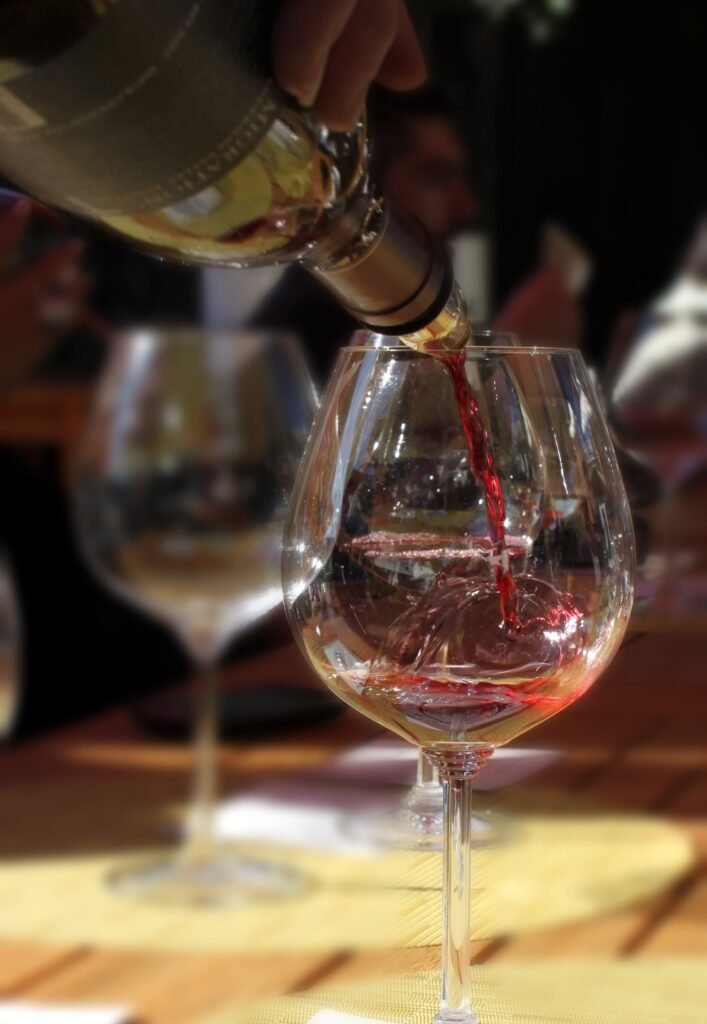
Wine tasting is the systematic sensory evaluation of wine, assessing its appearance, aroma, taste, and finish to judge quality, identify grape variety and origin, and determine readiness for drinking. Professional tasting follows a structured method, while casual tasting borrows the same basic steps in simplified form.
The Systematic Approach
Wine tasting typically follows a sequence of look, swirl, smell, and taste, beginning with visual examination of color and clarity, which can hint at a wine’s age and grape variety before a single aroma is detected. Swirling the glass aerates the wine, releasing volatile aromatic compounds that concentrate in the glass’s bowl, making the subsequent smell, often considered the most information-rich step, far more informative than simply sniffing a still glass. Tasting itself involves actively drawing the wine across different parts of the tongue and even pulling in a small amount of air, a technique sometimes called retro-olfaction, which pushes aroma up into the nasal passage from behind and significantly expands the perceived flavor profile beyond what taste buds alone can detect.
Describing What Is Tasted
Trained tasters use a shared vocabulary describing specific aroma and flavor categories, such as fruity, floral, earthy, or oaky notes, along with structural elements including acidity, tannin, body, and finish length, which together let tasters communicate precise impressions to one another using consistent, comparable terms. Blind tasting, where a taster evaluates a wine without knowing its identity, is widely used in professional certification and competition to remove expectation bias, since labels and price can otherwise strongly influence a taster’s perceived quality judgment even when the wine inside the bottle is identical.
Professional Certification
Organizations such as the Court of Master Sommeliers and the Wine & Spirit Education Trust offer graded certification programs that test a candidate’s ability to blind-taste wines and accurately identify grape variety, region, and vintage within a reasonable range, representing some of the most rigorous sensory evaluation credentials in any food or beverage field. These certifications require years of deliberate practice, since the sensory skill of consistently and accurately describing wine develops gradually through repeated, structured tasting rather than through natural talent alone.
The Role of Terroir and Vintage
Wine tasters pay close attention to how growing conditions in a given year, known as vintage, and the specific place a grape was grown, known as terroir, shape the finished wine. A cool, rainy vintage tends to produce lighter, higher-acid wines, while a hot, dry year often yields riper fruit flavors and higher alcohol. Experienced tasters use these patterns to estimate a wine’s origin and age even without seeing the label, a skill central to advanced certification exams.
Tasting Notes and Scoring Systems
Professional reviewers often record structured tasting notes covering appearance, aroma, palate, and finish, then assign a numerical score using systems such as the 100-point scale popularized by influential wine critics. These scores influence purchasing decisions and secondary market prices, though critics of the practice argue that reducing a complex sensory experience to a single number oversimplifies wine’s subjective and contextual nature. Many sommeliers prefer descriptive language over scores when guiding diners.
Technology and Changing Palates
Digital tools, including wine apps that log tasting notes and crowd-sourced rating platforms, have broadened participation in wine evaluation beyond professional critics. Climate change is also altering what regions can grow and how wines taste, pushing some historically cool-climate areas toward riper styles and prompting growers in traditionally warm regions to seek higher elevations. These shifts mean tasting vocabulary and reference points continue to evolve alongside the wines themselves.
Sensory Training and Common Faults
Professional tasters train their palates through repeated comparative tasting, often sampling flights of wines side by side to isolate differences in acidity, tannin, and fruit expression. Part of this training involves learning to identify common faults: cork taint, caused by the compound trichloroanisole, produces a musty, wet-cardboard aroma that masks fruit character, while oxidation turns fresh fruit notes into dull, sherry-like flavors. Volatile acidity, excessive heat exposure, and unwanted microbial activity can likewise mar an otherwise well-made wine, and recognizing these flaws quickly is a core competency tested in sommelier certification exams. Tasting rooms and wine schools use calibrated reference samples, sometimes deliberately spiked with fault compounds, so students learn to detect subtle flaws before they become overpowering. This disciplined approach to flaw detection protects both producers and consumers, since a flawed bottle identified early can be returned or replaced rather than served unknowingly to a guest expecting a sound wine.
Wine Tasting as Social and Educational Practice
Beyond professional certification, wine tasting has become a popular social and educational activity, with tasting rooms, wine clubs, and guided classes introducing newcomers to systematic evaluation in a low-pressure setting. Many wineries offer structured tasting flights that progress from lighter to fuller-bodied wines, helping visitors calibrate their palates while learning about regional styles and production methods firsthand. Educational programs increasingly pair tastings with vineyard tours and winemaker talks, framing the sensory experience within the broader agricultural and chemical processes that produce the finished wine, which helps participants connect abstract flavor descriptors to concrete causes like grape variety, oak aging, or malolactic fermentation.
Preserving Context After the Pour
Once a glass is poured, tasters often note how a wine changes over minutes of air exposure, since aeration can soften tannins and release additional aromatic compounds that were initially muted. This evolution in the glass is part of why experienced tasters revisit a sample multiple times before finalizing notes, treating the first impression as a starting point rather than a complete verdict, and why decanting young, tannic reds before service remains common professional practice.
Key facts
- The basic sequence is look, swirl, smell, and taste.nSwirling releases volatile aromatic compounds for better smelling.nBlind tasting removes expectation bias from quality judgments.nThe Court of Master Sommeliers offers rigorous certification programs.
Quick checkWhy do wine tasters swirl the glass before smelling?Show answer
Swirling aerates the wine, releasing volatile aromatic compounds that concentrate in the glass and make the aroma easier to detect.
Sources
- Court of Master Sommeliers, Wine & Spirit Education Trust
Editorially reviewed by Specialty Digest Editorial TeamLast reviewed November 3, 2026Researched and drafted with AI assistanceReport an issue