Overview
The Bible is the foundational text of Christianity, read also in part as sacred scripture within Judaism. It is not a single book but an anthology of works composed over roughly a thousand years, gathered into a canon that varies somewhat between Catholic, Orthodox, and Protestant traditions. For most Christians it is organized into the Old Testament, recounting the history, law, poetry, and prophecy of ancient Israel, and the New Testament, centered on the life, death, and resurrection of Jesus and the formation of the early church.
Structure and Content
The Old Testament includes the Torah, historical narratives, wisdom literature such as Psalms and Proverbs, and the writings of the prophets. The New Testament opens with four Gospels narrating the life of Jesus, continues with the Acts of the Apostles describing the spread of early Christianity, includes letters attributed to Paul and other apostles addressing emerging communities, and closes with the apocalyptic Book of Revelation. Together these sections total dozens of individual books of varying length and genre.
Composition and Canon
Scholars date the composition of biblical texts across many centuries, with oral traditions predating the earliest written material. The process of canonization, determining which texts counted as authoritative scripture, unfolded gradually through councils and widespread community acceptance, finalized at somewhat different points for different traditions. Catholic and Orthodox Bibles include additional deuterocanonical books not present in most Protestant editions.
Translation History
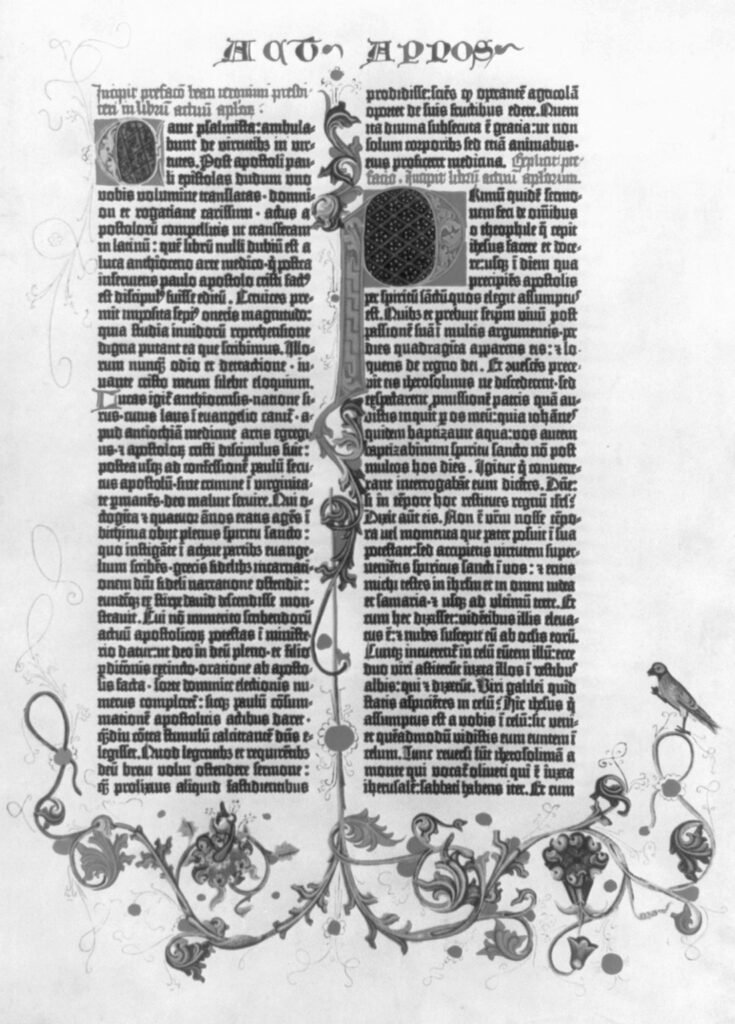
The Bible has been translated into more languages than any other text in history, beginning with ancient translations such as the Greek Septuagint and the Latin Vulgate. The printing press accelerated vernacular translation, and modern scholarship continues to produce new editions informed by manuscript discoveries and linguistic research. Translation choices on contested passages remain subjects of ongoing theological discussion.
Interpretation
Christian communities approach biblical interpretation through varied methods, ranging from literal historical reading to allegorical, typological, and critical-historical approaches. Denominational traditions differ on questions of authority, inerrancy, and the relationship between the two testaments, shaping distinct interpretive communities and commentary traditions that have developed for nearly two thousand years.
Role Today
The Bible remains central to Christian worship, personal devotion, and theological education worldwide. It has also profoundly shaped Western literature, law, art, and ethical discourse well beyond confessional boundaries, continuing to be studied by believers and secular scholars alike.
Manuscript Evidence
Biblical scholarship draws on a wide range of ancient manuscripts, including Dead Sea Scroll fragments for Hebrew Bible material and early papyri and codices for the New Testament. Comparing these manuscripts allows scholars to trace the transmission of the text across centuries and to identify points where wording varied between copies produced in different regions and periods, informing the critical editions used in modern translation work.
Archaeological findings have also contributed to understanding the historical and cultural settings behind many biblical narratives, offering context for ancient Near Eastern customs, political structures, and material culture referenced throughout the text. This combined evidence from manuscripts and archaeology continues to shape ongoing scholarly conversation about composition history and historical background.
Literary Genres
The Bible contains an unusually wide range of literary forms within a single collection, including narrative history, legal codes, poetry, proverb collections, prophetic oracle, personal letters, and apocalyptic vision. This diversity means that readers encounter markedly different styles and conventions depending on which book they are reading, requiring distinct interpretive approaches suited to each genre represented across the collection.
Cultural Influence
Beyond its religious role, the Bible has left a deep imprint on literature, visual art, music, and legal tradition across many cultures shaped by Christian history. Phrases, images, and narratives drawn from its pages recur throughout Western artistic and literary works, and its influence extends into legal and ethical frameworks even in largely secular contexts shaped historically by biblical tradition.
Modern Scholarship
Contemporary biblical studies draws on historical criticism, literary analysis, and archaeology to examine questions of authorship, dating, and composition history. These academic approaches operate alongside, and sometimes in tension with, traditional theological readings, contributing to a rich and ongoing scholarly conversation about how the text came together and what it meant to its earliest readers and communities.
Denominational Differences
Different Christian traditions maintain somewhat different canons and translation philosophies, with Catholic, Orthodox, and various Protestant communities each holding distinct positions on which books belong in the authoritative collection and how closely a translation should track original language wording versus readable modern expression. These differences reflect centuries of distinct theological development across separated Christian traditions.
Printing technology transformed access to the text beginning in the fifteenth century, enabling wider circulation of vernacular translations and contributing to religious movements that emphasized direct reader engagement with scripture. This shift had lasting consequences for literacy, religious authority, and the development of national languages across early modern Europe and beyond.
It continues to be read, debated, and studied across an enormous range of cultural and theological settings today.
Interfaith dialogue often returns to shared portions of the text as a point of common reference across related religious traditions.
Few texts have left so wide a mark across so many centuries and cultures.
New translations and study resources continue to appear, reflecting its enduring and wide-reaching relevance.
Comparative Study
Scholars often compare biblical material with other ancient Near Eastern texts, including Mesopotamian and Egyptian sources, to better understand shared literary conventions and distinctive theological emphases found within the biblical corpus relative to its broader ancient cultural environment and surrounding literary traditions.
This dialogue between tradition and critical inquiry continues to generate fresh insight into the ancient world behind the text.
Key facts
- Array
Quick checkWhat are the two main divisions of the Christian Bible?Show answer
The Old Testament, largely shared with the Hebrew scriptures, and the New Testament, centered on the life of Jesus and the early church.
Sources
- Array
Editorially reviewed by Specialty Digest Editorial TeamLast reviewed November 4, 2026Researched and drafted with AI assistanceReport an issue