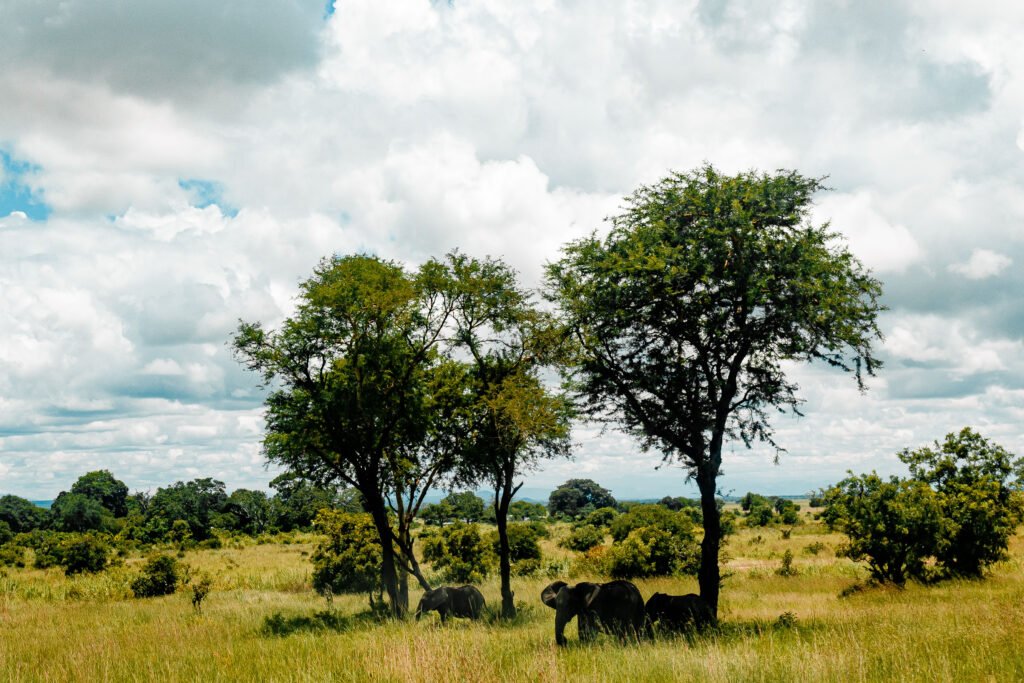
A habitat is the place where an organism or a community of organisms lives, encompassing both the surrounding living conditions and the nonliving features, such as climate, terrain, and water, that make that place suitable for the species found there. The term covers everything from a single tree hollow used by a nesting bird to the full extent of ocean a migrating whale travels through in a given season.
Habitat versus niche
Ecologists draw a careful distinction between habitat and niche that is easy to blur in everyday language. Habitat is essentially an address, the physical place where a species lives, while niche describes the species’ functional role within that place, including what it eats, what eats it, and how it interacts with every other organism sharing the same space. Two species can share the same habitat while occupying very different niches, and understanding which of the two concepts is actually limiting a species, the availability of suitable physical habitat or the availability of a workable ecological role, often shapes very different conservation strategies.
Habitat types and scale
Habitats are commonly grouped as terrestrial, such as a grove of trees, a grassland, or a desert, and aquatic, such as a pond, a river, or a coral reef, though many organisms depend on more than one habitat type across their life cycle, as migratory birds and anadromous fish such as salmon do. Habitat also operates at different scales simultaneously: a microhabitat describes the specific, often small-scale conditions immediately surrounding an organism, such as the underside of a particular log or the canopy layer of a particular tree, nested within the much broader habitat type the wider landscape provides. Some organisms, particularly parasites, treat another living organism as their habitat outright, living on or inside a host whose body supplies the conditions the parasite needs to survive.
Habitat loss and fragmentation
Habitat loss, the outright destruction or conversion of a habitat to another use, is widely considered the single largest driver of global biodiversity decline, typically caused by agricultural expansion, urban development, deforestation, and resource extraction. Habitat fragmentation is a related but distinct problem in which a habitat is not destroyed outright but is broken into smaller, disconnected patches, often by roads, farmland, or development cutting through what was once a continuous landscape. Fragmentation creates edge effects, changes in light, wind, temperature, and predator activity near a patch’s boundary that can make even a protected fragment behave ecologically differently from the interior of a once-larger habitat, and it can isolate populations from one another badly enough to block the movement, breeding, and genetic exchange a species needs to remain healthy over the long run.
Responses: corridors and restoration
Conservationists increasingly try to counter fragmentation by creating habitat corridors, strips of natural or restored land that reconnect isolated patches and let animals move, disperse, and interbreed across a landscape that would otherwise trap them in small, disconnected pieces. Habitat restoration projects aim to rebuild degraded habitat directly, for example by replanting native vegetation or re-flooding a drained wetland, while protected areas set aside land or water specifically to keep existing habitat intact rather than waiting for it to degrade and need restoration later. Species with very narrow habitat requirements, often called specialists, are generally far more vulnerable to habitat loss and fragmentation than generalist species able to thrive across a wide range of conditions, which is one reason habitat specificity itself is treated as a conservation risk factor independent of a species’ population size.
Habitat shifts under climate change
Climate change adds a further complication by shifting where a given habitat type can actually exist, as rising temperatures push suitable conditions for many species toward higher latitudes or higher elevations faster than slow-moving populations, or habitats fragmented by human development, can necessarily follow. A savanna elephant herd, for example, depends on a habitat that provides enough open grassland and woodland together to support large-bodied grazing and browsing year-round, and where agricultural expansion or settlement has fragmented that landscape, elephants are increasingly forced into narrower corridors between patches of suitable habitat, raising the odds of conflict with nearby farming communities even when no single patch of habitat has been destroyed outright. This dynamic illustrates why habitat conservation is rarely just about preserving a fixed area on a map; the area that counts as suitable habitat for a given species can itself move over time.
Why habitat matters to conservation
Because habitat loss underlies so much of global biodiversity decline, protecting habitat is often described as conservation’s most fundamental tool, more foundational even than protecting individual species directly, since a species with no remaining suitable habitat cannot persist no matter how carefully it is otherwise managed. This is also why conservation planning so often starts by mapping where a given species’ required habitat still exists, how much of it remains intact, and how connected or fragmented those remaining patches are to one another.
FAQs
What is the difference between habitat and niche? Habitat is the physical place where an organism lives, while niche is the functional role it plays there, including what it eats and how it interacts with other species; two species can share a habitat while occupying different niches.
Can a single species depend on more than one habitat? Yes. Many species, including migratory birds and salmon, rely on different habitats at different points in their life cycle or year, which means protecting only one of those habitats is often not enough to secure the species overall.
Key facts
- Habitat is the physical place a species lives, while niche is its functional role there; two species can share a habitat but occupy different niches.
- A microhabitat describes small-scale conditions, such as under a log, nested within a broader habitat type.
- Habitat loss, the outright destruction or conversion of habitat, is widely considered the single largest driver of global biodiversity decline.
- Habitat fragmentation breaks a continuous habitat into smaller, disconnected patches, creating edge effects and isolating populations from one another.
- Habitat corridors reconnect fragmented patches, letting animals move, disperse, and interbreed across an otherwise broken-up landscape.
Related concepts
In the news
Quick checkWhy can habitat fragmentation harm a species even if the total remaining habitat area stays the same?Show answer
Breaking habitat into smaller, disconnected patches creates edge effects near each patch's boundary and can isolate populations from one another, blocking the movement, breeding, and genetic exchange a species needs, so the same total area split into disconnected fragments supports less healthy populations than one continuous habitat would.
Sources
- Encyclopaedia Britannica. Habitat. 2024 (accessed 2026-11-01)
Editorially reviewed by Specialty Digest Editorial TeamLast reviewed November 1, 2026Researched and drafted with AI assistanceReport an issue