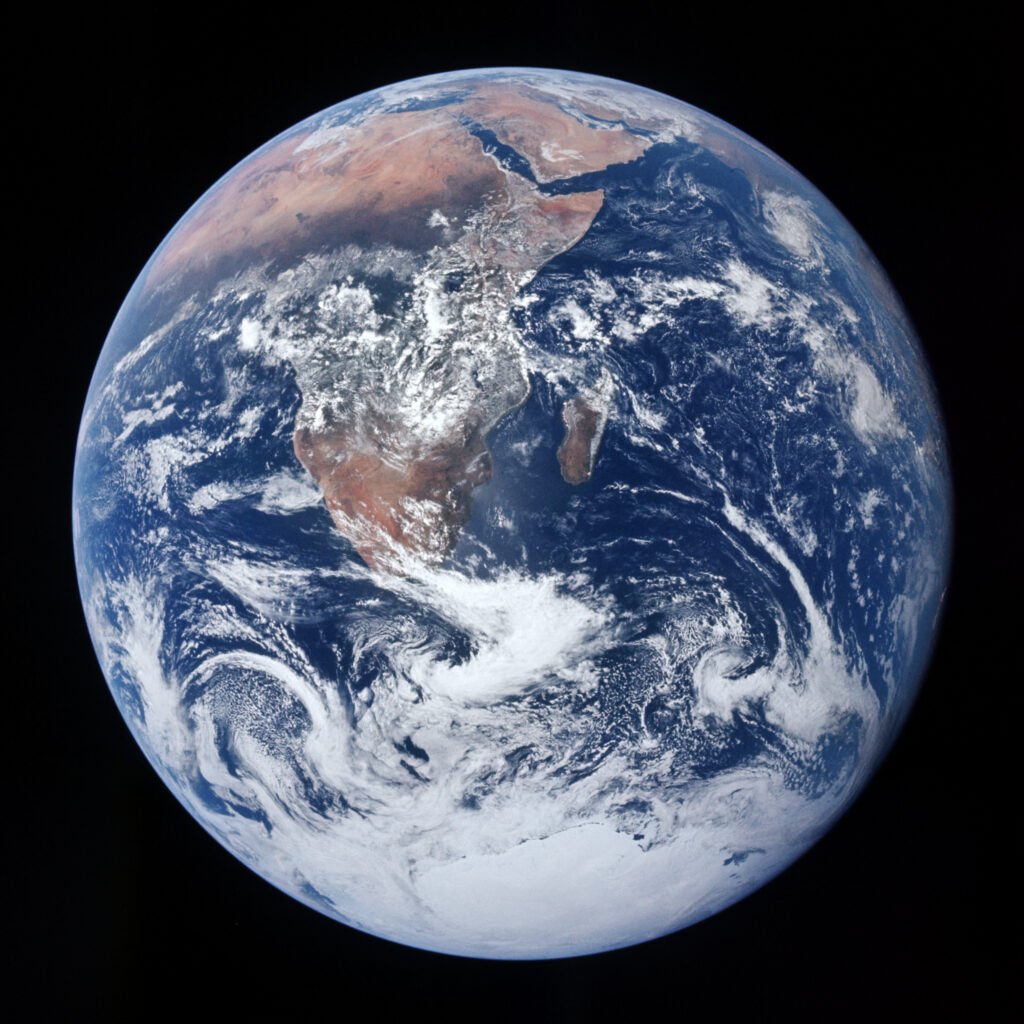
An ecological footprint is a measure of how much biologically productive land and water a given population, activity, or product requires to supply the resources it consumes and absorb the waste it generates, expressed in a standardized unit called the global hectare. The concept was developed in the early 1990s by Mathis Wackernagel, working under the supervision of ecologist William Rees at the University of British Columbia, as a way to translate the abstract idea of environmental sustainability into a single, comparable number.
How an ecological footprint is calculated
Calculating a footprint starts by converting each category of resource use, including cropland, grazing land, fishing grounds, forest products, built-up land, and the carbon emissions generated by energy use, into an equivalent area of biologically productive land or water. Because different types of land vary enormously in how productive they are, each area is adjusted using yield and equivalence factors so that all the different categories can be summed into a single standardized unit, the global hectare, representing one hectare of average world biological productivity. A continuous demand, such as a country’s total resource consumption in a given year, is reported in global hectares, while a one-time activity or a durable product’s footprint is spread across its lifetime and reported in global hectare-years. Carbon emissions are included indirectly, converted into the land area that would theoretically be needed to absorb them, which means a population’s footprint rises directly with its fossil fuel use even though burning fuel does not itself consume physical land in the same way farming or grazing does.
Comparing footprint to biocapacity
A footprint number only becomes meaningful when compared against biocapacity, the amount of biologically productive land and water actually available to supply those resources and absorb that waste, also measured in global hectares. When a population’s ecological footprint exceeds the biocapacity available to it, whether at a local, national, or global scale, the result is called overshoot, a state in which current demand on nature exceeds what ecosystems can regenerate or absorb within the same period, drawing down natural capital rather than living off its renewable yield. The Global Footprint Network, the organization that now maintains and publishes the most widely cited national ecological footprint accounts, calculates that humanity entered global overshoot decades ago and estimated that resource use in 2024 ran at roughly 170 percent of what Earth’s ecosystems can regenerate in a single year.
Earth Overshoot Day
The Global Footprint Network translates global overshoot into a single annual marker called Earth Overshoot Day, the calculated date each year on which humanity’s resource consumption for that year is estimated to exceed what Earth’s ecosystems can regenerate in twelve months, with the remainder of the year effectively run on ecological deficit. Earth Overshoot Day fell on August 1 in 2024, a date that has crept earlier over the decades from where it stood in the 1970s, when global demand first began exceeding global biocapacity, illustrating the widening gap between consumption and regenerative capacity that the ecological footprint framework was originally designed to make visible and trackable over time.
National and individual footprints vary enormously
Ecological footprint accounting is calculated not only globally but also at the level of individual countries, cities, and even single people, and the resulting figures vary dramatically depending on consumption patterns, energy mix, and population density. Wealthier, highly industrialized countries with carbon-intensive energy systems and high per-person consumption typically post footprints several times larger than their own domestic biocapacity, meaning they rely on importing biocapacity from elsewhere, in effect using land and resources located in other countries to sustain their own consumption levels. Lower-income countries with smaller populations relative to their available cropland, forest, and fishing grounds sometimes show the opposite pattern, running a biocapacity surplus even though average individual consumption there is much lower in absolute terms. The Global Footprint Network’s national accounts illustrate the scale of this gap: a resident of a high-consumption country can have a footprint several times the global average biocapacity per person, while a resident of a lower-income country may use only a fraction of that amount, meaning that if everyone on Earth lived at the consumption level of the highest-footprint countries, humanity would require the regenerative capacity of several Earths rather than the one actually available.
Criticisms and limitations
The ecological footprint framework has drawn sustained academic criticism over the decades since its introduction. Some researchers argue that converting such different kinds of environmental pressure, land use, water use, and carbon emissions, into one combined number obscures important differences that a single composite metric cannot capture, similar to concerns raised about other single-number sustainability indices. Others note that the carbon component, which converts emissions into a notional land area for absorption, dominates the total footprint for most wealthy countries, meaning the metric functions in practice largely as a particular way of measuring carbon emissions dressed in land-area units rather than a genuinely independent measure of overall resource pressure. Despite these critiques, the ecological footprint remains one of the most widely cited and publicly understandable ways of communicating the broad concept of living within, or beyond, the planet’s regenerative limits.
FAQs
Is a smaller ecological footprint always better? Generally yes for environmental sustainability, since a smaller footprint relative to available biocapacity means less draw-down of natural capital, though the metric does not by itself capture every dimension of wellbeing or development that a population or country might reasonably value.
Who created the ecological footprint concept? It was developed in the early 1990s by Mathis Wackernagel as part of his doctoral research at the University of British Columbia, under the supervision of ecologist William Rees, who co-developed the framework with him.
Key facts
- Developed early 1990s by Mathis Wackernagel and William Rees, UBC
- Measured in global hectares, compared against biocapacity
- 2024 global overshoot: ~170% of Earth's regenerative capacity
- Earth Overshoot Day 2024 fell on August 1
Related concepts
Quick checkWho created the ecological footprint concept?Show answer
Mathis Wackernagel, in the early 1990s, as doctoral research at the University of British Columbia supervised by William Rees.
Sources
- Global Footprint Network. Footprint FAQs. 2007 (accessed 2026-11-01)
- Global Footprint Network. Earth Overshoot Day. 2024 (accessed 2026-11-01)
Editorially reviewed by Specialty Digest Editorial TeamLast reviewed November 1, 2026Researched and drafted with AI assistanceReport an issue