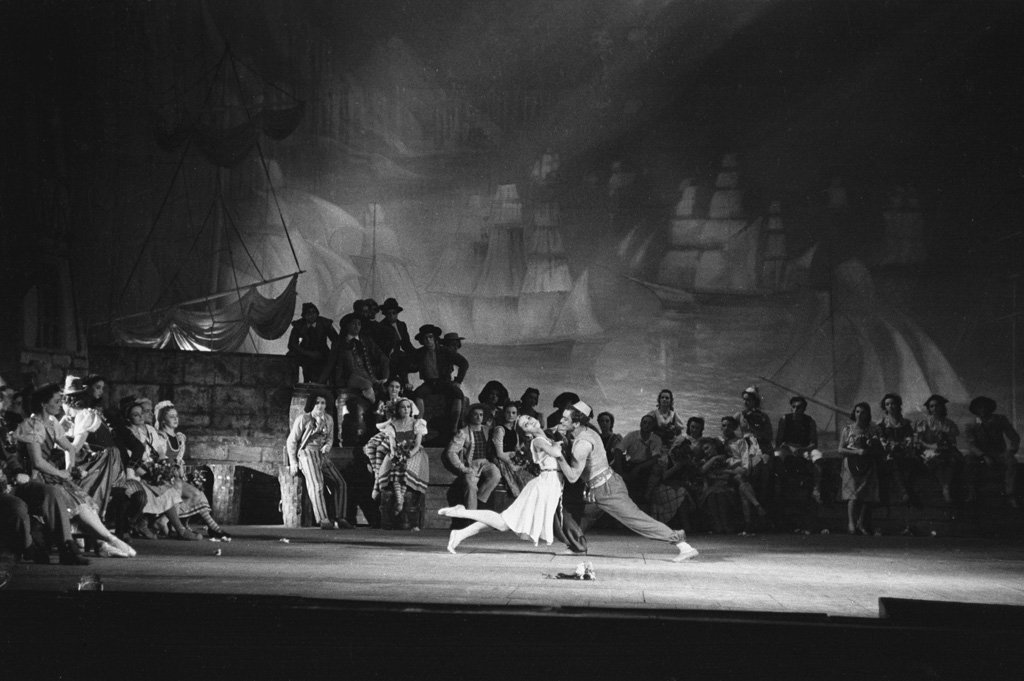
Ballet is a formal, highly codified style of theatrical dance that developed out of Renaissance Italian court entertainment before being systematically formalized in seventeenth-century France, producing a precise technical vocabulary and performance tradition that continues to shape concert dance worldwide.
Formalization under Louis XIV
King Louis XIV of France established the Academie Royale de Danse by royal letters patent in March 1661, the first dance institution of its kind in the Western world, created to restore dance to what its founding documents described as its original perfection and to oversee the training and licensing of professional dancers in Paris. Pierre Beauchamp, who directed the academy from 1680, is credited with codifying the five basic turned-out foot positions that remain fundamental to classical ballet technique today, a system later documented in writing by fellow dancing master Pierre Rameau in 1725. Beauchamp also developed an early dance notation system, later refined and popularized by choreographer Raoul-Auger Feuillet, allowing choreography to be recorded and shared in written form for the first time.
Romantic ballet
Ballet entered a new Romantic era in the early nineteenth century, exemplified by Giselle, which premiered in Paris in 1841 and helped establish pointe work, dancing on the tips of the toes, as a central technical and expressive feature associated with ethereal, otherworldly female characters.
Russian ballet and the Ballets Russes
Russian ballet rose to international prominence later in the nineteenth century under choreographer Marius Petipa, whose collaborations with composer Pyotr Ilyich Tchaikovsky produced enduring full-length works including Swan Lake and The Nutcracker. In the early twentieth century, impresario Sergei Diaghilev’s touring company, the Ballets Russes, brought Russian ballet to Western Europe and commissioned boldly experimental new work, including composer Igor Stravinsky’s The Rite of Spring, whose 1913 Paris premiere famously provoked a chaotic audience riot over its dissonant score and unconventional choreography.
Modern dance’s reaction against ballet
Ballet’s strict, highly formalized vocabulary provoked a reaction in the early twentieth century from pioneering dancers including Isadora Duncan and later Martha Graham, who rejected ballet’s rigid technique in favor of a freer, more personally expressive style that became known as modern dance, establishing an ongoing creative tension between ballet’s codified tradition and modern dance’s looser, more individualized vocabulary that continues to shape concert dance today.
Ballet today
Contemporary ballet companies continue performing both the classical nineteenth-century repertoire and newly commissioned contemporary work, and professional dancers still train for years to master the same fundamental turned-out positions and precise technical vocabulary that Beauchamp helped codify at the French court more than three centuries ago.
Ballet training and technique
Classical ballet training builds systematically on Beauchamp’s original five foot positions, progressing through years of disciplined practice in turnout, balance, and controlled movement, typically beginning in early childhood for dancers pursuing a professional career, since the extreme flexibility and strength classical technique demands develops most readily during childhood and adolescence.
Ballet terminology
Ballet retains French as its standard technical vocabulary worldwide, a direct legacy of the form’s codification at the French royal court, so dancers and choreographers from different countries can communicate using shared terms such as plie, a bending of the knees, and arabesque, a pose in which a dancer balances on one leg while extending the other straight behind.
Ballet companies today
Major international ballet companies, including the Paris Opera Ballet, the Royal Ballet in London, and the Bolshoi Ballet in Moscow, trace direct institutional lineages back centuries, maintaining both the classical repertoire and ongoing commissions of newly choreographed work performed in large dedicated opera houses.
Ballet and the body
Professional ballet places extraordinary physical demands on dancers, who must combine the strength and endurance of elite athletes with the artistry and expressiveness expected of theatrical performers, often while sustaining chronic injuries related to the extreme physical demands of pointe work and other core ballet techniques.
Male dancers in ballet
Although ballet’s public image has often centered on its female dancers, male dancers play an equally essential technical and artistic role, particularly in partnered work requiring significant strength to lift and support a partner, and leading male dancers, including Vaslav Nijinsky with the Ballets Russes, have themselves become celebrated historical figures in the art form.
Ballet beyond the stage
Ballet technique has also influenced training in other performance disciplines, including modern dance, figure skating, and gymnastics, whose practitioners frequently study ballet specifically to develop the core strength, balance, and controlled movement quality the form has refined over centuries.
Ballet music
Composers writing specifically for ballet must work closely with choreographers, since music intended to accompany precise, physically demanding movement imposes constraints a purely concert work does not, and some of the most celebrated ballet scores, including Tchaikovsky’s and Stravinsky’s, have gone on to enjoy independent lives in the concert hall separate from the staged choreography they were originally written to support.
Ballet costume and design
Costume and set design play a substantial role in ballet production, with the Ballets Russes in particular commissioning boldly modern designs from leading visual artists of the day, helping establish ballet as a genuinely collaborative art form spanning music, movement, and visual design rather than dance performed in isolation from other disciplines.
FAQs
Who founded the first official ballet institution? King Louis XIV of France established the Academie Royale de Danse in 1661, the first dance institution of its kind in the Western world, to formalize and oversee professional dance training in Paris.
Why did Stravinsky’s The Rite of Spring cause a riot? Its 1913 Paris premiere, staged by Diaghilev’s Ballets Russes, combined a dissonant, rhythmically aggressive score with unconventional, deliberately unballetic choreography that shocked much of the audience, provoking a famously chaotic reaction in the theater.
Key facts
- Louis XIV founded the Academie Royale de Danse in 1661
- Pierre Beauchamp codified the five basic foot positions
- Giselle (1841) established pointe work in Romantic ballet
- Diaghilev's Ballets Russes premiere of The Rite of Spring (1913) provoked a famous riot
Related concepts
Quick checkWho codified the five basic foot positions of classical ballet?Show answer
Pierre Beauchamp, director of the Academie Royale de Danse from 1680.
Sources
- Wikipedia, Academie Royale de Danse
- Wikipedia, Positions of the feet in ballet
Editorially reviewed by Specialty Digest Editorial TeamLast reviewed November 1, 2026Researched and drafted with AI assistanceReport an issue