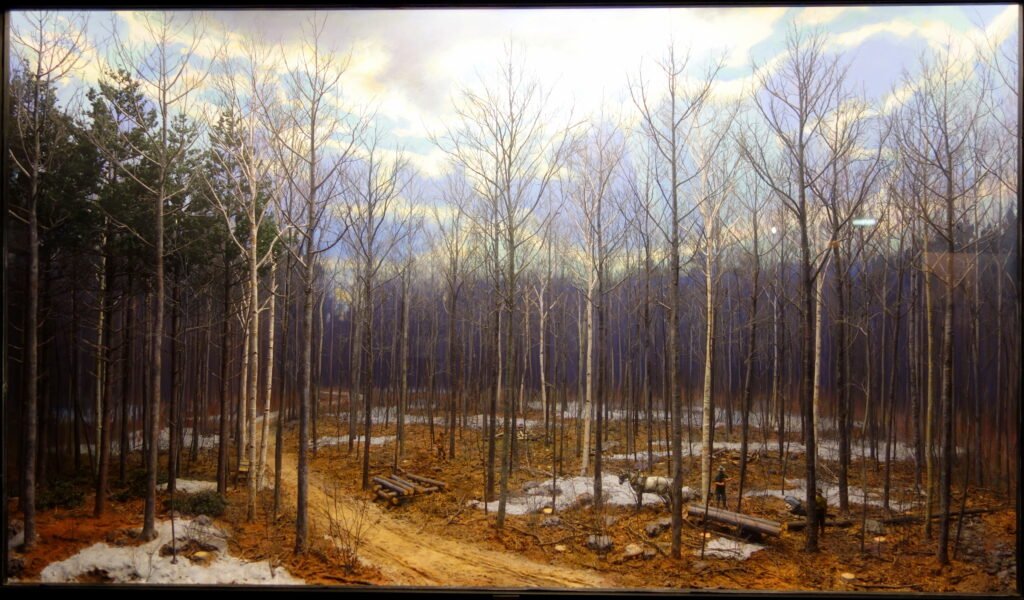
Silviculture is the applied science and practice of controlling the establishment, growth, composition, and quality of forest stands to meet specific management objectives, from timber production to wildlife habitat and watershed protection.
Core Silvicultural Systems
Foresters classify silvicultural systems broadly into even-aged methods, which regenerate a stand to a single age class through clear-cutting, seed-tree, or shelterwood cutting, and uneven-aged methods, which maintain a mix of tree ages through selective harvesting over time. The choice between these systems depends heavily on the light and soil requirements of the target species, since shade-intolerant species generally require the open conditions of even-aged regeneration while shade-tolerant species can regenerate successfully under a partial canopy.
Stand Density and Thinning
Silviculturists regularly thin overcrowded stands by removing a portion of trees to reduce competition for light, water, and nutrients, allowing remaining trees to grow faster and develop larger, more valuable stems. Thinning decisions depend on detailed stand density measurements and growth models that predict how a stand will respond to different levels of tree removal, balancing immediate volume loss against long-term gains in individual tree value.
Regeneration Methods
After harvest, silviculturists choose among natural regeneration from seed trees or stump sprouts, direct seeding across a cleared site, or planting nursery-grown seedlings, with the choice depending on species biology, site conditions, and how quickly new forest cover needs to establish. Artificial regeneration through planting offers more control over species composition and spacing but costs considerably more than relying on natural regeneration processes already present on a site.
Matching Silviculture to Objectives
A silvicultural prescription is ultimately written to achieve a specific landowner objective, whether maximizing timber value, restoring a particular forest type, improving wildlife habitat, or protecting water quality, and the same forest type can be managed very differently depending on which objective takes priority. This objective-driven flexibility is what distinguishes silviculture as an applied discipline from purely descriptive forest ecology, since silviculturists actively intervene to steer forest development toward chosen outcomes.
Training and Professional Practice
Silviculturists typically hold forestry degrees combining training in tree biology, soil science, and economics, and many jurisdictions require professional licensure or certification before an individual can prepare silvicultural prescriptions for commercial timber operations. This professional standard reflects how consequential silvicultural decisions are, since a poorly designed prescription can take decades to correct once a stand has begun developing along an unintended trajectory.
Silviculture and Climate Adaptation
Silviculturists increasingly factor anticipated climate shifts into their prescriptions, favoring species and genetic stock better suited to projected future temperature and precipitation patterns rather than simply replicating historical species composition, a forward-looking approach sometimes called climate-adaptive silviculture. This shift reflects growing recognition that forests established today will mature under conditions likely to differ substantially from those of the past century, making historical species matching an increasingly unreliable guide.
Economic Considerations in Prescription Design
Every silvicultural prescription balances biological requirements against economic realities, since the most ecologically ideal regeneration method is not always financially viable for a given landowner, and skilled silviculturists work to find practical compromises that achieve acceptable ecological outcomes within real budget constraints. This balancing act is particularly acute for small private landowners who lack the capital reserves that larger industrial forestry operations can draw on to absorb short-term costs for long-term silvicultural benefit.
Technology in Modern Silviculture
Growth and yield modeling software, combined with LiDAR-derived stand data, now allows silviculturists to simulate how a stand will respond to different thinning or regeneration prescriptions before committing to a field operation, substantially reducing the guesswork that once characterized much silvicultural decision-making.
Global Variation in Silvicultural Tradition
Silvicultural traditions vary considerably worldwide, with Central European forestry favoring intensive, long-rotation uneven-aged management refined over centuries, while North American industrial forestry historically favored faster, more intensive even-aged plantation systems, reflecting different land ownership patterns, economic pressures, and cultural attitudes toward forest management across regions.
The Role of Research Forests
Dedicated research forests, often affiliated with universities or government agencies, provide long-term experimental sites where silviculturists test new prescriptions and monitor outcomes over periods spanning decades, generating the long-term data essential for refining silvicultural practice since forest responses to management often take far longer to manifest than typical research funding cycles allow.
Taken together, modern silviculture blends centuries-old field craft with increasingly sophisticated science, reflecting how thoroughly the discipline has evolved while still resting on the same fundamental goal of shaping forest development toward a chosen outcome.
Training the Next Generation of Silviculturists
University forestry programs increasingly pair field-based silvicultural training with data science and remote sensing coursework, reflecting how thoroughly technology has reshaped the skill set expected of a modern silviculturist compared with a generation ago when field measurement and judgment alone defined the profession.
That gradual shift from a purely craft-based profession toward one grounded in data and simulation marks one of the most significant transformations in forestry practice over the past several decades.
Silviculture in Agroforestry Systems
Silvicultural principles increasingly inform agroforestry systems that deliberately combine trees with crops or livestock, applying thinning and spacing concepts developed for pure timber stands to mixed systems where tree growth must be balanced against the light and space needs of understory agricultural production.
Whatever the specific prescription, every silvicultural decision ultimately comes back to the same question: what forest does this landscape need to become, and how can careful, informed intervention help it get there.
That ongoing dialogue between science, economics, and ecology is what keeps silviculture a living discipline rather than a fixed set of rules.
Few applied sciences demand quite this balance of patience, humility, and technical precision, since any mistake made today may not reveal itself for decades.
Key facts
- Encompasses even-aged and uneven-aged management systems;Uses thinning to control stand density and tree growth;Prescriptions are tailored to specific landowner objectives
Quick checkWhat distinguishes even-aged from uneven-aged silvicultural systems?Show answer
Even-aged systems regenerate a stand to a single age class, while uneven-aged systems maintain a mix of tree ages over time
Sources
- Society of American Foresters silviculture standards
Editorially reviewed by Specialty Digest Editorial TeamLast reviewed November 3, 2026Researched and drafted with AI assistanceReport an issue