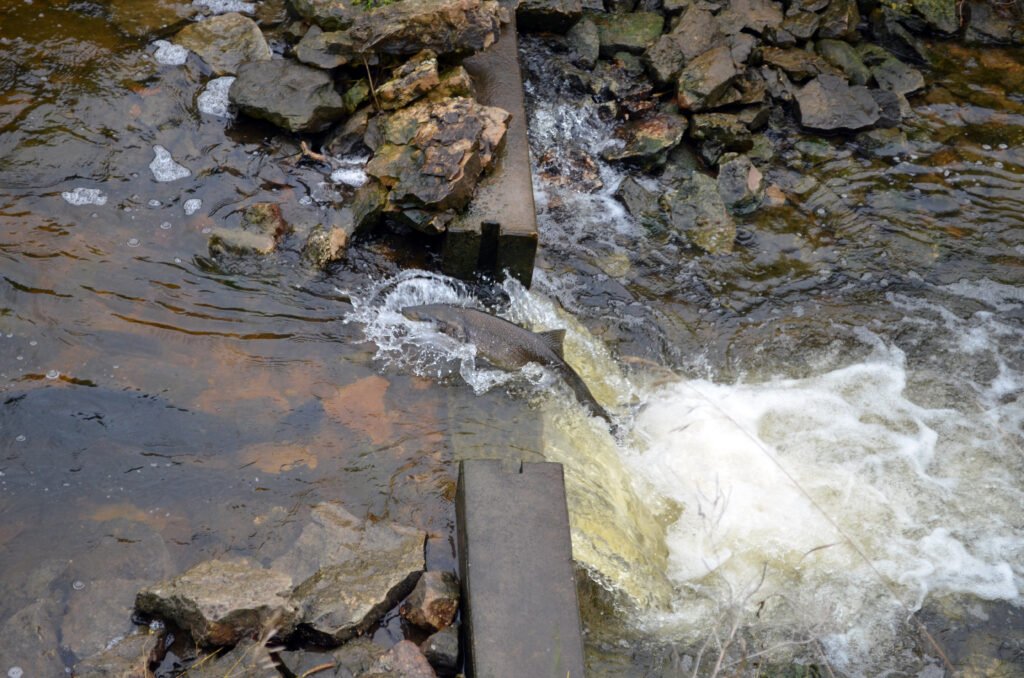
Fish migration is the regular, often seasonal movement of fish populations between different habitats to feed, spawn, or avoid unfavorable conditions. Migratory patterns can span a few kilometers between a river and its estuary or thousands of kilometers across entire ocean basins, and they shape where and when many of the world’s most important fisheries operate.
Types of Migration
Diadromous species move between freshwater and saltwater during their life cycle, with anadromous fish like salmon born in rivers before migrating to the ocean to grow and later returning to spawn, while catadromous fish like many eels do the reverse. Oceanic migrators such as tuna and billfish travel long distances within saltwater to follow prey, favorable temperatures, or spawning grounds, and some species undertake daily vertical migrations between deep and shallow water.
Navigation and Triggers
Fish use a combination of environmental cues, including water temperature, day length, ocean currents, and in some species a magnetic sense, to time and orient their migrations. Salmon are believed to imprint on the chemical signature of their home river as juveniles and use this memory, combined with magnetic orientation, to find their way back years later from the open ocean.
Ecological and Economic Importance
Migratory routes often concentrate large numbers of fish in predictable times and places, which has historically made migration corridors prime fishing grounds and, in the case of salmon runs, critical food sources for freshwater and coastal ecosystems. Migratory species also transport nutrients between ecosystems, such as when spawning salmon die in rivers and enrich surrounding forests.
Threats to Migratory Fish
Dams and other river barriers block access to historic spawning grounds for many diadromous species, and some dam-affected rivers have lost the majority of their historic salmon runs as a result. Climate change is shifting ocean temperatures and currents, altering the timing and routes of oceanic migrations in ways that can disrupt established fisheries and international management agreements.
Conservation Responses
Fish passage structures such as fish ladders and bypass channels allow some migratory species to navigate around dams, while dam removal has restored migration routes and rebuilt runs on several rivers where it has been implemented. International agreements increasingly govern the management of migratory oceanic species, since a single country’s conservation measures have limited effect on fish that cross many national jurisdictions during their life cycle.
Climate-Driven Range Shifts
Warming ocean temperatures are pushing many migratory species poleward or into deeper water in search of preferred thermal conditions, disrupting fishing patterns that communities have relied on for generations and creating new tensions over access as stocks move across national maritime boundaries. Some traditional fishing grounds have seen target species largely disappear within a few decades as a result of these shifts, while previously marginal areas have become newly productive.
Tracking Technology
Satellite tags, acoustic tags, and electronic data loggers attached to individual fish now let scientists track migration routes, depths, and timing in far greater detail than older methods relying solely on recapture of marked fish. These technologies have revealed previously unknown migration corridors and have helped refine international agreements by clarifying which countries’ waters a given stock actually passes through during its annual cycle.
Famous Migration Routes
The Atlantic bluefin tuna crosses entire ocean basins between feeding grounds off North America and spawning areas in the Mediterranean and Gulf of Mexico, while Pacific salmon runs can travel thousands of kilometers upstream against strong currents to reach the exact tributary where they were born. European eels undertake one of the most remarkable migrations of any fish, traveling from freshwater rivers across Europe to spawn in the Sargasso Sea in the western Atlantic, a journey whose precise navigation mechanism remains only partly understood by scientists.
Migration and Fisheries Management Overlap
Because migratory stocks often cross multiple national jurisdictions during a single life cycle, their management requires international cooperation that purely domestic fisheries do not, and disagreements over how to allocate catch among countries sharing a migratory route have historically been a major source of fisheries diplomacy disputes. Satellite tracking data showing precisely where migratory fish spend time in different countries’ waters has increasingly informed these negotiations, providing an objective basis for allocation discussions that were previously grounded mainly in historical catch records.
Looking Ahead
Scientists expect continued range shifts to require periodic renegotiation of international fishing agreements as traditional assumptions about which countries’ waters a migratory stock passes through become outdated. Expanded satellite tracking networks and international data-sharing initiatives are likely to play a growing role in keeping management arrangements aligned with the actual, changing behavior of migratory fish populations in the coming decades.
Research Collaboration
Studying migratory fish often requires collaboration across the many countries a species passes through during its life cycle, since no single national research program can observe an entire migration route on its own. International research consortia pooling tagging data, genetic samples, and survey results from multiple nations have become increasingly important for building a complete picture of how major migratory stocks move and respond to environmental change.
Related Specialties
Scientists who study fish migration draw on telemetry engineering, oceanography, and behavioral ecology, reflecting the inherently interdisciplinary nature of tracking animals that move through such varied and often inaccessible environments. Advances in battery life and tag miniaturization continue to expand what species and life stages can realistically be tracked.
Taken together, the science of fish migration continues to reshape fisheries management and conservation planning, revealing connections between distant ecosystems that earlier generations of fishery managers could not have fully appreciated without modern tracking technology.
Key facts
- Includes diadromous species moving between fresh and salt water.|Guided by temperature, day length, and in some species magnetism.|Concentrates fish in predictable fishing grounds.|Threatened by dams and shifting ocean conditions.
Quick checkWhy do fish like salmon migrate between rivers and the ocean?Show answer
Salmon migrate to take advantage of ocean feeding grounds for growth and then return to freshwater rivers, where conditions are safer for spawning and early development.
Sources
- NOAA Fisheries; U.S. Fish and Wildlife Service
Editorially reviewed by Specialty Digest Editorial TeamLast reviewed November 3, 2026Researched and drafted with AI assistanceReport an issue