A catastrophic Himalayan flood has killed hundreds, devastated communities and exposed dangerous weaknesses in early-warning systems, infrastructure planning and cross-border disaster cooperation.
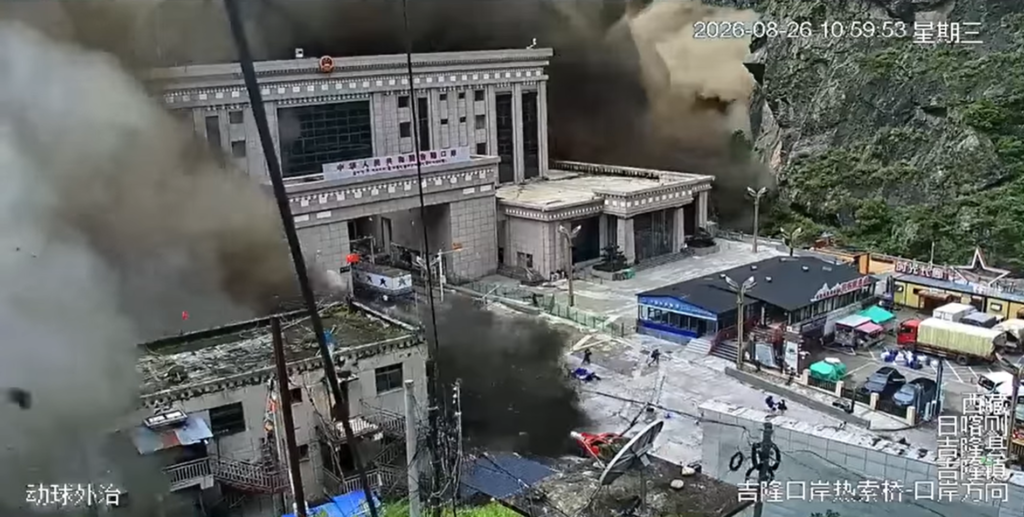
On the morning of August 26, 2026, a violent torrent of water, ice, rock and mud swept through Nepal’s Himalayan river valleys. Communities along the Bhote Koshi and Trishuli river corridors had little time to escape.
Homes disappeared. Roads and bridges collapsed. Hydropower facilities were damaged, and entire settlements were buried beneath mud and debris.
By August 31, Nepal’s government reported that 903 bodies had been recovered, approximately 4,200 people remained unaccounted for and more than 10,000 had been rescued. The missing included about 590 foreign nationals from 39 countries. Authorities cautioned that these figures could change as rescue teams reached previously inaccessible areas. (Nepal Ministry of Foreign Affairs)
The Nepal flood disaster of 2026 is more than a national tragedy. It is a warning about what can happen when unstable mountain environments, expanding infrastructure, exposed communities and limited warning time converge.

What caused the Nepal floods?
Preliminary expert assessments indicate that part of a glacier may have collapsed near the Nepal–China border. The falling mass of ice and rock appears to have generated an enormous surge that rushed into the river system, gathering sediment, boulders and debris as it travelled downstream.
This was not an ordinary river flood. It was a cascading disaster: one physical event triggered several others in rapid succession.
A glacier or mountainside collapse can displace water, block a river or create a temporary lake. If that unstable barrier fails, the released water can become a fast-moving debris flow powerful enough to destroy concrete structures.
Satellite imagery examined after the disaster supported the glacier-collapse explanation, although scientists continued to investigate the precise sequence of events. It is therefore more accurate to call the collapse the suspected trigger, rather than a fully established conclusion. (Reuters)
Climate change cannot automatically be declared the sole cause of one disaster. Nevertheless, rising temperatures are transforming the Himalayan cryosphere—the region’s glaciers, snow and permanently frozen ground. Rapid changes can increase the likelihood of glacier instability, rockfalls, avalanches and glacial-lake outburst floods.
The disaster consequently illustrates an important distinction: a natural hazard may provide the trigger, but human exposure and inadequate preparation determine how destructive it becomes.
Why was the destruction so extensive?
Nepal’s geography makes disaster management exceptionally difficult. Steep slopes accelerate water and debris, narrow valleys concentrate their force, and remote terrain can delay rescue operations.
Development has also expanded along river corridors. Roads, settlements, border facilities and hydropower projects occupy areas where land is limited but flood exposure can be high.
The 2026 flood damaged bridges and power facilities and left hundreds of hydropower workers missing, including many feared trapped in project tunnels. Nepal depends heavily on hydropower for domestic electricity and export revenue, but the disaster demonstrated that infrastructure essential to economic growth can also become dangerously exposed when rare, high-impact hazards are underestimated. (Reuters)
The humanitarian consequences extended well beyond the immediate death toll. UNICEF estimated that approximately 65,000 people—including 22,100 children—were affected across Rasuwa, Nuwakot, Dhading, Gorkha and Tanahun districts. Damaged water systems, disrupted health services and displacement increased the risks of disease, malnutrition and exploitation. (UNICEF)
The disaster therefore did not end when the water receded. Its effects will continue through interrupted education, lost livelihoods, psychological trauma, damaged electricity supplies and the difficult reconstruction of isolated communities.
Lesson one: A warning must reach people, not merely exist
Early-warning technology saves lives only when information travels quickly from monitoring systems to those in danger—and when recipients know what action to take.
At one school in Bidur, an informal upstream warning reportedly gave staff approximately 14 minutes to evacuate more than 900 students and faculty members. The school was later destroyed, but the people escaped. (Reuters)
That episode contains the disaster’s clearest lesson: even a few minutes can separate survival from catastrophe.
Nepal should expand end-to-end, multi-hazard warnings using river sensors, satellite monitoring, sirens, radio, mobile alerts and trained community networks. Systems must also reach people without smartphones, those with disabilities, tourists unfamiliar with local hazards and communities speaking different languages.
Lesson two: Mountain hazards do not respect borders
The flood developed within a transboundary Himalayan system and affected both Nepal and Tibet. Conditions upstream could determine the fate of communities many kilometres downstream.
Nepal and China therefore need continuous, automated sharing of river levels, satellite observations, glacier movements and suspected landslide blockages. Information should move between technical agencies immediately—not wait for diplomatic communication after a disaster begins.
The UN Office for Disaster Risk Reduction described the event as a reminder of both the transboundary character of risk and the difficulty of providing early warnings for cascading mountain hazards. (UNDRR)
India and other downstream countries also have an interest in stronger regional cooperation because Himalayan river disasters can cross several national boundaries.
Lesson three: Infrastructure must be designed for future risk
Historical flood records are no longer sufficient guides to future safety. Hydropower plants, bridges, schools, roads and settlements must be evaluated against changing glacier conditions and extreme events that may previously have been considered improbable.
This requires updated hazard maps, independent environmental assessments, multiple evacuation routes and stricter restrictions on construction in high-risk river corridors.
Hydropower projects need particular attention. Worker shelters, tunnel access points, communication systems and emergency exits should be planned for sudden floods and debris flows—not only routine workplace emergencies.
Climate-resilient construction may cost more initially, but rebuilding destroyed infrastructure costs far more.
Lesson four: Preparedness must become an everyday habit
Emergency plans often look convincing on paper but fail when people have never practised them.
Schools, tourism businesses, construction companies and riverside communities should conduct regular evacuation drills. Safe ground must be clearly marked, and residents should understand that after an upstream warning, unusual river change or loud mountain collapse, the correct response is to move upward immediately—not approach the river to observe or record it.
Local knowledge is equally important. Residents, guides and workers may notice unusual sounds, falling water levels or sudden changes in river colour before a formal alert arrives. Communities need simple channels for reporting these signs quickly.
A disaster—and a decision point
Nepal cannot remove its mountains, glaciers or rivers. Nor should development stop in a country where hydropower, tourism and transport are essential to economic progress.
The real choice is between development that ignores risk and development that learns to live with it.
The Nepal flood disaster of 2026 shows that modern disaster resilience must connect climate science, engineering, land-use planning, regional diplomacy and community action. None is sufficient alone.
The most important lesson is also the simplest: disasters become catastrophes when danger reaches people before reliable information, safe infrastructure and organized action do.
Nepal’s reconstruction must therefore accomplish more than replacing what was destroyed. It must create safer settlements, stronger warning systems and infrastructure designed for the changing Himalayas. If that happens, the lives lost in 2026 may help protect countless others—not only in Nepal, but across every mountain region facing a more unstable future.
- Nepal Ministry of Foreign Affairs, press briefing, August 31, 2026: casualty, missing-persons and rescue figures. Full briefing.
- Reuters, “Glacier collapse may have triggered deadly Nepal flash flood, experts say,” August 26, 2026. Article.
- Reuters, “Nepal teams seek hundreds trapped in hydropower tunnels after deadly floods,” August 31, 2026. Article.
- Reuters, “Last-minute flood warning saved over 900 Nepal students, school head says,” August 31, 2026. Article.
- UNICEF Australia, “Nepal Flash Floods 2026: What Happened and Who’s Affected.” Explainer.
- UN Office for Disaster Risk Reduction (UNDRR), statement by Kamal Kishore, Special Representative of the UN Secretary-General for Disaster Risk Reduction. Statement.
- Satellite imagery: NASA/USGS Landsat, public domain, via Wikimedia Commons.