Overview
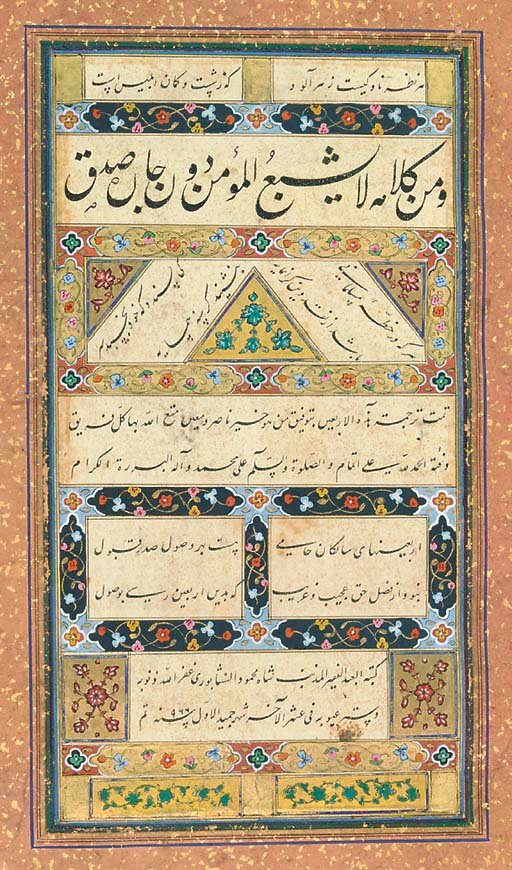
Hadith are reports recording the sayings, actions, and tacit approvals attributed to the Prophet Muhammad, serving alongside the Quran as a primary source for Islamic belief, law, and practice. Together these reports form the basis for understanding the Sunnah, the exemplary way of life demonstrated by the Prophet.
Transmission
Each hadith traditionally carries an isnad, a chain of named narrators linking the report back through successive generations to someone who directly witnessed the Prophet words or deeds. Scholars developed rigorous methods for evaluating the reliability of each narrator in the chain, assessing character, memory, and historical plausibility of contact between links.
Classification
Hadith scholars sort reports into categories based on reliability, commonly authentic, acceptable, weak, and fabricated, with further subcategories reflecting degrees of certainty. This classification system, developed over centuries by specialists in the discipline, allows later generations to weigh how much legal or doctrinal weight a given report can bear.
Major Collections
Several collections achieved particular authority within Sunni tradition, most notably Sahih al-Bukhari and Sahih Muslim, regarded as containing especially reliable material. Shia tradition relies on its own distinct collections, reflecting differences in which early narrators and lines of transmission are trusted.
Role in Islamic Law
Hadith function as the second major source of Islamic law after the Quran, supplying details on ritual practice, ethical conduct, and legal rulings not fully specified in scripture itself. Jurists across schools of Islamic law draw extensively on hadith material when deriving rulings for situations not explicitly addressed in the Quran.
Role Today
Hadith study remains a living scholarly discipline, with ongoing debate over authentication methods, translation, and application to contemporary circumstances. Digital hadith databases have made vast collections searchable, supporting both specialist research and everyday reference by practicing Muslims worldwide.
Development of the Discipline
The science of hadith criticism developed into a sophisticated scholarly field in its own right during the early centuries of Islam, as scholars traveled extensively to collect reports directly from surviving narrators and to cross-check differing versions of the same account. This painstaking work of verification, carried out across a wide geographic area spanning much of the early Islamic world, produced detailed biographical records evaluating the trustworthiness of thousands of individual narrators.
Specialized terminology grew up around this discipline, distinguishing types of narration by the number and reliability of parallel chains, and by whether a report concerned words, actions, or silent approval attributed to the Prophet. Scholars also identified categories of defect that could weaken a report, including breaks in the chain of transmission or contradiction with more firmly established material from other sources.
Shia Hadith Tradition
Shia Islam maintains its own body of hadith literature, drawing heavily on reports transmitted through the family of the Prophet and the line of Imams recognized within Shia theology. Major Shia collections, compiled by different scholars than those responsible for the standard Sunni collections, reflect distinct historical lines of transmission shaped by the particular communal and political history of Shia communities.
Use in Scholarship Today
Contemporary scholars, both within traditional Islamic educational institutions and in academic settings worldwide, continue to study hadith using a combination of classical authentication methods and newer historical and linguistic approaches. Questions about the historical reliability of specific reports remain a lively subject of ongoing research and debate among specialists working across different methodological traditions.
This sustained scholarly attention reflects the central and lasting importance of these reports within the Islamic tradition as a whole.
Everyday Application
Many practical details of Muslim daily life, from specific prayer movements to dietary guidance, trace their basis to hadith material supplementing broader principles found in the Quran, making familiarity with authenticated hadith reports an important component of religious education for practicing Muslims across diverse cultural settings.
This enduring relevance ensures that hadith study remains an active and evolving scholarly pursuit rather than a closed historical exercise.
Numbers and Scope
Major classical collections contain many thousands of individual reports, varying widely in length and subject matter, from brief statements on personal conduct to detailed narratives describing specific historical events witnessed by early companions of the Prophet during his lifetime.
Their breadth and specificity have made them an indispensable complement to the more general guidance found within the Quran itself.
Preservation Efforts
Early Muslim scholars undertook extensive journeys across vast distances specifically to verify reports directly from surviving narrators, a practice that produced detailed biographical dictionaries still consulted today by specialists working to evaluate the reliability of individual transmission chains.
These biographical records remain an essential resource for scholars working to assess the reliability of specific transmission chains today.
Few other religious traditions have developed so elaborate and systematic a framework for evaluating oral historical transmission.
Closing Note
Together with the Quran, these reports form the twin pillars on which classical Islamic jurisprudence and theology were built over the following centuries of scholarly development.
That dual foundation continues to guide religious practice today.
Regional Variation
Different regions of the Muslim world have historically emphasized particular collections and particular schools of interpretation when applying hadith material to local legal and religious questions, producing a rich diversity of practice within an overall shared commitment to hadith as a foundational source of guidance.
This regional diversity reflects the broader historical spread of Islam across many distinct cultural and linguistic settings over time.
Together, hadith scholarship and jurisprudence continue to shape how Muslim communities interpret guidance for daily life.
This remains an active field of study among religious scholars worldwide.
Specialists continue refining these methods even now.
Interest in the field remains strong across the Muslim world and beyond today.
Key facts
- Array
Quick checkWhat is the chain of narrators used to evaluate a hadith called?Show answer
The isnad, a chain tracing the report back through successive narrators to someone who witnessed the words or actions of the Prophet directly.
Sources
- Array
Editorially reviewed by Specialty Digest Editorial TeamLast reviewed November 4, 2026Researched and drafted with AI assistanceReport an issue