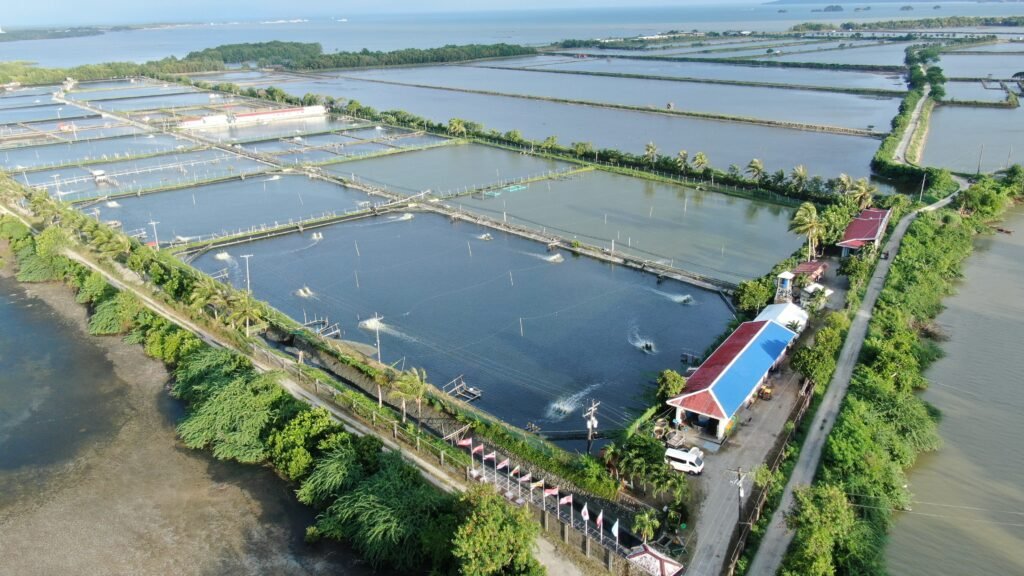
Pond culture is the practice of raising fish or shrimp in constructed earthen or lined ponds, making it one of the oldest and most widely used forms of aquaculture worldwide. It remains the dominant production method for species such as carp, tilapia, and farmed shrimp across much of Asia, where it has been practiced in some regions for thousands of years.
Pond Design and Construction
Ponds are typically built by excavating or embanking earth to create a water-holding basin, with size ranging from small family-scale ponds covering a fraction of an acre to large commercial operations spanning many acres. Proper pond design accounts for water source and drainage, soil type to minimize seepage, and depth sufficient to maintain stable temperature and oxygen levels for the species being raised.
Water and Nutrient Management
Unlike flow-through or recirculating systems, pond culture often relies on naturally occurring plankton and algae as a food source, which farmers can encourage by adding organic or inorganic fertilizers to stimulate the growth of this natural food web alongside supplemental manufactured feed. Periodic water exchange, aeration equipment, and careful monitoring of oxygen levels help prevent the oxygen depletion that can occur in densely stocked ponds, particularly during warm weather or at night.
Polyculture Practices
Many pond systems raise multiple complementary species together in a practice known as polyculture, such as combining fish that feed at different levels of the water column or on different natural food sources, which can increase total yield per pond compared with raising a single species alone. Traditional Asian carp polyculture systems, combining species that feed on plankton, bottom detritus, and aquatic plants respectively, remain a widely used example of this approach.
Advantages and Limitations
Pond culture generally requires lower capital investment than tank-based or recirculating systems, making it accessible to small-scale farmers across much of the developing world, though it offers less environmental control and can be more vulnerable to weather extremes, disease outbreaks, and water quality problems than more intensive systems. Land and water availability also directly limit how much pond culture can expand in a given region, particularly as competition for land increases near growing urban areas.
Global Importance
Pond culture accounts for a very large share of global aquaculture production by volume, particularly in China, India, and other parts of Asia where it supports both large commercial operations and millions of smallholder farming households. Continued improvements in pond management, feed efficiency, and disease control remain central to sustaining and expanding this long-established production method.
Disease and Water Quality Risks
Pond systems can be vulnerable to disease outbreaks that spread quickly through densely stocked water, particularly in shrimp ponds where viral diseases have historically caused severe industry-wide losses in several major producing countries. Good pond management practices, including appropriate stocking density, regular water testing, and biosecurity measures limiting the movement of water and equipment between ponds, are central to reducing these risks.
Environmental Considerations
Pond construction, particularly for shrimp farming, has historically been linked to the conversion of coastal mangrove forests in some regions, prompting growing attention to more sustainable site selection and the restoration of converted areas. Improved water treatment and recirculation within pond systems has also reduced the discharge of nutrient-rich water into surrounding natural waterways compared with older, less managed practices.
Modernization Trends
Many traditional pond operations are gradually adopting improved aeration equipment, water testing tools, and more precise feeding practices borrowed from more intensive aquaculture systems, boosting yields without abandoning the basic pond-based approach. This gradual modernization has allowed pond culture to remain competitive and relevant even as more capital-intensive systems like recirculating aquaculture have expanded in other parts of the industry.
Looking Ahead
Pond culture remains the backbone of global aquaculture production, particularly across Asia, where it supports a huge share of farmed fish and shrimp output. Even so, the sector faces real pressure to modernize. Older ponds often suffer from inconsistent water quality, inefficient feeding, and vulnerability to disease outbreaks that can wipe out an entire crop. Newer approaches, including better pond liners, automated feeders, water quality sensors, and more carefully managed stocking densities, are gradually being adopted on both small and large farms. Land and freshwater availability are also becoming real constraints in some regions, pushing some producers toward more intensive systems that get more output from the same pond footprint, while others look to diversify into brackish or coastal ponds where fresh water is scarcer.
Related Specialties
Pond culture is closely related to recirculating aquaculture systems, which represent a more controlled, land-based alternative built for sites where open ponds are not practical. It overlaps with hatchery operations, since many pond farms rely on hatchery-produced fry or post-larvae to stock their ponds each season. Rural development and extension programs also intersect heavily with pond culture, since small-scale pond farming is a major source of income and nutrition for farming households across much of the developing world.
Economic Considerations
Pond culture generally requires lower capital investment than more intensive systems, since ponds can often be built using local materials and labor, making the method accessible to smallholder farmers across much of the developing world. Operating costs still include feed, pond maintenance, and labor for stocking and harvest, and profitability depends heavily on stocking density, feed quality, and how effectively a farmer manages water quality to avoid losses from disease or poor oxygen levels. Access to credit and extension support remains a limiting factor for many small pond farmers seeking to improve yields or expand their operations.
Key facts
- One of the oldest and most widespread aquaculture methods.|Often relies on natural plankton plus supplemental feed.|Polyculture combines complementary species in one pond.|Requires lower capital investment than tank-based systems.
Quick checkWhat is polyculture in pond-based fish farming?Show answer
Polyculture is raising multiple complementary fish species together in the same pond, each feeding on different natural food sources, to increase total yield.
Sources
- FAO Fisheries and Aquaculture Department
Editorially reviewed by Specialty Digest Editorial TeamLast reviewed November 3, 2026Researched and drafted with AI assistanceReport an issue