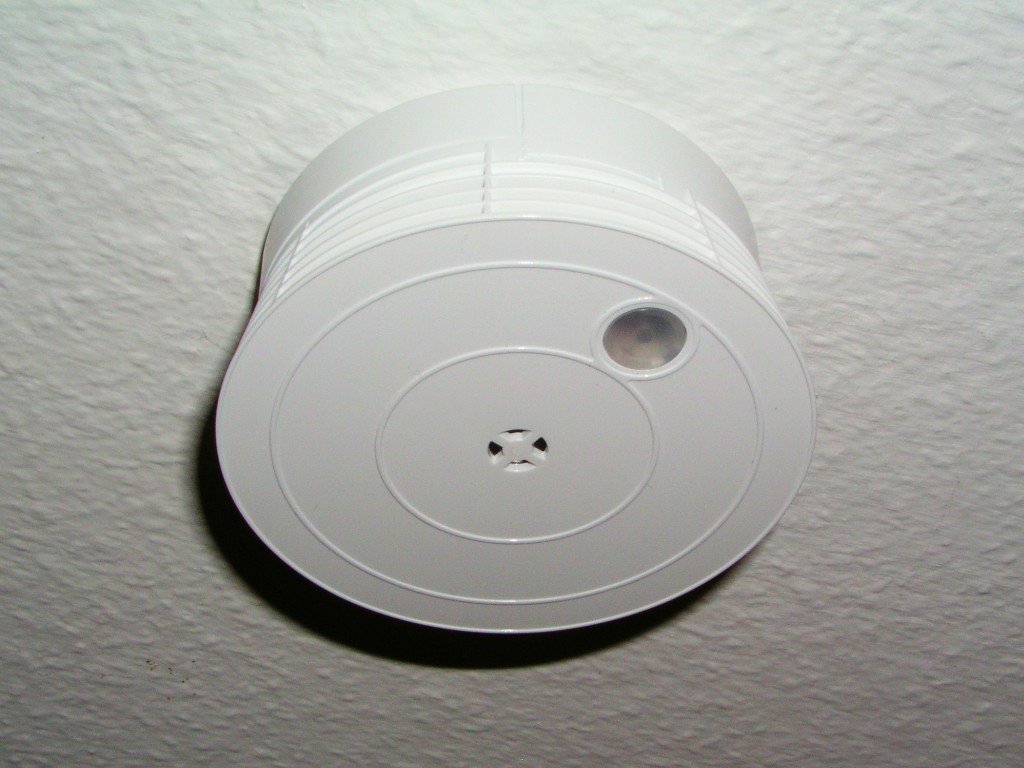
A smoke detector is a device designed to sense airborne smoke particles, typically produced during the early stages of a fire, and sound an alarm to alert occupants before the fire grows large enough to pose an immediate life threat. Because most fire deaths occur during sleeping hours when occupants cannot see or smell developing smoke, properly functioning smoke detectors are considered one of the single most effective life safety measures available in residential settings.
n
Sensing Technologies
n
Ionization detectors use a small amount of radioactive material to ionize the air within a sensing chamber, creating a tiny electrical current; smoke particles entering the chamber disrupt this current, triggering the alarm, and this method tends to respond especially quickly to fast, flaming fires. Photoelectric detectors instead shine a light beam across a sensing chamber and use a photosensor to detect light scattered by smoke particles, a method that tends to respond more quickly to smoldering, slow-burning fires that produce more visible smoke before flame develops. Dual-sensor alarms combine both technologies to provide balanced detection across a wider range of fire conditions.
n
Placement and Maintenance
n
Effective smoke detector coverage depends on correct placement, typically including every sleeping area, outside each separate sleeping area, and on every level of a home, since smoke rises and placement near ceilings in central locations improves detection speed. Regular maintenance, including monthly testing and periodic battery replacement or unit replacement according to manufacturer guidance, is essential since a detector with a dead battery or expired sensor provides no protection despite appearing to be installed correctly.
n
Interconnection and Power Sources
n
Modern smoke detector installations are often interconnected, meaning that when one unit detects smoke, all connected units throughout the building sound simultaneously, ensuring occupants in distant rooms are alerted even if the fire originates far from where they are located. Detectors may be powered by replaceable batteries, long-life sealed batteries designed to last the unit full service life, or hardwired into the building electrical system with battery backup, with each approach involving different maintenance expectations and reliability considerations.
n
Common Causes of Failure
n
Despite their importance, smoke detectors frequently fail to operate as intended due to depleted or missing batteries, sensors that have exceeded their rated service life, typically around ten years, or units disabled by occupants frustrated by frequent nuisance alarms from cooking or steam. Public fire safety campaigns consistently emphasize regular testing and timely replacement specifically because detector failure due to these preventable causes remains a significant factor in fire deaths that occur in homes where a detector was technically present but not functioning.
n
Specialized Detector Types
n
Beyond standard ionization and photoelectric smoke detectors, specialized versions address particular environments, including heat detectors for areas prone to frequent smoke or steam, duct detectors that monitor airflow within HVAC systems to shut down equipment and prevent smoke circulation, and aspirating smoke detection systems that continuously draw air samples from a protected space to detect extremely low smoke concentrations, often used in sensitive environments such as data centers and museums where early warning before visible smoke appears is especially valuable.
n
Regulatory Requirements
n
Building and fire codes specify detailed requirements for smoke detector installation, including required locations, acceptable spacing between units, and minimum performance standards that products must meet before certification for use. These requirements have evolved considerably over past decades as research identified gaps in earlier standards, such as the need for detectors outside as well as inside bedrooms, reflecting an ongoing process of refining detection requirements based on accumulated data about where and how residential fires actually develop and spread.
n
Looking Ahead
n
Emerging smoke detection technology includes multi-sensor units that combine smoke, heat, and carbon monoxide detection in a single device, as well as camera-based and artificial intelligence enhanced systems being explored for commercial applications where faster or more selective detection could reduce both response time and nuisance alarm rates. While traditional ionization and photoelectric detectors remain the backbone of residential and commercial fire detection, these newer approaches may gradually supplement or, in some specialized applications, replace conventional point detectors.
n
Role in Overall Fire Safety Strategy
n
Smoke detectors are most effective when considered as one layer within a broader fire safety strategy that also includes escape planning, practiced evacuation routes, and in some settings automatic suppression, since early detection only translates into safety if occupants know how to respond once alerted. Fire safety education consistently emphasizes that having a working detector and a practiced escape plan together provide substantially more protection than either measure alone.
n
Legislative History
n
The widespread adoption of residential smoke detector requirements followed decades of fire fatality data demonstrating their effectiveness, leading most jurisdictions to progressively strengthen requirements from optional installation to mandatory presence, and eventually to specific requirements regarding detector type, placement, and interconnection. This legislative evolution illustrates how fire safety requirements often develop incrementally, informed by accumulating evidence about which specific measures most effectively reduce fire deaths in practice.
n
Closing Perspective
n
Decades of fire fatality data consistently show that working smoke detectors, combined with a practiced escape plan, dramatically improve survival odds, making routine testing and timely replacement among the simplest yet most consequential fire safety actions a household or building operator can take.
n
No single technology or policy change replaces the basic responsibility of ensuring a detector is installed, powered, and tested regularly in every space where it is needed.
n
That ordinary discipline, repeated consistently over years, is what ultimately separates households that survive a fire from those that do not.
n
Simple, consistent habits remain the most reliable safeguard available to any household.
Key facts
- Array
Sources
- Array
Editorially reviewed by Specialty Digest Editorial TeamLast reviewed November 3, 2026Researched and drafted with AI assistanceReport an issue