Timor-Leste occupies the eastern half of the island of Timor in Southeast Asia, along with a small enclave on the island’s western side and two outlying islands. One of the world’s youngest nations, it gained independence in 2002 after a long and often violent struggle, first against Portuguese colonization and then against Indonesian occupation.
Where Is Timor-Leste Located?
Timor-Leste comprises the eastern half of the island of Timor, the Oecussi enclave on the island’s western, Indonesian-administered side, and the nearby islands of Atauro and Jaco. It lies at the southeastern edge of the Indonesian archipelago, north of Australia across the Timor Sea. Dili, on the north coast, is the capital and largest city.
Geography
The country is mountainous and rugged, with a central spine of peaks rising to Mount Tatamailau, also known as Mount Ramelau, at about 2,986 meters. The climate is tropical, with a pronounced wet season, and the terrain’s steepness combined with limited road infrastructure has historically made many rural areas difficult to access. Coral reefs off the north coast, including around Atauro Island, support marine biodiversity that has drawn growing scientific and ecotourism interest.
A Brief History of Timor-Leste
Portuguese Colonization
Portuguese traders and missionaries established a presence in Timor from the sixteenth century, and Portugal formally colonized the eastern half of the island, administering it as Portuguese Timor for over four centuries while the Dutch controlled the western half, a division that endures today as the border between Timor-Leste and Indonesia.
Independence Declaration and Indonesian Occupation
Timor-Leste declared independence from Portugal in 1975, but Indonesia invaded and annexed the territory within weeks, beginning a 24-year occupation marked by armed resistance and significant loss of life. International pressure led to a United Nations-sponsored referendum in 1999, in which an overwhelming majority of East Timorese voted for independence, a result followed by a wave of violence from pro-Indonesia militias before a UN-mandated international peacekeeping force restored order.
Restored Independence and State-Building
A United Nations transitional administration governed the territory until Timor-Leste formally regained independence in 2002. Since then, the country has built democratic institutions, holding regular presidential and parliamentary elections, and has pursued closer regional integration, completing accession to the World Trade Organization in 2022 and becoming a full member of the Association of Southeast Asian Nations in October 2025.
Government and Economy
Timor-Leste is a semi-presidential republic with a president and a prime minister-led government accountable to the National Parliament. The World Bank classifies it as a lower-middle-income country, with a population of about 1.4 million. Since 2011, national development has been guided by the Strategic Development Plan 2011-2030, which sets a goal of reaching upper-middle-income status by 2030, and the government that took office in July 2023 has pursued a five-year program aimed at leveraging the country’s natural resources, including offshore oil and gas revenue, to accelerate social and economic development and strengthen state institutions. Timor-Leste is also a member of the Community of Portuguese Language Countries, reflecting its Portuguese colonial heritage.
Culture and People
Tetum and Portuguese are Timor-Leste’s official languages, with Indonesian and English recognized as working languages, a layered linguistic legacy of successive colonial and occupying powers. More than 97 percent of the population is Roman Catholic, making Timor-Leste, alongside the Philippines, one of only two majority-Catholic nations in Asia, a legacy of centuries of Portuguese missionary activity that deepened during the Indonesian occupation as the church became a focal point of national identity and resistance. Traditional customs, including communal ceremonial houses known as uma lulik, remain important markers of local identity alongside Catholic practice.
What Is Timor-Leste Known For?
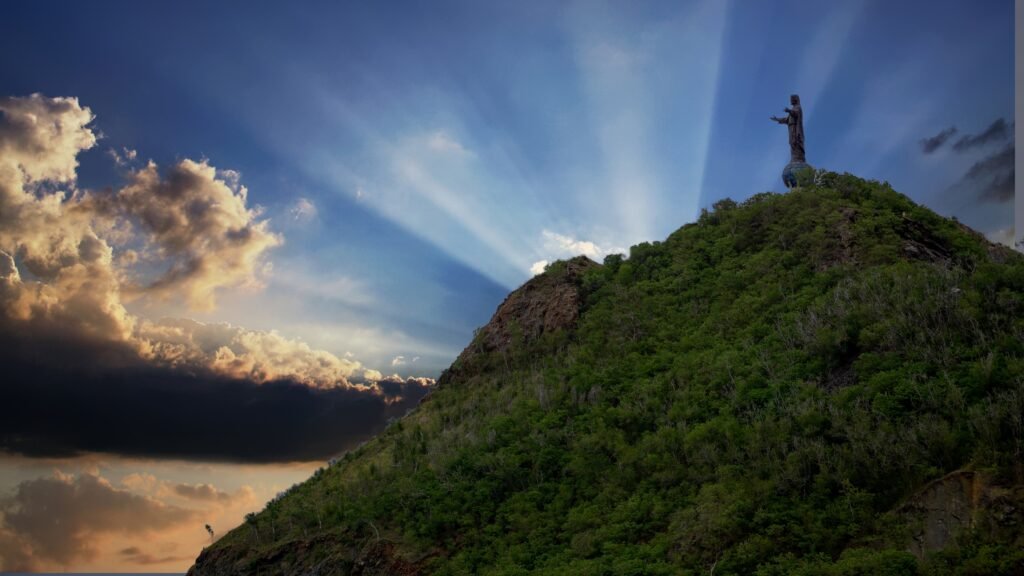
Timor-Leste’s best-known landmark is the Cristo Rei of Dili, a 27-meter statue of Christ atop a globe overlooking the capital from a hillside promontory, built in 1996 during the Indonesian occupation and now a defining symbol of the city and the country. Internationally, Timor-Leste is also known for its long and hard-won path to independence, for its status as one of the world’s youngest countries, and increasingly for its reef diving sites around Atauro Island, considered among the most biodiverse in the world.
Why Timor-Leste Matters
Timor-Leste’s history offers one of the clearest modern examples of a nation achieving independence through a United Nations-administered transition after decades of colonization and occupation, and its post-2002 state-building, including recent accession to ASEAN and the WTO, is closely studied as a model of institution-building in a small, resource-dependent economy. Its predominantly Catholic identity, highly distinctive in Southeast Asia, and its role as a bridge between Portuguese-speaking and Southeast Asian regional communities give it a cultural significance beyond its small size and population.
Key Takeaways
- Timor-Leste occupies the eastern half of Timor island plus the Oecussi enclave and the islands of Atauro and Jaco.
- It declared independence from Portugal in 1975 but was then occupied by Indonesia for 24 years before a 1999 UN-sponsored referendum led to restored independence in 2002.
- More than 97 percent of the population is Roman Catholic, one of only two majority-Catholic nations in Asia alongside the Philippines.
- The population was about 1.4 million as of the latest World Bank estimate.
- Timor-Leste completed WTO accession in 2022 and became a full ASEAN member in October 2025.
- The Cristo Rei of Dili, a 27-meter statue overlooking the capital, is the country’s most recognized landmark.
Sources
- World Bank, “Timor-Leste Overview” (2026) [1]: worldbank.org/en/country/timor-leste/overview
- World Bank, “Timor-Leste Economic Report, April 2026” [2]: documents.worldbank.org
- International Finance Corporation, Timor-Leste Country Page [3]: ifc.org
Key facts
- Population: approximately 1.4 million1
- Declared independence from Portugal in 1975; occupied by Indonesia until a 1999 UN-sponsored referendum1
- Restored independence in 2002 after UN transitional administration
- More than 97% of the population is Roman Catholic
- Completed WTO accession in 2022 and became a full ASEAN member in October 20251
Quick checkIn what year did Timor-Leste restore its independence after the UN transitional administration?Show answer
2002.
Sources
- World Bank. Timor-Leste Overview. 2026 (accessed Date accessed: 2026-10-04)
- World Bank. Timor-Leste Economic Report, April 2026. 2026-04 (accessed Date accessed: 2026-10-04)
- International Finance Corporation. Timor-Leste Country Page. Undated (accessed Date accessed: 2026-10-04)
Editorially reviewed by Specialty Digest Editorial TeamLast reviewed October 4, 2026Researched and drafted with AI assistanceReport an issue