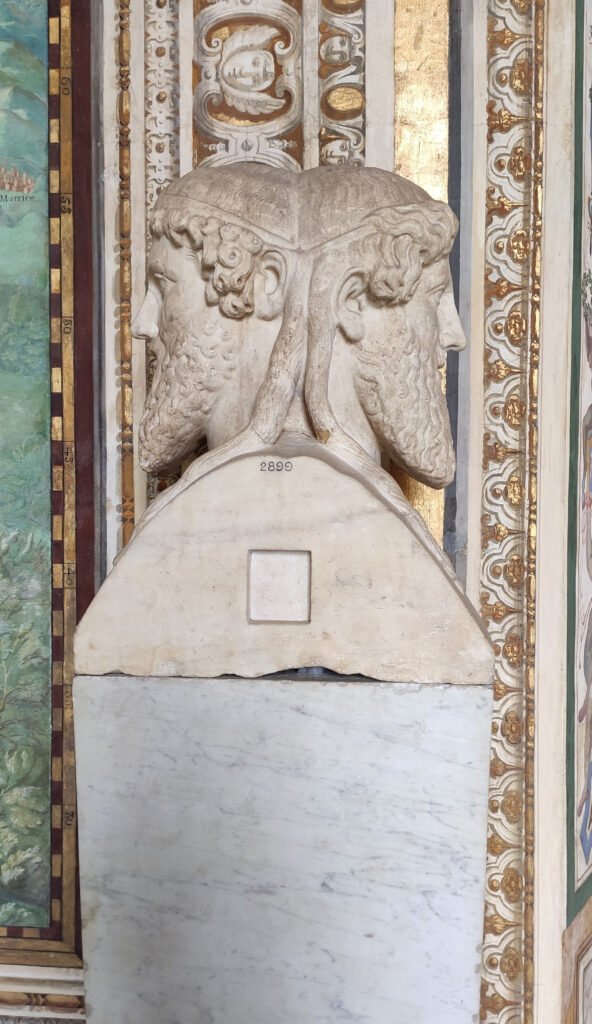
January 1 isn’t a fixed point of astronomy the way a solstice or equinox is — there’s no natural reason the year has to start there. It’s the product of a Roman political calendar decision, a religious dedication to a two-faced god, and a centuries-long tug-of-war between the Catholic Church and Europe’s Protestant and Orthodox holdouts. For most of Roman history, and for much of medieval Europe afterward, January 1 wasn’t New Year’s Day at all.
Rome Originally Started the Year in March
The earliest Roman calendar began the year in Martius, the month named for Mars, the god of war, roughly aligning the new year with the start of the spring campaigning and farming season. For centuries, that made sense for an agrarian, militarized society: the year began when the fields could be worked and armies could march again.
Consuls Move the Date to January
The shift toward January traces to a practical, bureaucratic decision. Starting in 153 B.C., Roman consuls — the republic’s top elected officials — began taking office on January 1 instead of March, largely so incoming consuls would have time to prepare for military campaigns before the spring fighting season began. Because so much civic and legal business was tied to the consular calendar, January 1 increasingly functioned as the practical start of the civic year, even though the formal calendar year didn’t always agree.
Julius Caesar Locks It In, and Dedicates It to Janus
When Julius Caesar overhauled the Roman calendar in 46 and 45 B.C., creating the Julian calendar, he formally fixed January 1 as the start of the year. The month itself was already named for Janus, the Roman god of doorways, transitions and beginnings, depicted with two faces looking simultaneously into the past and the future — a fitting namesake for the first day of a new year. Romans marked the day with offerings to Janus, well-wishes, and small gifts exchanged among friends and family.
Medieval Europe Scatters the Date
January 1’s status as New Year’s Day didn’t survive intact. As Christianity spread, church leaders grew uncomfortable with the date’s association with pagan Roman revelry, and medieval Europe adopted a patchwork of alternative New Year dates instead, including December 25 (Christmas), Easter, and especially March 25, the Feast of the Annunciation, sometimes called “Lady Day.” England and its American colonies used March 25 as the legal start of the year for centuries.
The Gregorian Calendar Restores January 1, Slowly
Pope Gregory XIII’s calendar reform of 1582 reinstated January 1 as New Year’s Day, and Catholic countries such as Spain, Portugal and Italy adopted the change quickly. Protestant nations, wary of a papal reform, held out far longer. Britain and its American colonies didn’t switch until 1752, when Parliament’s Calendar Act moved New Year’s Day from March 25 to January 1 and, in the same stroke, skipped 11 days to correct centuries of drift, so that September 2, 1752, was followed directly by September 14. Some countries, including Russia, didn’t adopt the Gregorian calendar, and its January 1 New Year, until the 20th century.
The date, in other words, was never really about astronomy — it was about which authority controlled the calendar, and that authority changed hands more than once.