Specialty Digest

DISCOVER IDEAS THAT SHAPE OUR WORLD

Section

Science

The latest Specialty Digest coverage in Science.

Science

Science
Aerial view of the San Andreas Fault line cutting across the Carrizo Plain, showing where tectonic plates meet and cause earthquakes

What Causes Earthquakes?

Earthquakes are caused by stress: massive slabs of Earth’s crust push against each other for years or centuries, and the ground shakes when that built-up stress finally overcomes friction and the rock breaks free in a fraction of a second. The plates behind the pressure Earth’s outer shell isn’t one solid piece; it’s broken into

What Causes Earthquakes? Read More »

Tectonic plates grind against each other for decades before a fault snaps — here is the geology behind every earthquake.

Science
Aerial drone view of ocean waves breaking near shore, the salty seawater that has accumulated dissolved minerals for billions of years

Why Is the Ocean Salty?

The ocean is salty because rivers and underwater volcanic vents have been adding dissolved minerals to it for roughly four billion years, while evaporation removes only the water and leaves the salt behind to build up. It is not a single event; it is a slow accumulation from two very different sources. Rivers Carry Salt

Why Is the Ocean Salty? Read More »

Rivers are fresh and rain is fresh, yet the sea is briny — billions of years of rock weathering and undersea vents explain the difference.

Science
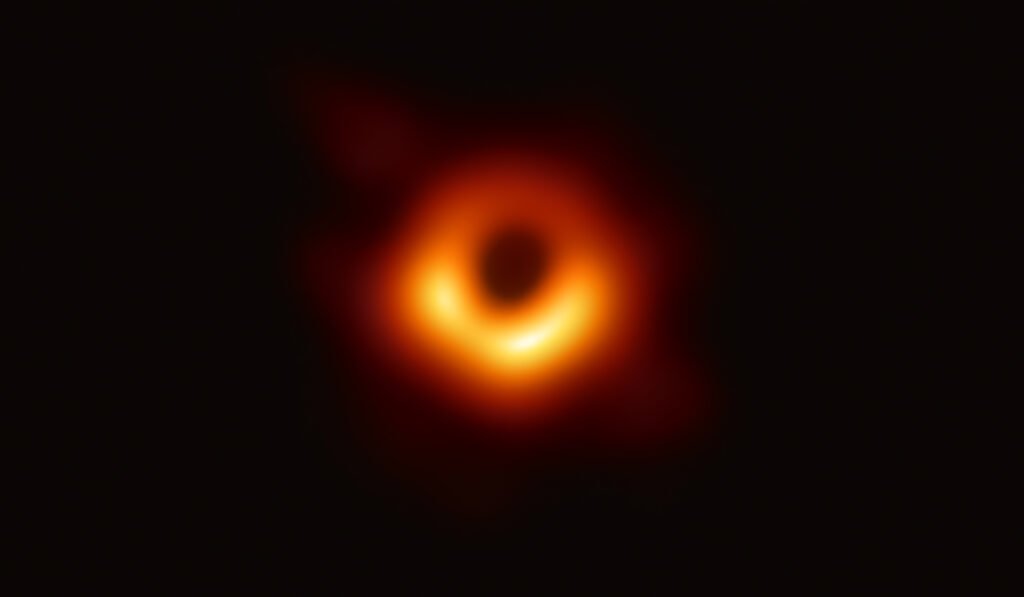
The first-ever image of a black hole, showing the glowing ring around the supermassive black hole at the center of galaxy M87

What Is a Black Hole?

A black hole is a region of space where gravity has become so extreme that nothing — not even light — can escape once it crosses a boundary called the event horizon. In 2019, astronomers released the first-ever image of one: not a photograph of the black hole itself, which can’t be photographed by definition,

What Is a Black Hole? Read More »

Nothing, not even light, can escape a black hole — here is how these extreme objects form and why astronomers can detect what they cannot see.

Science
Man sleeping soundly, illustrating the REM sleep stage when most vivid dreaming happens

Why Do We Dream?

Nobody knows with certainty why we dream, but decades of sleep research point in a consistent direction: dreaming looks like an active, purposeful process the brain runs every night, not random noise thrown off by a resting mind. Several theories currently compete to explain exactly what that process is for, and they are not mutually

Why Do We Dream? Read More »

Every night your brain builds vivid, illogical worlds out of nowhere — here is what sleep science says dreaming is actually for.

Science
Assortment of white pills and capsules representing the sugar pills used to study the placebo effect

What Is the Placebo Effect?

The placebo effect is real: a fake treatment, such as a sugar pill or a saline injection, can trigger a genuine, measurable improvement in a patient’s condition, driven by the brain’s own expectations rather than any active ingredient. It is not imagination, and it is not a trick being played on gullible patients — it

What Is the Placebo Effect? Read More »

Fake pills and sham treatments can trigger very real relief — the placebo effect is one of the strangest, best-documented phenomena in medicine.

Science
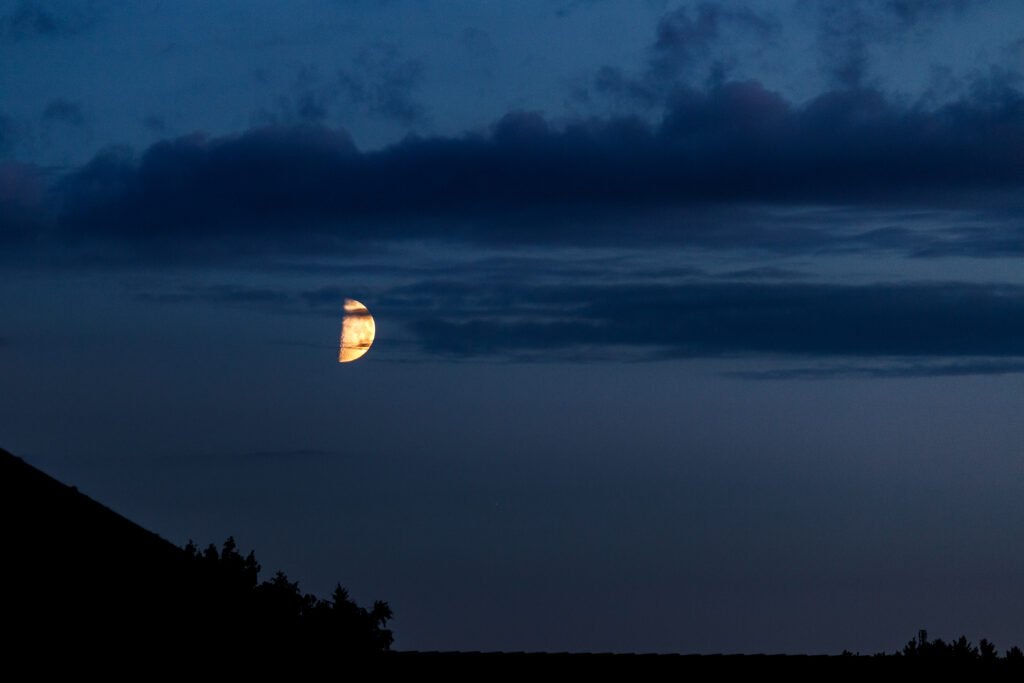
Waxing crescent moon glowing in the evening sky, an early phase in the cycle of why the moon changes shape

Why Does the Moon Change Shape?

The Moon changes shape because it doesn’t produce any light of its own — what we’re actually seeing is sunlight hitting different parts of its surface as the angle between Earth, the Moon, and the Sun shifts over the Moon’s 27.3-day orbit. The Moon itself never physically changes; only how much of its sunlit half

Why Does the Moon Change Shape? Read More »

The Moon looks different every night, but it is not the Moon that is changing — it is our view of the sunlight falling on it.

Science
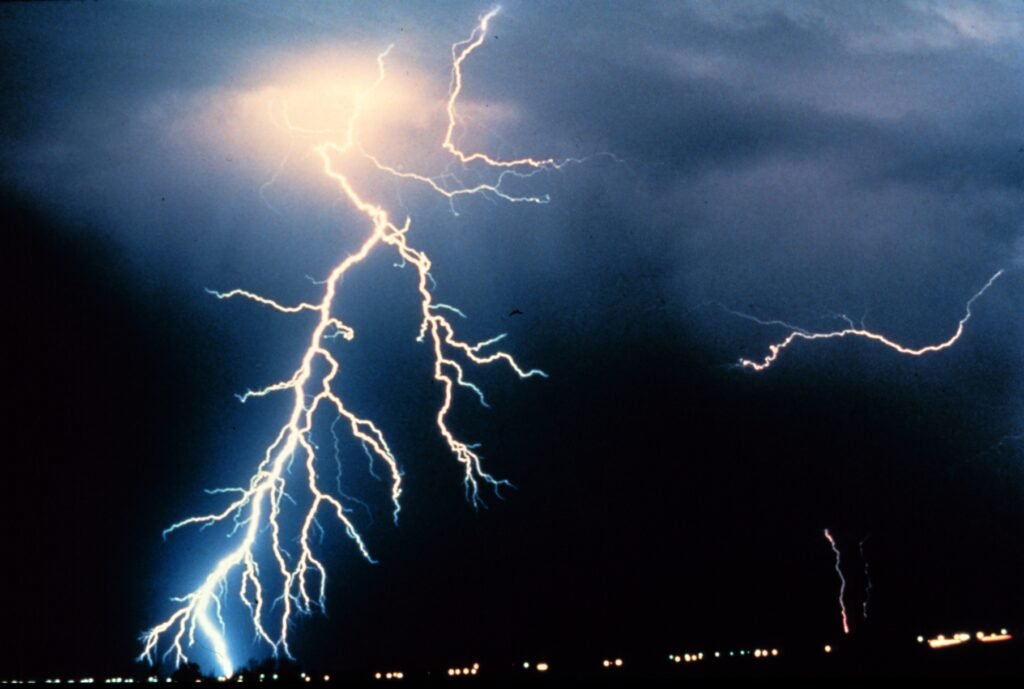
A bright lightning bolt striking the ground during a nighttime thunderstorm.

What Causes Lightning and Thunder?

Lightning is a brief, violent transfer of electricity between a cloud and the ground — or between two parts of a cloud — and thunder is simply the sound of it: the crack and rumble of air that has just been superheated fast enough to produce a shockwave. In the United States alone, it strikes

What Causes Lightning and Thunder? Read More »

A storm cloud builds a massive electrical charge, and thunder is just the sound of air heated to five times the temperature of the sun's surface.

Science
Close-up portrait of a domestic cat, whose purring is produced by tissue pads within its vocal folds.

Why Do Cats Purr?

Cats purr because a pair of small, dense tissue pads in their vocal folds vibrate as air flows past them — and they do it far beyond moments of contentment, including when they are injured, giving birth, or dying. The mechanism behind the sound turns out to be just as surprising as the reasons behind

Why Do Cats Purr? Read More »

A 2023 study upended a 50-year-old theory about how cats produce that rumble — and purring may do more than signal contentment.

Science
A person yawning widely, mouth open and eyes closed, illustrating the involuntary reflex of yawning.

Why Do We Yawn?

Nobody has one clean answer yet, but yawning is not about grabbing extra oxygen. Scientists have ruled out the most popular old theory and narrowed in on two better-supported explanations: yawning helps cool the brain, and it works as a switch that nudges the brain toward alertness during transitions. It is also one of the

Why Do We Yawn? Read More »

Scientists still debate the exact reason, but brain cooling, alertness, and social contagion all play a role.

Science
A clear, deep blue sky photographed on a sunny day, illustrating the Rayleigh scattering that gives the sky its color.

Why Is the Sky Blue?

Sunlight itself isn’t blue — it’s white light, made up of every color in the rainbow bundled together. The sky looks blue because Earth’s atmosphere scatters the blue wavelengths in that sunlight in every direction, far more than it scatters red or yellow light, so blue light reaches your eyes from all over the sky

Why Is the Sky Blue? Read More »

Sunlight is white. The sky is blue. Here is the physics behind the gap — and why sunsets swing to red and orange.