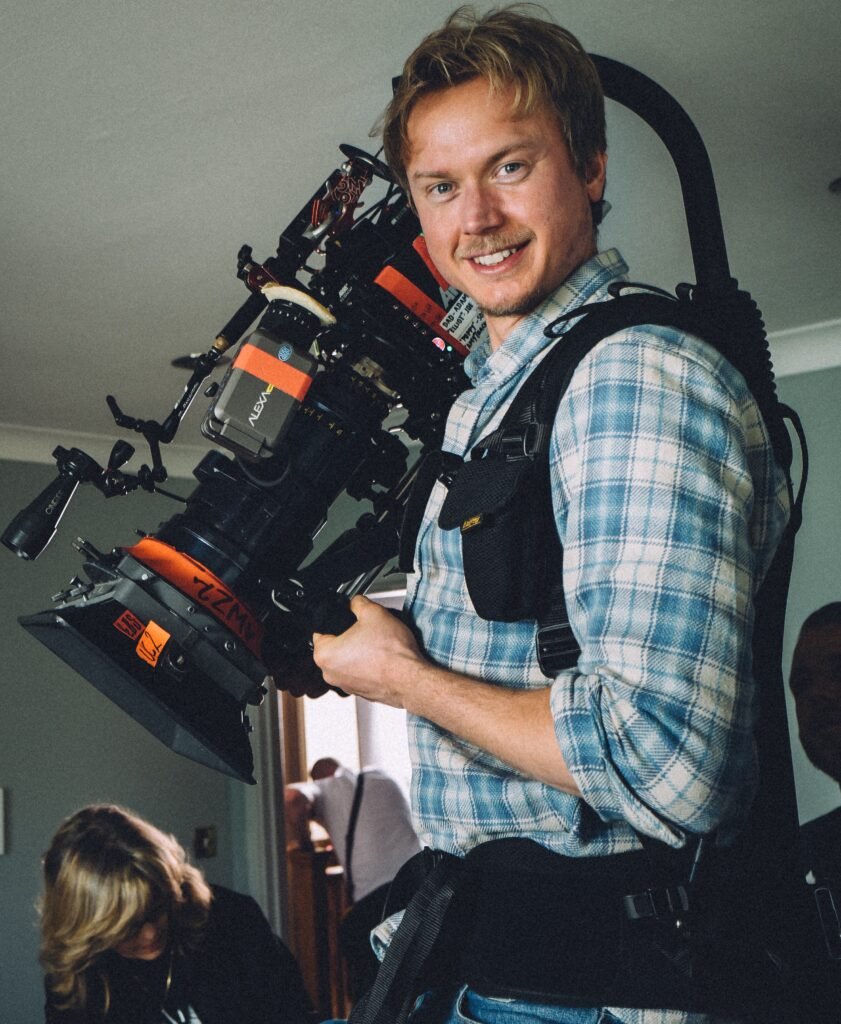
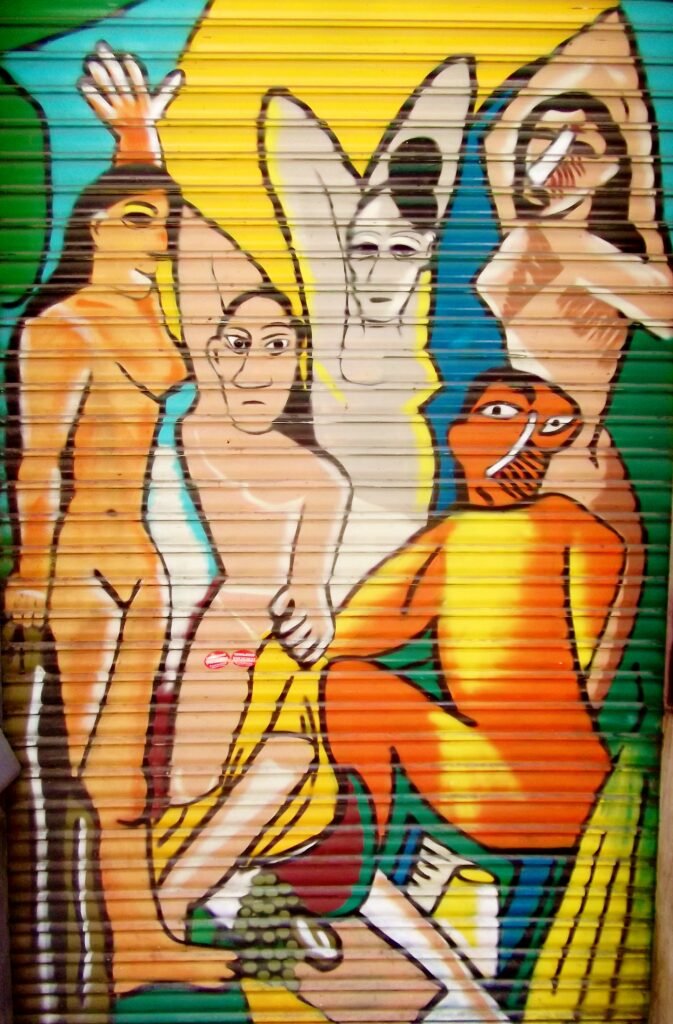
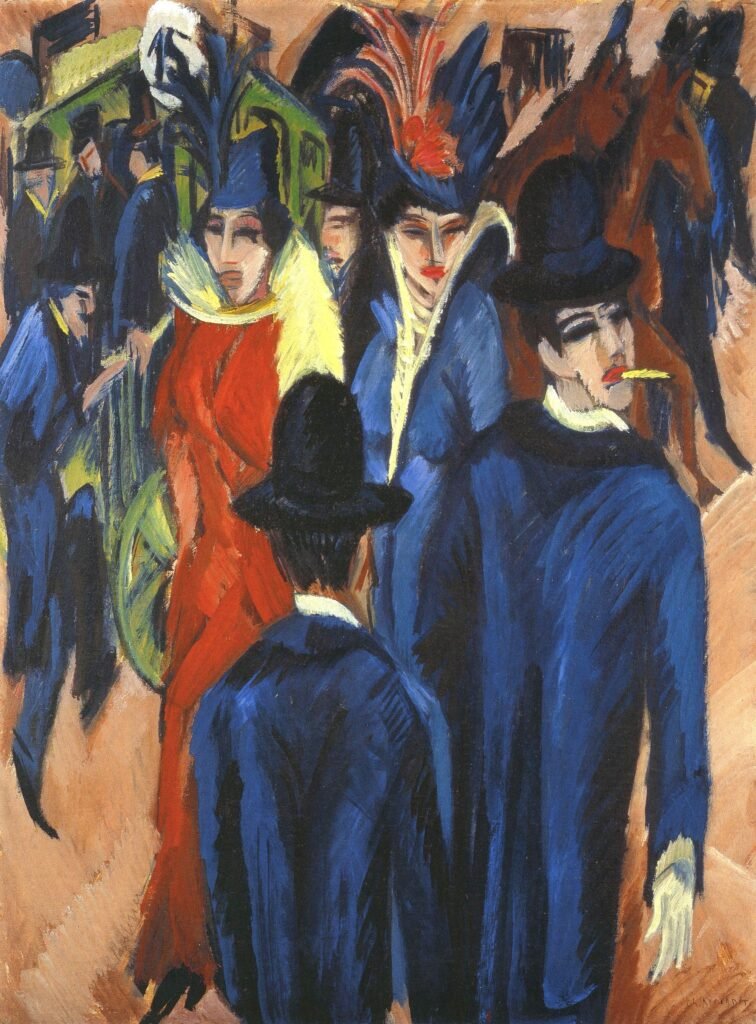
Cinematography is the art and technique of capturing moving images on film or digital sensors, encompassing how a scene is lit, framed, composed, and photographed to create a film’s overall visual style and emotional tone. The person responsible for these creative and technical decisions on a production, the cinematographer or director of photography, works closely
Cinematography Read More »
The art and technique of capturing moving images: lighting, framing, camera movement and lens choice, led by the director of photography.
In simple terms Collage is an art technique built by assembling different materials, such as paper, fabric, photographs, or found objects, onto a surface, rather than painting or drawing an image entirely from scratch. [1] How it works An artist working in collage gathers existing materials, newspaper clippings, wallpaper, ticket stubs, photographs, and arranges and
Collage Read More »
Collage is an art technique built by assembling different materials, such as paper, fabric, photographs, or found objects, onto a surface, rather than painting or drawing an image entirely from scratch.
Color theory is the body of practical guidance and principles that explains how colors relate to one another, how they can be combined to create visual harmony or contrast, and how viewers perceive and respond to different color combinations. Artists and designers use it to make deliberate decisions about palette rather than choosing colors arbitrarily,
Color theory Read More »
Principles explaining how colors relate, combine and are perceived, tracing back to Newton and systematized by Johannes Itten.
In simple terms Counterpoint is the technique of combining two or more independent melodic lines in music so that they sound good both on their own and together. [1] Rather than one melody with supporting chords underneath it, counterpoint treats each line as its own voice with its own melodic shape. How it works A
Counterpoint Read More »
Counterpoint is the technique of combining two or more independent melodic lines in music so that each line works on its own and the lines work together.
Cubism is an early twentieth-century art movement that broke objects and figures into fragmented geometric planes, often showing multiple viewpoints of the same subject simultaneously, rather than depicting a scene from a single, fixed vantage point the way centuries of Western painting tradition, built on linear perspective, generally had. Developed jointly by Pablo Picasso and
Cubism Read More »
An early 20th-century art movement, developed by Picasso and Braque, that fragments subjects into geometric planes and multiple viewpoints.
In simple terms A documentary film is a motion picture built primarily from footage of real people, places, and events, intended to inform or persuade an audience about the actual world rather than to tell a fictional story. [1] How it works Documentary filmmakers draw on a range of techniques: observational footage filmed as events
Documentary film Read More »
A documentary film is a motion picture built primarily from footage of real people, places, and events, made to inform or persuade rather than to tell a fictional story.
Expressionism is an early twentieth-century art movement, primarily centered in Germany, that emphasized subjective emotional experience over objective visual accuracy, often through distorted forms, simplified shapes, and intense, clashing color. Rather than aiming to depict the world as it objectively appears, Expressionist artists sought to convey how a scene or subject felt emotionally, frequently reflecting
Expressionism Read More »
An early 20th-century movement, centered in Germany, emphasizing subjective emotional experience through distorted form and intense color.
In simple terms Gothic architecture is a European building style that dominated major church and cathedral construction from roughly the 12th to the 16th century, recognizable by its pointed arches, soaring ceilings, and large windows filled with colored stained glass. [1] It grew directly out of the earlier, heavier Romanesque style, and solved several of
Gothic architecture Read More »
Gothic architecture is a European building style, dominant from the 12th to 16th centuries, known for pointed arches, ribbed vaults, flying buttresses, and large stained-glass windows.
Graphic design is the practice of visual communication that combines typography, imagery, color, and layout to convey information, express ideas, or persuade an audience. Graphic designers work across an enormous range of media, including logos and brand identities, books and magazines, posters and advertising, packaging, signage, and the screens of websites and apps, shaping how
Graphic design Read More »
The practice of combining typography, imagery, color, and layout to communicate visually.
Harmony, in music, is the way different musical notes sound when combined simultaneously, and the study of how those combinations, called chords, relate to and move between one another over the course of a piece. Alongside melody and rhythm, harmony is one of music’s three fundamental building blocks, and the particular harmonic language a piece
Harmony (music) Read More »
How musical notes sounding together, as chords, relate and move; one of music's three fundamental building blocks alongside melody and rhythm.