Climate change is a long-term shift in the average weather patterns that define Earth’s climates, including temperature, precipitation, and wind patterns, measured over decades rather than days or years. Since the mid-20th century, human activity, chiefly the burning of fossil fuels, has been the main driver of the changes scientists have observed, though natural factors
Climate change Read More »
Climate change is a long-term shift in Earth's average weather patterns, driven mainly by human greenhouse gas emissions since the mid-20th century.
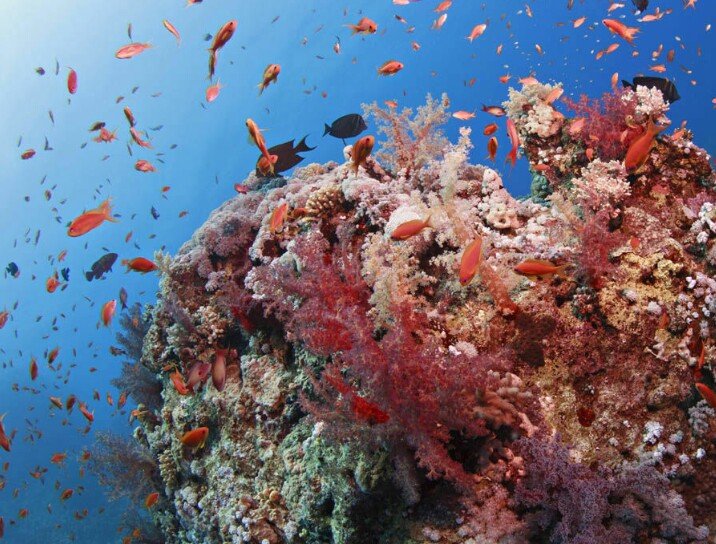
A coral reef is an underwater structure built up over long periods by colonies of hard, reef-building corals that secrete a calcium carbonate skeleton. Although corals are animals, most reef-building species host tiny symbiotic algae called zooxanthellae, which use sunlight to generate energy that the coral shares, which is why healthy reefs are concentrated in
Coral reef Read More »
A coral reef is an underwater structure built over long periods by colonies of hard corals, concentrated in shallow, clear, tropical waters.
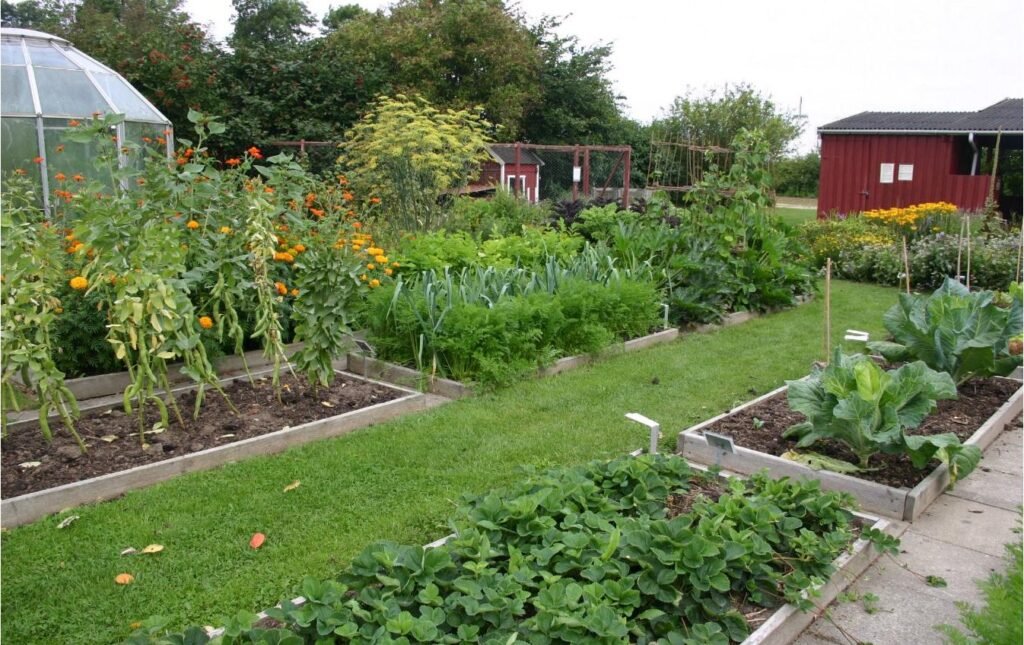
In simple terms Crop rotation means growing a series of different crops in the same field in sequential seasons, instead of planting one crop there year after year. [1] A field might carry maize one season, a legume the next, then a cereal, before the cycle begins again. It works because a crop does more
Crop rotation Read More »
Crop rotation is the practice of growing different crops in the same field in a planned sequence from season to season.
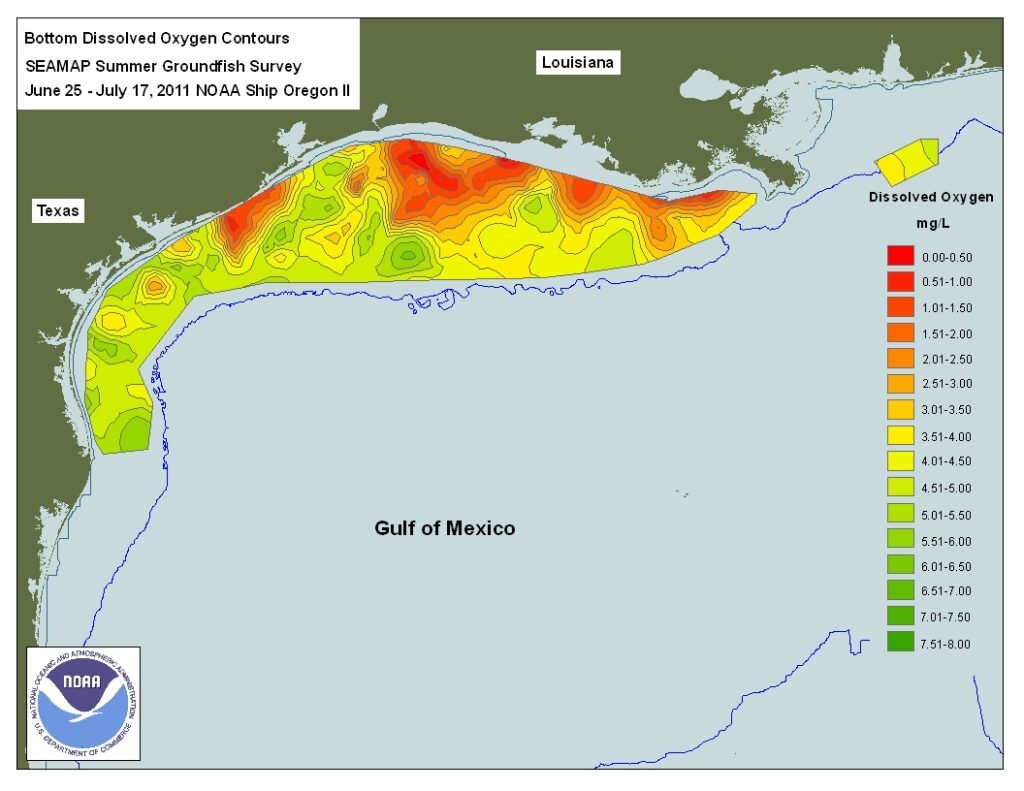
In simple terms A dead zone is a stretch of water where oxygen has dropped so low that fish and other animals cannot live in it. The scientific name is hypoxia, which means low or depleted oxygen in a water body. [1] Dead zones form in the ocean and in fresh water alike. Nothing is
Dead zone (water) Read More »
A dead zone is an area of water where oxygen has fallen so low that fish and other animals cannot survive there.
Deforestation is the large-scale clearing or removal of forest, most often to convert the land to farming, grazing, logging, mining, or urban development. It differs from forest degradation, in which a forest remains standing but is thinned or damaged, because deforestation removes the tree cover itself and, with it, most of the forest’s original ecological
Deforestation Read More »
Deforestation is the large-scale clearing of forest for farming, logging, mining, or development, removing tree cover and its ecological functions.
Desertification is the process by which fertile land in dry, semi-dry, or seasonally dry regions becomes progressively degraded, losing the vegetation, soil quality, and water retention it needs to support agriculture and natural ecosystems, until it comes to resemble a desert. Despite the name, desertification does not mean existing deserts physically expanding their boundaries outward
Desertification Read More »
Desertification is the progressive degradation of fertile dryland until it loses the vegetation and soil quality needed to support agriculture.
Drought is a prolonged period of below-normal precipitation severe enough to cause a serious water shortage for some activity, population, or ecosystem. Unlike a flood or a storm, drought has no single clear starting point or visible event marking its arrival; it develops gradually as a rainfall deficit accumulates, and its real severity is usually
Drought Read More »
Drought is a prolonged period of below-normal precipitation severe enough to cause a serious water shortage.
An ecological footprint is a measure of how much biologically productive land and water a given population, activity, or product requires to supply the resources it consumes and absorb the waste it generates, expressed in a standardized unit called the global hectare. The concept was developed in the early 1990s by Mathis Wackernagel, working under
Ecological footprint Read More »
A measure, in global hectares, of how much productive land and water a population or activity requires, developed in the early 1990s.
An ecosystem is a community of living organisms interacting with one another and with the nonliving parts of their surroundings, functioning together as a single, loosely bounded system. The idea links two things ecologists had long studied separately, living communities and physical environments, into one unit defined by the flows of energy and matter that
Ecosystem Read More »
An ecosystem is a community of interacting organisms together with the nonliving parts of their environment, functioning as a single system.
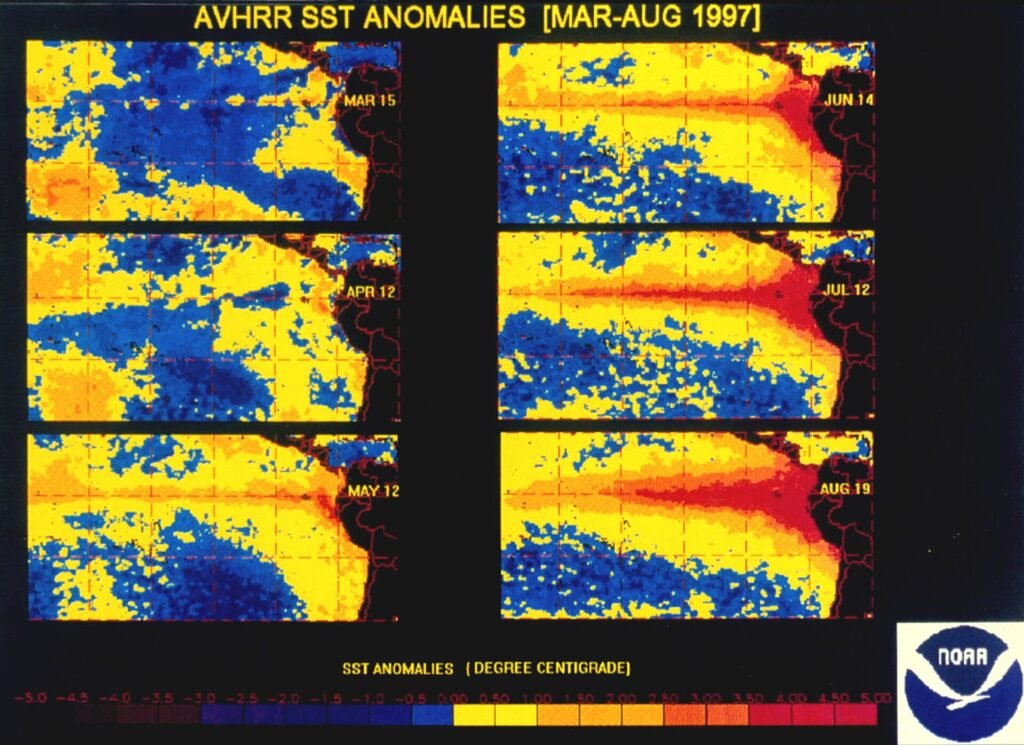
In simple terms El Nino is the warm phase of a climate pattern in the tropical Pacific Ocean that shifts rainfall and temperature in many parts of the world. Its cold counterpart is La Nina, and the whole cycle is called the El Nino-Southern Oscillation, or ENSO. Unusually warm surface water in the central and
El Nino Read More »
El Nino is the warm phase of a tropical Pacific climate pattern that shifts weather around the world.