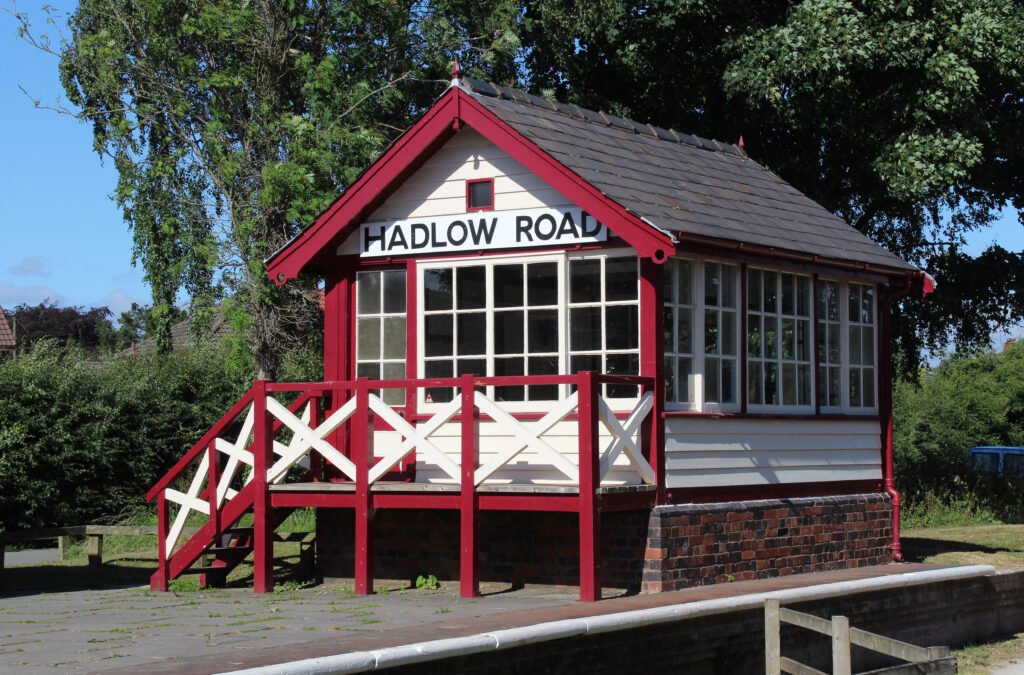
Purpose of Rail Signaling
Rail signaling systems manage train movements to prevent collisions and ensure safe separation between trains operating on the same track. Because trains cannot stop quickly and often cannot see far enough ahead to avoid another train through visual observation alone, signaling systems provide the critical safety function of controlling how closely trains can follow each other or when they can safely enter a section of track.
Signal Blocks and Track Circuits
Traditional rail signaling divides track into sections called blocks, with signals controlling entry into each block based on whether it is already occupied by another train, detected through track circuits or similar technology that senses the presence of a train on a given section of rail.
Evolution of Signaling Technology
Rail signaling has evolved from mechanical semaphore signals operated manually by signalmen to modern computerized systems that automatically track train positions and enforce speed restrictions. Many railways have modernized toward centralized traffic control systems that allow dispatchers to remotely monitor and control signals across large sections of a rail network from a single control center.
Positive Train Control
Positive train control refers to advanced signaling technology that can automatically slow or stop a train if it detects the train is violating a speed restriction or is at risk of colliding with another train, adding an automated enforcement layer beyond relying solely on a human operator correctly responding to signal indications.
Interlocking and Signal Logic
Railway interlocking systems ensure that signals and track switches work together logically, preventing a signal from clearing a train to proceed onto a track section where a conflicting train movement or an improperly aligned switch would create a collision risk, forming a critical safety layer beneath the visible signal displays themselves.
Signaling and Railway Capacity
The design and spacing of signal blocks directly affects how many trains a given stretch of track can safely handle, since shorter blocks with more signals generally allow trains to follow each other more closely, making signaling system design an important factor in overall railway capacity alongside physical track infrastructure.
Signaling System Interoperability
Different railways and countries have historically developed incompatible signaling systems, creating technical challenges when trains need to cross between networks using different signaling technology, prompting international efforts toward standardized signaling systems that would allow trains to operate seamlessly across borders without requiring multiple onboard signaling systems.
From Mechanical Interlocking to Computer-Based Systems
Early railway signaling relied entirely on mechanical interlocking, where levers in a signal box were physically connected by rodding and wires to trackside signals and switches, with the interlocking frame itself preventing conflicting lever movements. This gave way through the twentieth century to electrical relay interlocking, which used circuits of relays to enforce the same safety logic electronically, and more recently to computer-based interlocking systems that implement signaling logic in software running on redundant safety-certified processors. Each generational shift increased the distance a single signal box or control center could manage, moving from a signalman overseeing a few hundred meters of track to modern traffic management centers that can supervise entire regional networks from one location. Despite this centralization, the underlying safety principle has remained constant: a train should never receive permission to occupy a section of track that another train already occupies or that conflicts with another route already set.
Positive Train Control and Modern Overlays
In the United States, a series of serious collisions attributed to human error in observing signals prompted Congress to mandate Positive Train Control, a GPS- and radio-based overlay system that can automatically enforce speed limits and stop a train if a crew fails to respond to a signal or speed restriction. PTC and similar systems elsewhere, such as the European Train Control System, represent a shift toward systems that actively intervene rather than merely display information for a human operator to act on. These overlay systems are typically layered on top of existing interlocking and block signaling infrastructure rather than replacing it outright, since the underlying track circuits and interlockings still perform the fundamental job of detecting train position and preventing conflicting movements.
Signal Aspects and Driver Interface
Despite growing automation in the control systems behind them, most railway signals still communicate with train drivers through a standardized vocabulary of colored lights, known as aspects, that indicate whether the track ahead is clear, clear to a restricted speed, or occupied and requiring a stop. Different countries and even different railway companies within the same country have historically developed their own aspect sequences and naming conventions, creating interoperability challenges for drivers and trains crossing between networks, which international standardization efforts such as the European Train Control System aim to reduce by replacing lineside signal displays with in-cab signaling information delivered directly to the driver’s console.
Maintenance of signaling equipment has become increasingly specialized as systems have shifted from simple mechanical components toward sensor networks and software, requiring railways to retrain or hire technicians with electronics and programming skills alongside traditional signal maintenance expertise.
Cybersecurity has also emerged as a growing concern for computer-based signaling systems, since a network intrusion into train control software could in principle disrupt safety-critical functions, prompting railways to adopt stricter network isolation and security certification standards for new signaling installations.
Level crossing protection, where roads intersect railway tracks at grade, represents another major signaling application, using automatic barriers and warning lights triggered by approaching train detection to prevent collisions with road vehicles.
Interlocking data must be rigorously tested before commissioning to confirm no conflicting route can ever be set.
Key facts
- Array
Quick checkWhat is the main purpose of rail signaling?Show answer
To safely manage train movements and prevent collisions by ensuring trains maintain safe separation from each other on shared track.
Sources
- Array
Editorially reviewed by Specialty Digest Editorial TeamLast reviewed November 4, 2026Researched and drafted with AI assistanceReport an issue