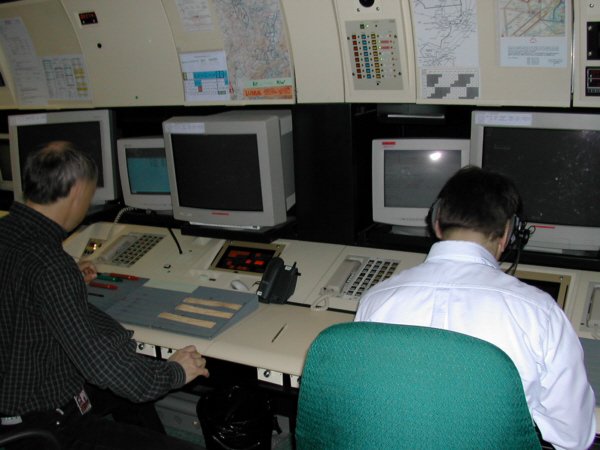
What Air Traffic Control Does
Air traffic control directs the movement of aircraft to maintain safe separation and keep traffic flowing efficiently, covering aircraft on the ground at airports, departing and arriving aircraft near airports, and aircraft cruising between destinations. Controllers communicate with pilots by radio, issuing instructions on altitude, heading, and speed to keep aircraft safely separated.
Layers of Air Traffic Control
Air traffic control operates through several specialized layers. Control towers manage aircraft on the ground and in the immediate vicinity of an airport. Approach and departure control handles aircraft climbing away from or descending toward an airport within a wider surrounding area. En route centers, sometimes called area control centers, manage aircraft cruising at altitude across large sections of airspace between airports.
Technology Used in Air Traffic Control
Controllers rely on radar systems to track aircraft position, increasingly supplemented by satellite-based surveillance technology that provides more precise location data than radar alone. Automated conflict detection systems alert controllers to potential aircraft proximity issues before they become dangerous, while voice radio remains the primary means of communicating instructions to pilots.
Air Traffic Control and System Capacity
The capacity of air traffic control systems directly limits how many flights can safely operate in a given airspace or at a given airport, making air traffic control a major factor in flight delays during periods of high demand, poor weather, or system outages. Modernization programs in many countries aim to increase capacity through more precise satellite-based navigation and automation.
Controlled Versus Uncontrolled Airspace
Air traffic control services are provided within controlled airspace, where aircraft must follow specific clearances and instructions from controllers, while uncontrolled airspace, typically found over sparsely populated or low-traffic areas, allows pilots to operate with greater autonomy and less direct oversight, though pilots still follow general right-of-way and safety rules.
Air Traffic Controller Training and Certification
Air traffic controllers undergo extensive specialized training and must earn certification specific to the facility and airspace they will control, since the skills needed to manage a busy terminal area differ significantly from those required for en route traffic management across large, less congested airspace sectors.
Weather and Air Traffic Control
Severe weather significantly affects air traffic control operations, often requiring controllers to reroute aircraft around storm systems, space out arrivals and departures more widely for safety, or temporarily halt operations entirely at affected airports, decisions that can cascade into delays across an entire regional or national air traffic system.
Separation Standards
Air traffic controllers apply formal minimum separation standards specifying the required distance, whether measured horizontally, vertically, or by time interval, that must be maintained between aircraft at all times, with exact separation requirements varying based on aircraft type, the specific airspace involved, and the surveillance technology available to controllers in that area.
International Coordination in Air Traffic Control
Because flights frequently cross national borders, air traffic control systems in neighboring countries must coordinate handoffs as aircraft transition between different countries’ controlled airspace, following internationally standardized procedures and communication protocols that allow controllers speaking different native languages to communicate safely and effectively.
Air Traffic Control Staffing Challenges
Many countries have faced air traffic controller staffing shortages in recent years, since training a fully certified controller takes years and facilities cannot simply hire replacement staff quickly, a constraint that has contributed to flight delays and, in some cases, forced temporary reductions in scheduled flights at affected airports.
Air Traffic Flow Management
Beyond managing individual aircraft separation, air traffic control systems also perform broader air traffic flow management, adjusting departure times and rerouting traffic across entire regions to prevent any single airport or airspace sector from becoming overloaded, particularly important during widespread weather disruptions affecting multiple airports simultaneously.
Next-Generation Air Traffic Control Systems
Many countries are modernizing air traffic control through satellite-based navigation and automated data communication systems that reduce reliance on older ground-based radar and voice radio methods, aiming to increase safe airspace capacity and improve the precision of aircraft routing compared with legacy air traffic control technology.
Air Traffic Control and Noise Management
Controllers and airport authorities often coordinate specific departure and arrival routes designed to reduce aircraft noise over populated areas near airports, balancing community noise concerns against the operational efficiency of the most direct possible flight paths into and out of busy airports.
Air Traffic Control Funding Models
Air traffic control services are funded differently across countries, with some funded through general government taxation and others operated as self-funding entities charging airlines directly for air navigation services, a funding model choice that can affect how quickly a given air traffic control system can invest in modernization.
Human Factors in Air Traffic Control
Air traffic control work involves sustained high-stakes attention and decision-making under time pressure, making human factors research into controller fatigue, workload management, and shift scheduling an important and ongoing area of aviation safety study.
Outlook for Air Traffic Control
As air traffic volumes continue to grow in many regions, air traffic control modernization and controller staffing will likely remain central challenges for aviation authorities seeking to expand safe airspace capacity without compromising safety standards.
Controllers, pilots, and airlines all depend on this system functioning reliably, making continued investment in both technology and staffing a shared priority across the aviation industry.
The system’s success is measured not just in avoided incidents but in the everyday reliability travelers rarely think about until something goes wrong.
Few other systems manage this level of real-time coordination so consistently and with so few serious failures.
That track record is a testament to decades of careful system design.
Key facts
- Array
Quick checkWhat is the main purpose of air traffic control?Show answer
To maintain safe separation between aircraft and ensure the efficient flow of air traffic both in the air and on the ground.
Sources
- Array
Editorially reviewed by Specialty Digest Editorial TeamLast reviewed November 4, 2026Researched and drafted with AI assistanceReport an issue