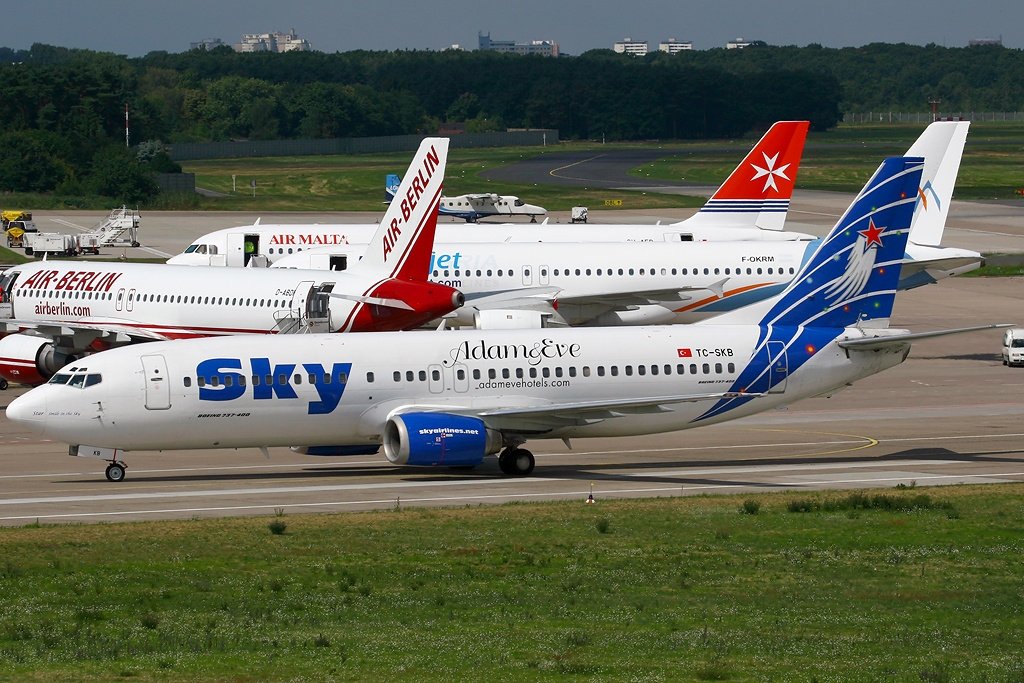
What Commercial Aviation Covers
Commercial aviation encompasses the airlines and operators that carry passengers and cargo for payment, including scheduled passenger service, dedicated cargo carriers, and charter operations. It is distinct from general aviation, which covers private, recreational, and non-revenue flying, and from military aviation, which serves defense purposes.
Scheduled Versus Charter Service
Scheduled airlines operate fixed routes on published timetables available to the general public, forming the backbone of commercial passenger travel. Charter operators instead fly on an as-needed basis for a specific customer, such as a tour operator, sports team, or corporate client, without maintaining a regular published schedule.
The Airline Business Model
Airlines generate revenue primarily through passenger fares and cargo shipping rates, increasingly supplemented by ancillary fees for services such as checked baggage, seat selection, and onboard amenities. Because aircraft and crew represent enormous fixed costs regardless of how full a flight is, airlines rely heavily on sophisticated pricing and scheduling systems to maximize how many seats or how much cargo space they sell on each flight.
Global Regulatory Framework
Commercial aviation operates under a framework of international standards set by the International Civil Aviation Organization, a United Nations agency, with individual countries implementing and enforcing these standards through national aviation authorities. This global coordination allows aircraft, crews, and airlines from different countries to operate safely across borders under broadly consistent rules.
Airline Alliances and Partnerships
Major airlines often join global alliances or form bilateral codeshare agreements, allowing passengers to book connecting itineraries across multiple carriers under a single reservation while airlines coordinate schedules, share airport lounges, and align frequent flyer programs. These partnerships let airlines extend their effective route networks far beyond what they could serve with their own aircraft alone.
Commercial Aviation Economics
Commercial aviation operates on notoriously thin profit margins, with airlines facing high fixed costs for aircraft, fuel, labor, and airport fees that must be covered regardless of how many seats are actually sold on a given flight. Airlines use sophisticated revenue management systems to price seats dynamically, charging different fares for the same flight based on booking timing, demand, and remaining seat availability.
Cargo Operations Within Commercial Aviation
Beyond passenger service, many commercial airlines also carry freight as belly cargo in the holds of passenger aircraft, and some operate dedicated all-cargo divisions or affiliated freight carriers, recognizing air cargo as a meaningful additional revenue stream that can help offset the costs of operating passenger routes.
Fleet Planning in Commercial Aviation
Airlines must plan their aircraft fleet composition years in advance, balancing the operating economics of different aircraft sizes against expected demand on specific routes, since ordering new aircraft from manufacturers typically involves lead times measured in years rather than months, making fleet decisions among the most consequential long-term choices an airline makes.
Labor in Commercial Aviation
Commercial aviation depends on a highly skilled, heavily regulated workforce including pilots, flight attendants, maintenance technicians, and dispatchers, many of whom belong to labor unions that negotiate pay, scheduling, and working condition terms through collective bargaining agreements that significantly affect an airline’s overall cost structure.
Airline Loyalty Programs
Frequent flyer loyalty programs have become a major driver of airline profitability in their own right, generating substantial revenue through co-branded credit card partnerships and mileage sales to other businesses, sometimes contributing more directly to airline profit margins than the core business of selling airline tickets.
Deregulation and the Modern Airline Industry
The modern structure of commercial aviation in many major markets traces directly back to airline deregulation, which removed government control over routes and fares and allowed market competition to determine airline pricing and network decisions, a shift that enabled the rise of low-cost carriers and dramatically expanded air travel accessibility over subsequent decades.
Mergers and Consolidation in Commercial Aviation
The commercial airline industry has experienced significant consolidation through mergers, as carriers seek greater scale, broader route networks, and improved cost efficiency, with regulatory authorities reviewing proposed airline mergers closely for potential competitive concerns before approving or blocking a given transaction.
Passenger Experience and Service Tiers
Commercial airlines typically offer multiple service classes, such as economy, premium economy, business, and first class, each priced and configured differently to capture varying levels of willingness to pay among passengers for factors such as seat comfort, baggage allowance, and onboard service.
Commercial Aviation and National Economies
Commercial aviation supports substantial economic activity beyond the airline industry itself, enabling tourism, international business travel, and time-sensitive trade, which is why many governments treat airline connectivity and airport infrastructure as strategic economic priorities worth significant public investment and policy attention.
Airline Response to Economic Cycles
Airlines are highly sensitive to broader economic cycles, since both leisure and business travel demand tend to contract sharply during recessions while recovering, sometimes strongly, during periods of economic growth, making capacity planning and fleet investment decisions unusually dependent on macroeconomic forecasting accuracy.
Looking Ahead for Commercial Aviation
Commercial aviation continues to evolve through new aircraft technology, shifting travel demand patterns, and growing attention to environmental sustainability, with airlines balancing these pressures against the fundamentally thin profit margins that have long characterized the industry.
Airlines that balance financial discipline with investment in passenger experience and reliability tend to perform best across the industry’s recurring cycles of growth and contraction.
These dynamics ensure commercial aviation remains one of the more closely watched and economically sensitive global industries year after year.
For this reason, analysts and investors continue to track commercial aviation closely as a signal of broader economic health.
In every sense, it remains a sector defined by constant adaptation.
More in Aviation and Air Transport
Key facts
- Includes scheduled passenger airlines, cargo carriers, and charter operators
- Regulated internationally through the International Civil Aviation Organization
- Generates revenue through passenger fares, cargo rates, and ancillary fees
Related concepts
Quick checkWhat distinguishes commercial aviation from general aviation?Show answer
Commercial aviation carries passengers or cargo for compensation, while general aviation covers private, recreational, and non-commercial flying.
Sources
- International Civil Aviation Organization
- U.S. Federal Aviation Administration
Editorially reviewed by Specialty Digest Editorial TeamLast reviewed November 4, 2026Researched and drafted with AI assistanceReport an issue